
Last updated November 2, 2026
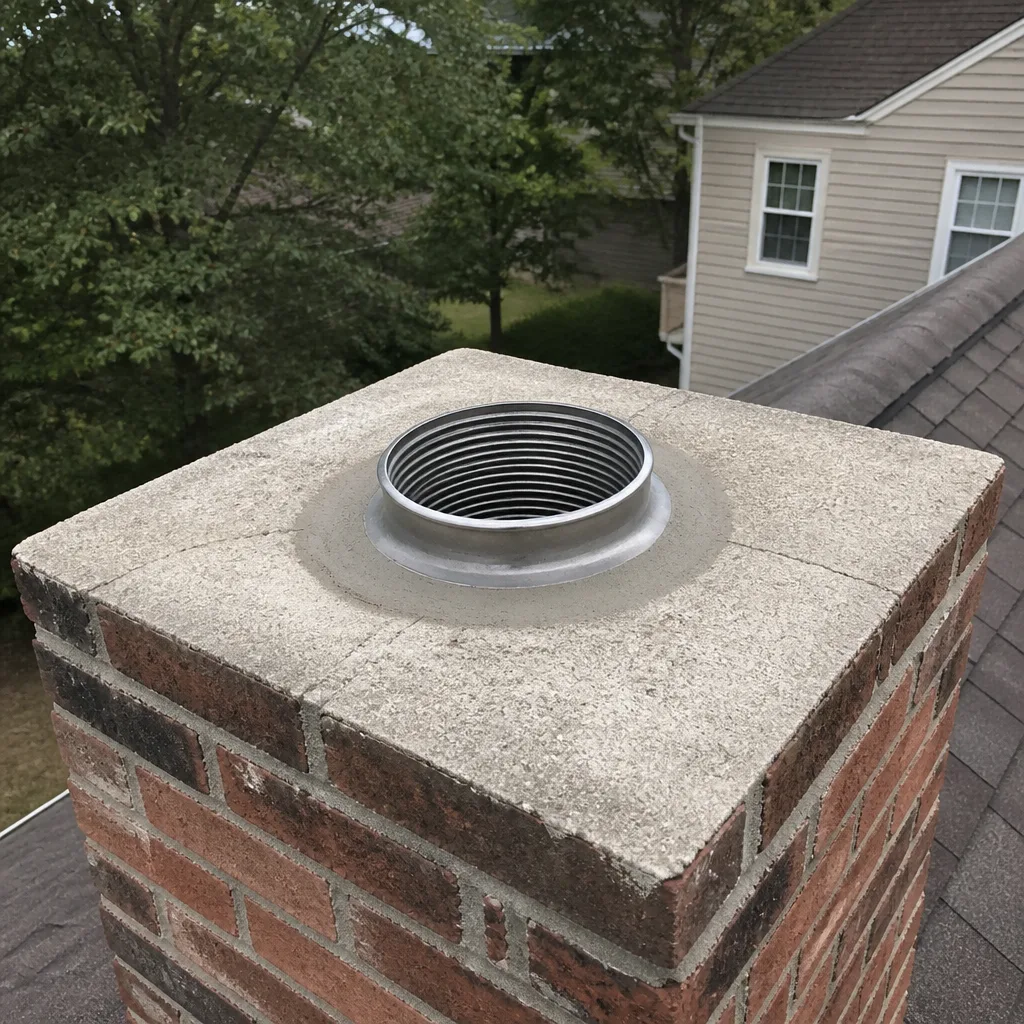
 Sweep & inspection
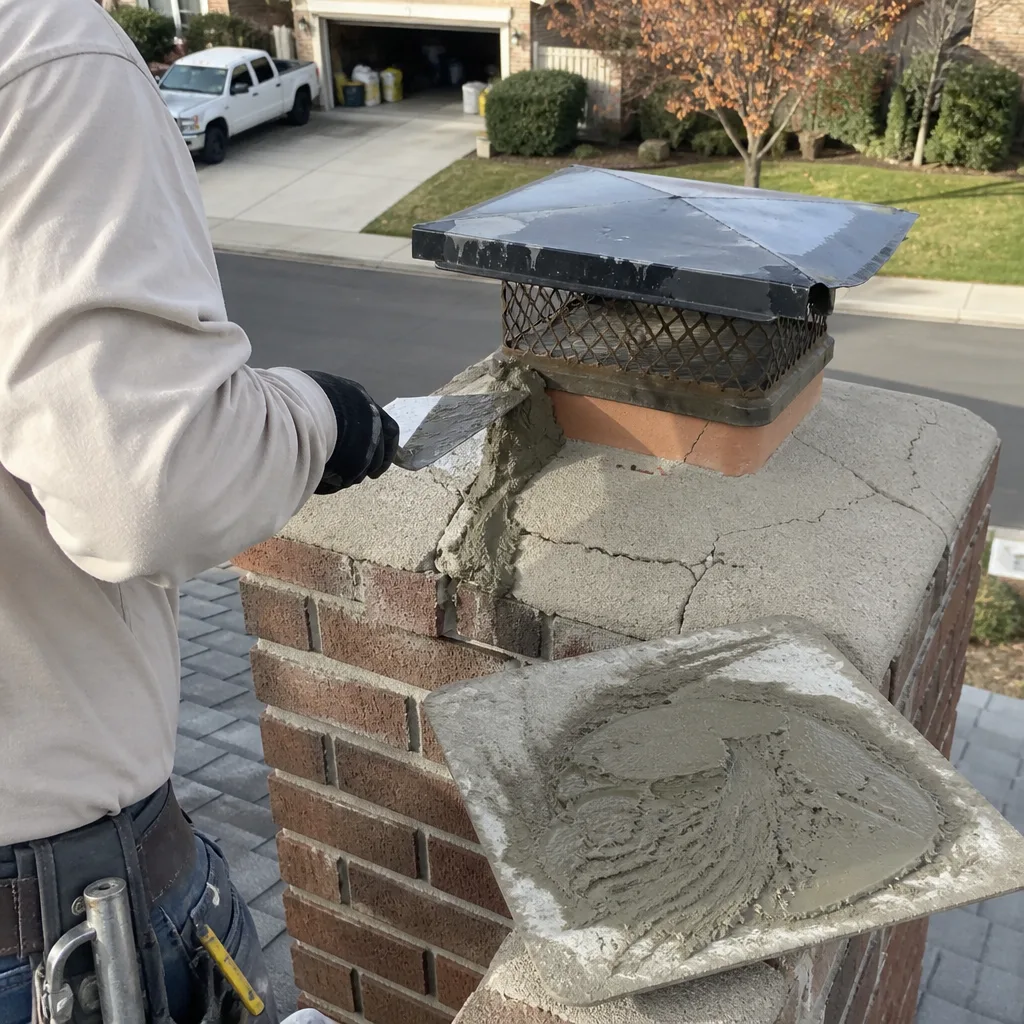
 Caps & crowns
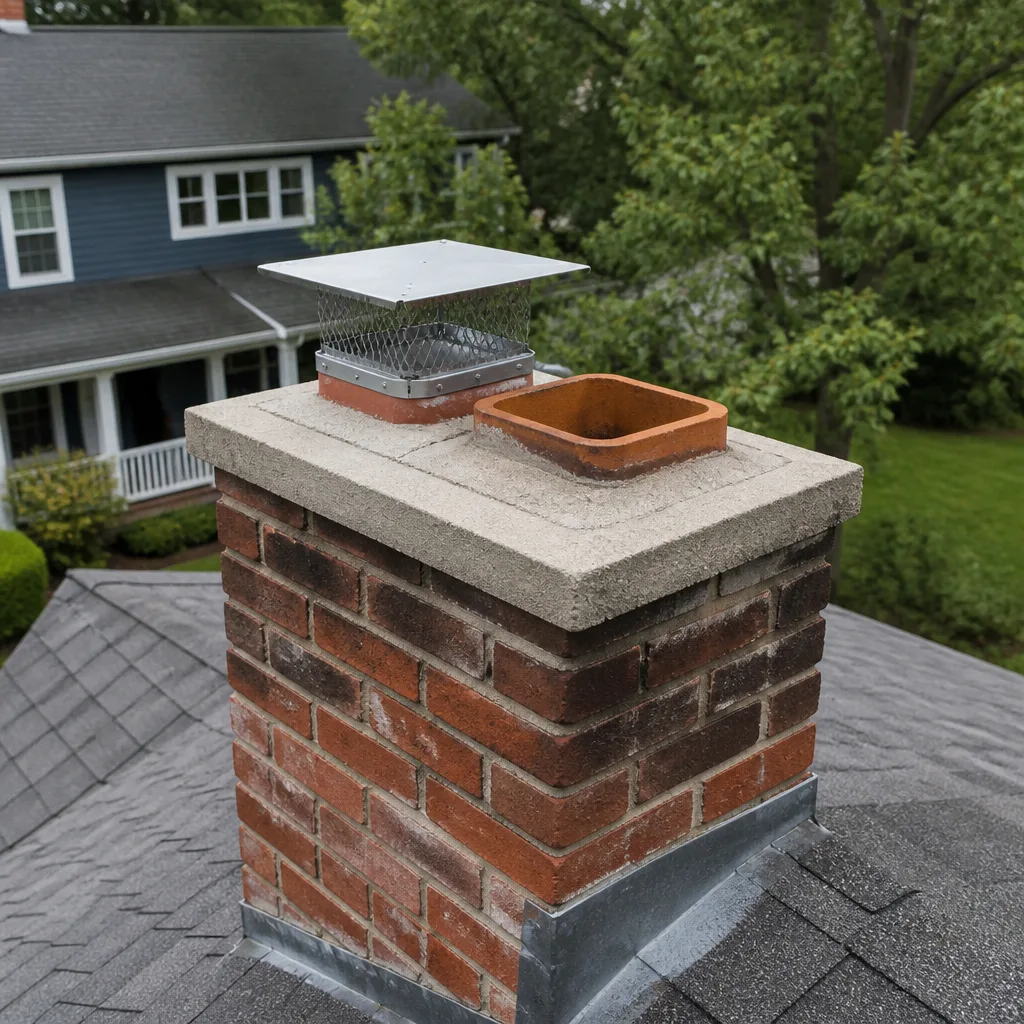
 Flue relining
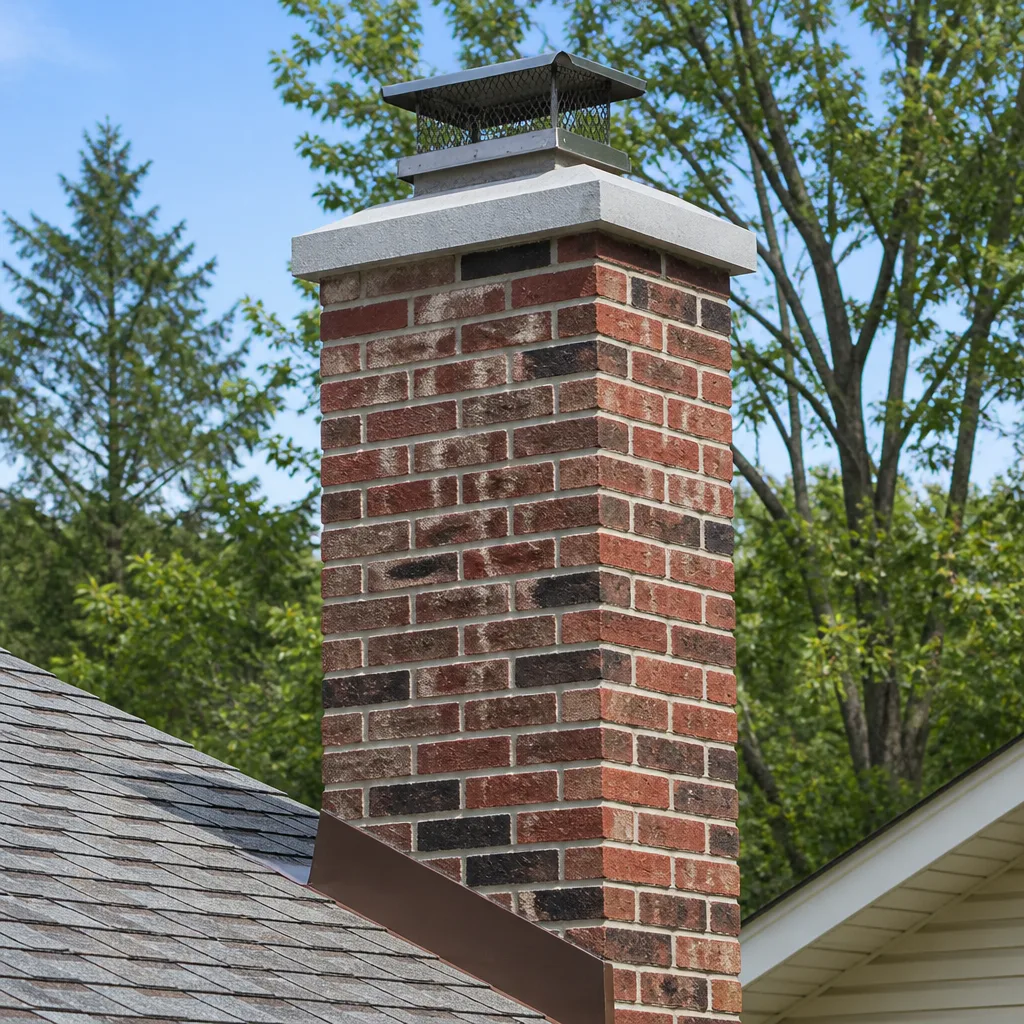
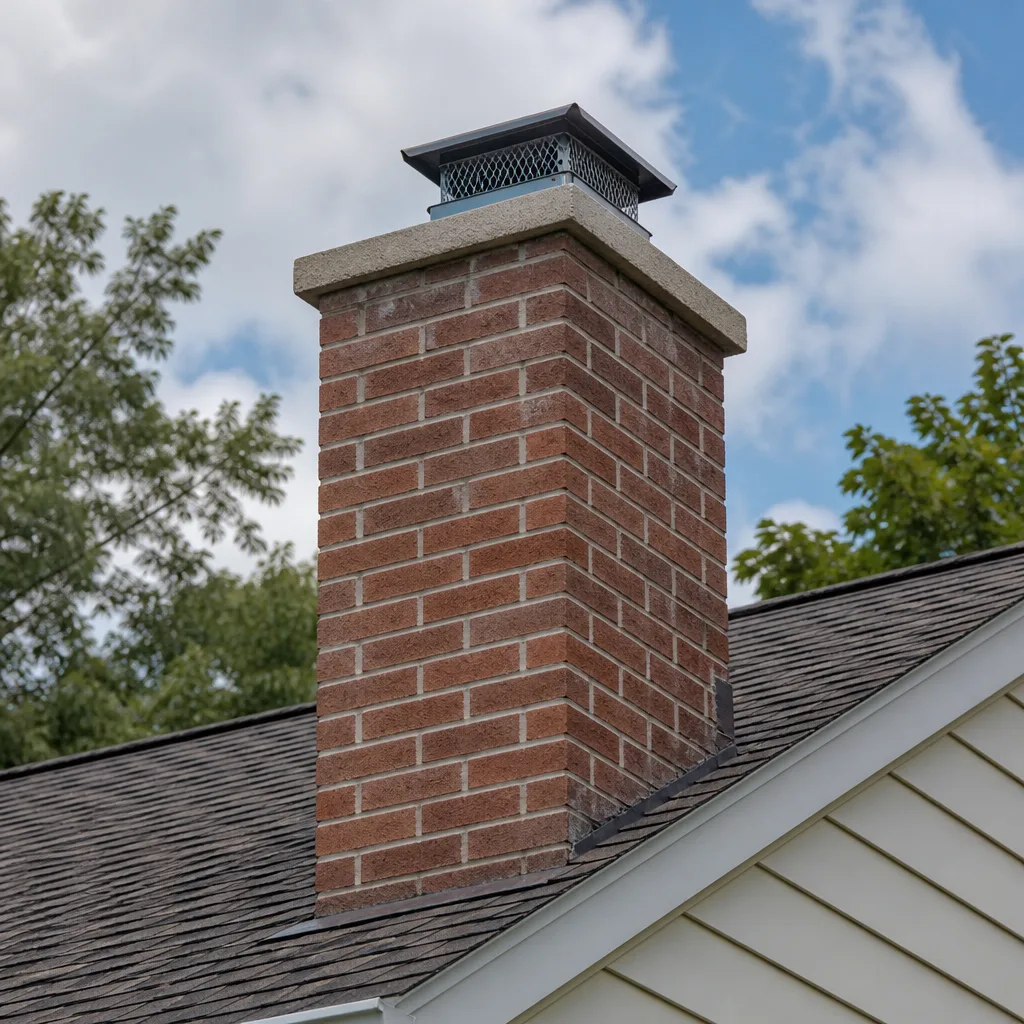 Masonry repair
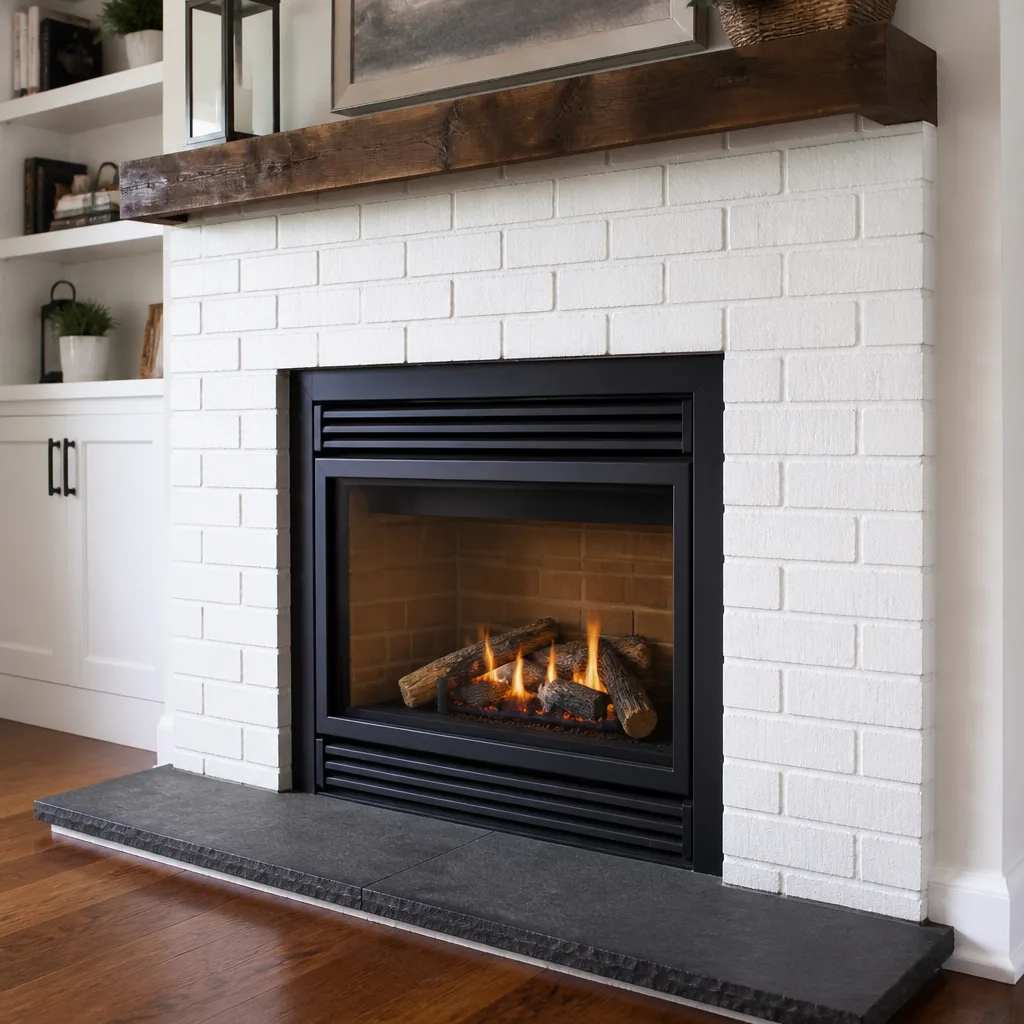 Gas fireplace service
Level 1 sweep and inspection to the NFPA 211 annual standard - flue, crown, cap, and flashing checked and photographed
Chimney sweep logs do not sweep chimneys. They loosen some creosote - which then falls where a brush and vacuum still have to collect it.
Chimney Cleaning Emergency Preparedness Guide for Menifee Homes
A chimney fire in a Menifee home during a Santa Ana wind event isn’t just a house fire risk. It’s a neighborhood risk. The preparation gap between a maintained and unmaintained flue is the difference between a contained incident and a structure loss, and in Menifee’s wildfire-adjacent geography, that gap narrows considerably between October and February. This guide covers the three chimney emergencies most likely to hit Inland Empire homes, what to do in the first 60 seconds of each, and the pre-season preparation that prevents most of them from ever happening.
Quick Answer
Chimney emergency preparedness in Menifee means three things: removing Stage 2 creosote before burn season, verifying your damper seals tightly, and installing an ember-resistant cap screen. These three actions address the most common Menifee chimney emergencies: chimney fires from creosote ignition, carbon monoxide intrusion from failed liners, and wildlife or debris blockage that turns a routine fire into a smoke-filled living room. Most chimney emergencies are preventable with a pre-season sweep and inspection, and the ones that aren’t preventable become far less severe when you know what to do in the first minute.
Styles & brands we work with
- Sweep & inspection
- Caps & crowns
- Flue relining
- Masonry repair
- Gas fireplace service
Table of Contents
- The Three Chimney Emergencies Most Likely in Menifee
- First 60 Seconds of a Chimney Fire: What to Do and What Not to Do
- Pre-Season Preparation That Directly Reduces Emergency Risk
- Wildfire Ember Intrusion: Menifee’s Underrated Chimney Risk
- Carbon Monoxide from a Failed Liner: The Silent Emergency
- Wildlife and Debris Blockage: How It Presents and Why It’s Dangerous
- What Your Insurance Carrier Needs to See: Maintenance Documentation
The Three Chimney Emergencies Most Likely in Menifee
We’ve worked on chimneys across Menifee, from the older homes near Sun City to newer construction off Newport Road, and the emergency patterns here are consistent. Three scenarios account for nearly every urgent call we get during burn season. They present differently, they require different immediate responses, and they all share one trait: they’re almost always preceded by skipped maintenance.
1. Chimney Fire from Stage 2 or Stage 3 Creosote
Creosote builds in layers. Stage 1 is dusty soot that a brush removes easily. Stage 2 is a flaky, tar-like deposit that requires more aggressive removal. Stage 3 is a hardened, glazed coating that can only be removed with chemical treatments or mechanical abrasion. Menifee’s winter burn patterns, short hot fires on cold desert nights, produce creosote faster than homeowners expect. A Stage 2 or Stage 3 buildup ignites at around 451 degrees Fahrenheit, and a chimney fire burns at 2,000 degrees or more. The signs are unmistakable: a loud roaring sound like a freight train or low-flying jet, flames or dense smoke shooting from the chimney cap, and a vibrating or shaking fireplace. This is a structure-threatening event, not a wait-and-see situation.
2. Carbon Monoxide Intrusion from a Failed Liner
Chimney liners fail in three ways: cracks from thermal stress, corrosion from acidic flue gases, and separation at joints from settling or earthquake movement, something Menifee’s seismic profile makes more relevant than most homeowners realize. When a liner fails, flue gases including carbon monoxide can leak into wall cavities, attics, and living spaces instead of venting outside. This emergency doesn’t announce itself with noise or flames. It presents as headaches, nausea, dizziness, or a CO detector going off in the middle of the night. If a CO alarm sounds and your fireplace or gas insert was in use, evacuate first, then call for professional inspection. We specify HeatShield resurfacing instead of full liner replacement when the liner damage is moderate, because restoring the existing structure with a certified ceramic material is often a better engineering answer than tearing everything out. But the inspection has to happen first, and it has to happen promptly.
3. Wildlife or Debris Blockage
Menifee sits in a migration corridor. Birds, squirrels, and raccoons find chimneys attractive for nesting, and the debris they leave behind, twigs, dried grass, droppings, creates a blockage that does two things: it restricts draft, pushing smoke and combustion gases back into the home, and it provides dry, flammable material that can ignite from a single spark. A blocked chimney presents as smoke filling the room when you light a fire, a strong odor even when the fireplace is cold, or visible nesting material around the chimney cap. If you light a fire and smoke immediately rolls back into the room, extinguish the fire and don’t attempt another one until the flue is cleared.
First 60 Seconds of a Chimney Fire: What to Do and What Not to Do
If you hear a roaring sound from your chimney or see flames at the cap, you have roughly one minute to make decisions that determine whether this is a chimney-only incident or a house fire. Here’s the sequence, in order.
- Call 911 immediately. Do not wait to see if it settles down. Chimney fires routinely spread to the roof structure within minutes, particularly in Menifee’s dry climate where roofing materials and decking are already moisture-depleted from months of low humidity.
- Close the fireplace glass doors if you have them. This starves the fire of oxygen from inside the home. If you have a freestanding wood stove, close the air intake vents completely.
- Evacuate everyone from the house, including pets. Do not collect belongings. Do not go back inside for anything. Chimney fires can breach into wall cavities and attics without any visible sign from outside.
- If you can safely reach it from outside, spray the roof around the chimney with a garden hose. Do not spray water directly into the chimney opening. Thermal shock from water on a 2,000-degree flue can crack the liner and turn a contained chimney fire into a structural fire.
- Wait for fire personnel and tell them exactly what you observed: the sound, the flames, the duration, and whether the fireplace was in use at the time. This matters for their assessment of extension risk.
Here’s what not to do, and one of these is counterintuitive enough that we hear it from homeowners regularly.
- Do not close the damper. This is the wrong first move in most configurations. Closing the damper on a fully involved chimney fire can force flames and superheated gases back through any cracks or gaps in the flue and into the home. The damper’s job during a chimney fire is already compromised; restricting the only exit path makes a bad situation worse. The exception is if closing the damper is part of the manufacturer’s documented fire response for your specific fireplace model. Most homeowners don’t have that documentation memorized, so leave the damper alone and focus on evacuation.
- Do not pour water into the fireplace. This creates steam, which expands rapidly and can push burning creosote out of the chimney and into the room. It can also crack masonry and warp metal components.
- Do not use the fireplace again after the fire is out without a full inspection. A chimney fire damages liners, mortar joints, and flue tiles even when it looks contained. The next fire you light could vent into the house. We see this pattern consistently in Menifee: homeowner has a chimney fire, fire department responds, everyone assumes the problem is solved, and the actual liner damage goes undetected until the next cold night.
After any chimney fire, even one you think was minor, the entire flue needs to be evaluated by a professional before another burn. No exceptions. Menifee homes deserve an inspection that documents exactly what survived and what didn’t.
Pre-Season Preparation That Directly Reduces Emergency Risk
Most Menifee chimney emergencies are the result of deferred maintenance, not random accidents. The preparation steps below take one service visit and directly eliminate the conditions that cause chimney fires, CO intrusion, and blockage emergencies.
- Schedule a Stage 2 creosote removal before your first fire. A standard chimney sweep removes Stage 1 soot. If you’ve burned regularly through previous seasons, particularly with unseasoned or softwood, you likely have Stage 2 deposits that a standard sweeping may not fully remove. Ask specifically about Stage 2 creosote removal. A professional will know what you’re asking. We treat creosote removal as a graded process, not a one-size pass, because Menifee’s burn patterns create harder deposits than many coastal California chimneys.
- Verify your damper seals tightly. A damper that doesn’t close completely lets conditioned air escape up the flue year-round, but more importantly during burn season, it allows a path for smoke and gases to draft incorrectly. A damper seal inspection takes minutes and catches problems that cost nothing to fix early and become emergencies later.
- Install or upgrade to an ember-resistant cap screen. This is the single most overlooked wildfire-preparedness step for Menifee chimneys. A standard spark arrestor uses 3/4-inch mesh, which stops large debris but lets wind-driven embers through. An ember-resistant screen uses 3/8-inch or finer mesh, and that difference matters enormously during Santa Ana conditions when embers can travel half a mile or more ahead of the fire front. We install Gelco chimney caps with ember-rated screening because the material is engineered for real-world wind exposure, not decorative use.
- Check for and seal any gaps at the roofline flashing. The intersection where the chimney meets the roof is a common entry point for both water and embers. Flashing that has lifted, cracked, or separated during Menifee’s wind season creates a direct path into the attic.
- Test your carbon monoxide detectors before burn season starts. Replace batteries, verify the units are within their service life, and confirm you have at least one detector per sleeping area. CO is odorless and colorless; the detector is the only warning system you have for the second most common chimney emergency.
One call covers sweep, repair, and dryer vent inspection. The consolidated visit saves you a second scheduling cycle and ensures the entire combustion-exhaust system in your Menifee home is evaluated at the same time. More on our approach here: Chimney Sweep Menifee home.
Wildfire Ember Intrusion: Menifee’s Underrated Chimney Risk
Menifee’s position in the Inland Empire puts it in a wildfire exposure zone that most homeowners don’t fully process until a Santa Ana wind event pushes smoke and ash into the neighborhood. But the bigger threat isn’t the fire front. It’s embers. Research from fire protection agencies consistently shows that the majority of homes destroyed in wildland-urban interface fires ignite from ember attack, not direct flame contact. And chimneys are among the most vulnerable ember entry points.
Here’s how ember intrusion works in a Menifee chimney. During a Santa Ana event, sustained winds of 40 to 60 mph, with gusts higher, carry burning embers long distances. These embers enter chimneys through the top opening, through damaged caps, through cracked spark arrestors, or through gaps in the masonry. Once inside the flue, they land on creosote deposits, which ignite easily, or they drop through an open damper directly into the firebox and from there into the living space. It doesn’t require a wildfire to be at your property line. Embers from a fire a mile away can do it.
Assessing your Menifee chimney’s ember vulnerability comes down to five questions:
- Is your spark arrestor or cap screen mesh fine enough? If the openings are larger than 3/8 inch, wind-driven embers can pass through. Most older Menifee homes have 3/4-inch mesh, which was standard for years but is not adequate for ember resistance.
- Is the cap intact and seated correctly? A cap that’s cracked, rusted through, or lifted by wind creates a direct ember entry point. We’ve replaced Gelco caps on Menifee chimneys where the original caps had failed within five years due to UV degradation and wind stress.
- Is the flue liner sound? Cracks in a clay tile liner don’t just leak gases out; they provide a path for embers to reach combustible materials in the chimney chase or wall cavity.
- Is the damper closing fully? An open or partially open damper is an open invitation for anything falling down the flue.
- Is there any accumulated creosote? Creosote is fuel. An ember that lands on a clean clay tile has a chance of being contained. An ember that lands on Stage 2 creosote starts a chimney fire.
Menifee homeowners in the more exposed areas, particularly homes near open space off Holland Road or along the eastern edge of the city where development meets scrubland, should treat ember-resistant screening as standard equipment, not an upgrade. The cost difference is minor. The risk difference is not. For a full evaluation of your chimney’s current condition, our Chimney Sweep in Menifee service includes cap, screen, and damper assessment as part of every visit.
Carbon Monoxide from a Failed Liner: The Silent Emergency
Carbon monoxide kills more people in home fires than flames do, and chimney liner failure is one of the most preventable causes. In Menifee, the climate contributes to liner degradation in ways that coastal homeowners don’t experience. The extreme temperature swings between summer highs over 100 degrees and winter nights near freezing create repeated thermal expansion and contraction cycles on clay tile liners. Each cycle stresses the mortar joints. Eventually, cracks develop.
A cracked liner is not a cosmetic problem. It’s a breach in the pressure boundary that keeps combustion exhaust moving upward and out. When the boundary fails, flue gases follow the path of least resistance, which is often backward into the home. The gases include carbon monoxide, which binds to hemoglobin in the blood far more efficiently than oxygen. Symptoms present as flu-like: headache, dizziness, nausea, fatigue. The difference is that these symptoms improve when you leave the house and worsen when you’re home, particularly after using the fireplace or running a gas insert.
We recommend this sequence for any Menifee homeowner who suspects a liner problem:
- If your CO detector sounds, or if anyone in the home is experiencing symptoms, evacuate immediately and call 911. Do not open windows and wait to see if things improve. Let fire personnel assess the air quality.
- After the immediate safety issue is resolved, do not use the fireplace or any gas appliance venting through that chimney until a professional has inspected the liner. This includes gas water heaters and furnaces in many Menifee homes that share a common flue.
- Ask for a camera inspection. A visual sweep inspection can’t see hairline cracks or joint separation deep in the flue. A camera can. We don’t recommend liner repair or replacement in Menifee without showing you the footage, because you should know what’s going into your flue and why the recommendation makes sense.
- If the liner damage is moderate, ask about HeatShield resurfacing. HeatShield is a ceramic coating applied to the interior of an existing flue that seals cracks and restores the liner’s structural integrity. It’s not a patch job. It’s a certified restoration method that can extend flue life significantly. We offer HeatShield resurfacing instead of full liner replacement when it’s appropriate, because it gives Menifee homeowners a cost-credible middle option between doing nothing and a full rebuild. Know what’s going into your flue before you approve any liner work.
- If the liner requires full or partial replacement, ask about DuraFlex flexible liner systems. Menifee homes with chimney offsets, unusual flue dimensions, or masonry that has shifted over time often can’t accommodate rigid liner sections. DuraFlex is an industry-vetted flexible liner system that handles non-standard configurations while maintaining the same performance standards as rigid systems. We specify DuraFlex because it’s the liner product that solves more Menifee-specific geometry problems than any other system we’ve used.
Chimney liner work is not the place to shop by price alone. The material that goes into your flue determines whether you’re safe for 5 years or 25. Our advice: ask what liner product is being installed, ask why that product was chosen for your specific chimney, and if the answer is “it’s what we have on the truck,” call someone else.
Wildlife and Debris Blockage: How It Presents and Why It’s Dangerous
Menifee’s position between the coastal hills and the desert creates a wildlife corridor that brings birds, squirrels, and raccoons into residential chimneys year-round. Spring nesting season is the worst, but fall and winter bring their own problems as animals seek warmth. The signs of animal activity in your chimney are usually noticeable before an emergency develops, if you know what to look for.
The most common presentation is odor. Nesting material, droppings, and deceased animals create a persistent smell that’s strongest near the fireplace and often noticeable from upstairs rooms. The second presentation is sound. Scratching, chirping, or movement sounds inside the flue are definitive signs of animal presence. The third presentation, and the one that turns the situation into an emergency, is smoke rollback. When you light a fire and smoke immediately fills the room instead of drafting up the chimney, that’s evidence of a serious blockage.
A blocked chimney is dangerous in two ways. First, the draft restriction pushes combustion gases, including carbon monoxide, back into the home. Second, the blockage material itself is usually highly flammable. Bird nests are made of dry twigs and grasses. Squirrel nests include shredded insulation and fabric. An ember from your fire lands on that material and you have a chimney fire with a fuel source that wasn’t there when the chimney was clean.
Do not attempt to remove wildlife or nesting material yourself. Federal and state law protects many bird species during nesting season, and the physical act of removing a raccoon or squirrel from a flue is hazardous. Professional removal starts with identifying the species and its legal status, then uses equipment designed to extract animals and material without causing further damage or leaving residual odor. After removal, the chimney needs to be swept to clear all debris, and a proper cap with appropriate screening needs to be installed to prevent re-entry. If you’re seeing signs of wildlife activity, our Chimney Repair in Menifee service covers animal removal follow-up, debris clearing, and cap installation.
What Your Insurance Carrier Needs to See: Maintenance Documentation
When a chimney fire or CO incident happens in a Menifee home, the homeowner’s insurance claim often hangs on one question: was the chimney properly maintained? Insurance carriers routinely deny or reduce claims for chimney fires when the homeowner cannot produce documentation of regular sweeping and inspection. The reasoning is straightforward: chimney fires are considered preventable through maintenance, and a carrier will view a fire in an unmaintained chimney as negligence, not an accident.
Here’s what you need to keep and what your carrier will ask for:
- A dated service record from every chimney sweep. This should include the company name, the date, the scope of work performed, and any findings or recommendations. A receipt that says “chimney clean” is not enough. You need documentation that specifies what was cleaned, what condition the flue was in, and what, if anything, was recommended as follow-up.
- Camera inspection reports, if you have them. Whenever a chimney professional does a camera inspection, request a copy of the footage or at minimum a written report describing what was observed. This is the strongest possible evidence of diligence at claim time.
- Proof of any repairs or replacements. If you replaced a cap, resurfaced a liner, or repaired flashing, keep the invoice that specifies the work done and the materials used. An invoice that says “HeatShield resurfacing completed” carries far more weight than one that says “chimney repair.”
- Your burn history, if you can reconstruct it. If you use your fireplace regularly, document that you had it swept at the appropriate intervals. The National Fire Protection Association standard is annual inspection, with sweeping as needed based on usage and creosote accumulation.
The uncomfortable truth is that if you’ve been burning for five years without a sweep, you may have trouble with a claim even if the fire was caused by something outside your control. Insurance carriers look for diligence, and diligence leaves a paper trail. Start building yours now. If you don’t have documentation and you’ve been burning regularly, the smart move is a professional inspection before next season, not after an incident. Get the inspection, get the written report, and start your maintenance file. Your future claim depends on it.
Common Mistakes to Avoid
- Skipping the pre-season sweep because the chimney “looks fine.” You can’t see creosote buildup inside a flue from the living room, and by the time it’s visible from the roof, it’s already a fire hazard. Menifee homeowners who burn weekly should budget for annual sweeping as a fixed cost, not an optional one.
- Burning unseasoned wood to save money. Green or wet wood produces incomplete combustion, which deposits creosote far faster than seasoned hardwood. The money saved on wood is spent on emergency repairs. Buy wood that has been split and stacked for at least six months, ideally a year.
- Closing the damper during a chimney fire. This instinct makes sense on paper but is wrong in practice for most fireplace configurations. It restricts the flue’s only exit path and can force flame and gases backward into the house. Focus on calling 911 and evacuating.
- Ignoring a CO detector that chirps intermittently or triggers only when the fireplace runs. Intermittent CO readings often indicate a developing liner crack that worsens under heat. The detector is telling you something. Get the chimney inspected before you burn again.
- Assuming a chimney fire is over because the fire department left. Fire personnel extinguish the active fire. They do not assess liner integrity or flue damage. A post-fire inspection is mandatory before the next burn, and skipping it is the single most dangerous decision we see Menifee homeowners make after an incident.
- Installing a cheap cap from a big-box store instead of a spec’d product. Caps are exposed to Menifee’s extreme sun, wind, and temperature swings. A cheap cap fails faster, and a failed cap is an ember entry point and a wildlife invitation. We install Gelco caps because they’re designed for real weather exposure, not shelf appeal.
- Cleaning the dryer vent yourself with a brush kit and calling it done. Dryer vents are part of the same combustion-exhaust safety system as your chimney. A homeowner brush kit removes some lint but doesn’t address the total run, transitions, or exterior termination. Lint accumulation is the leading cause of dryer fires, and this is a fire-safety service, not a convenience task. Dryer Vent Cleaning in Menifee treats it that way.
See the difference
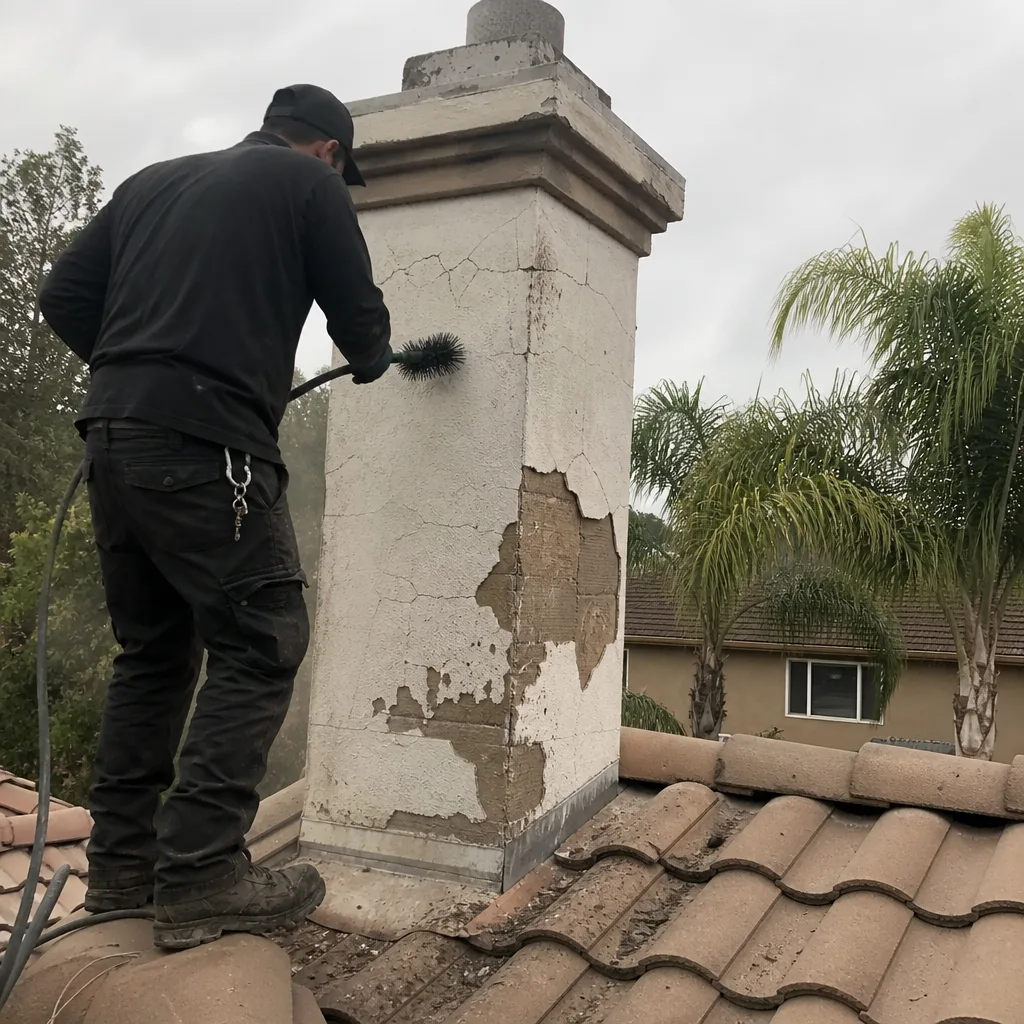 Before
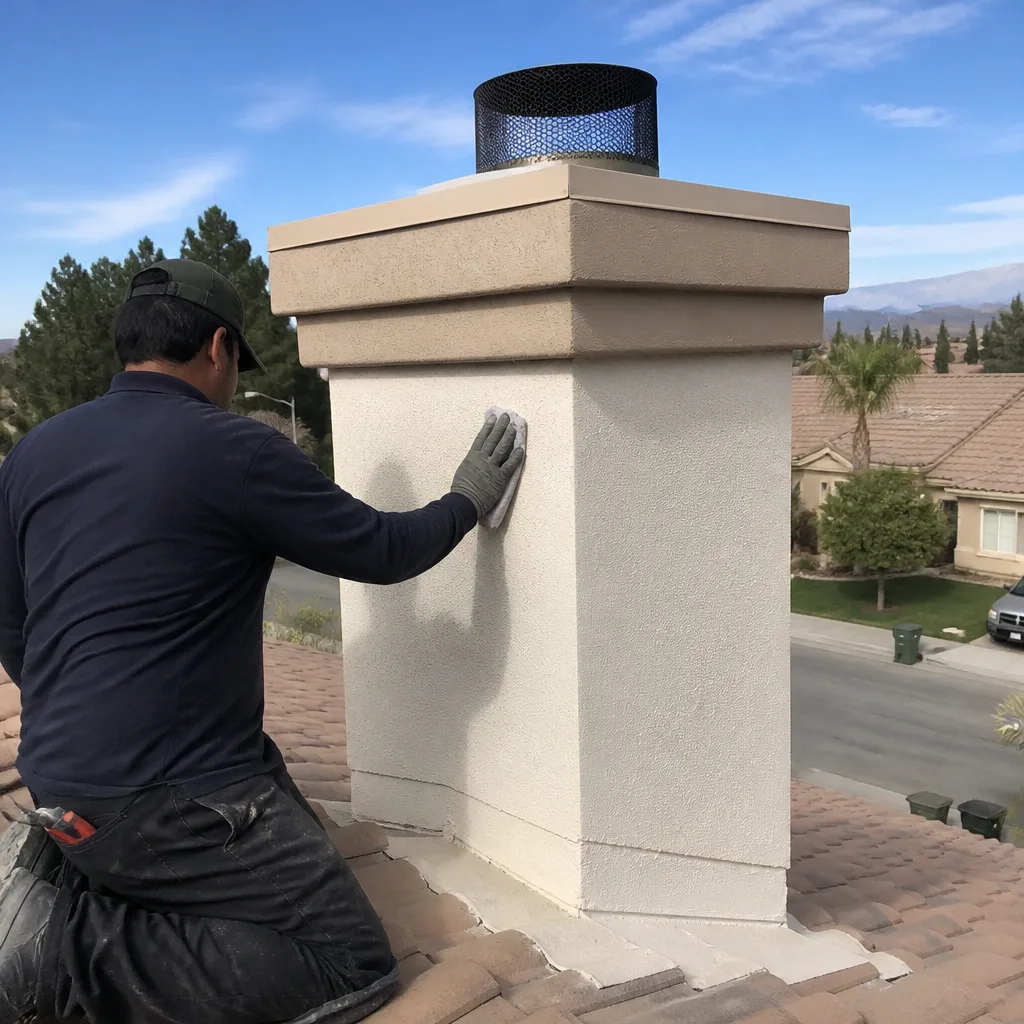 After
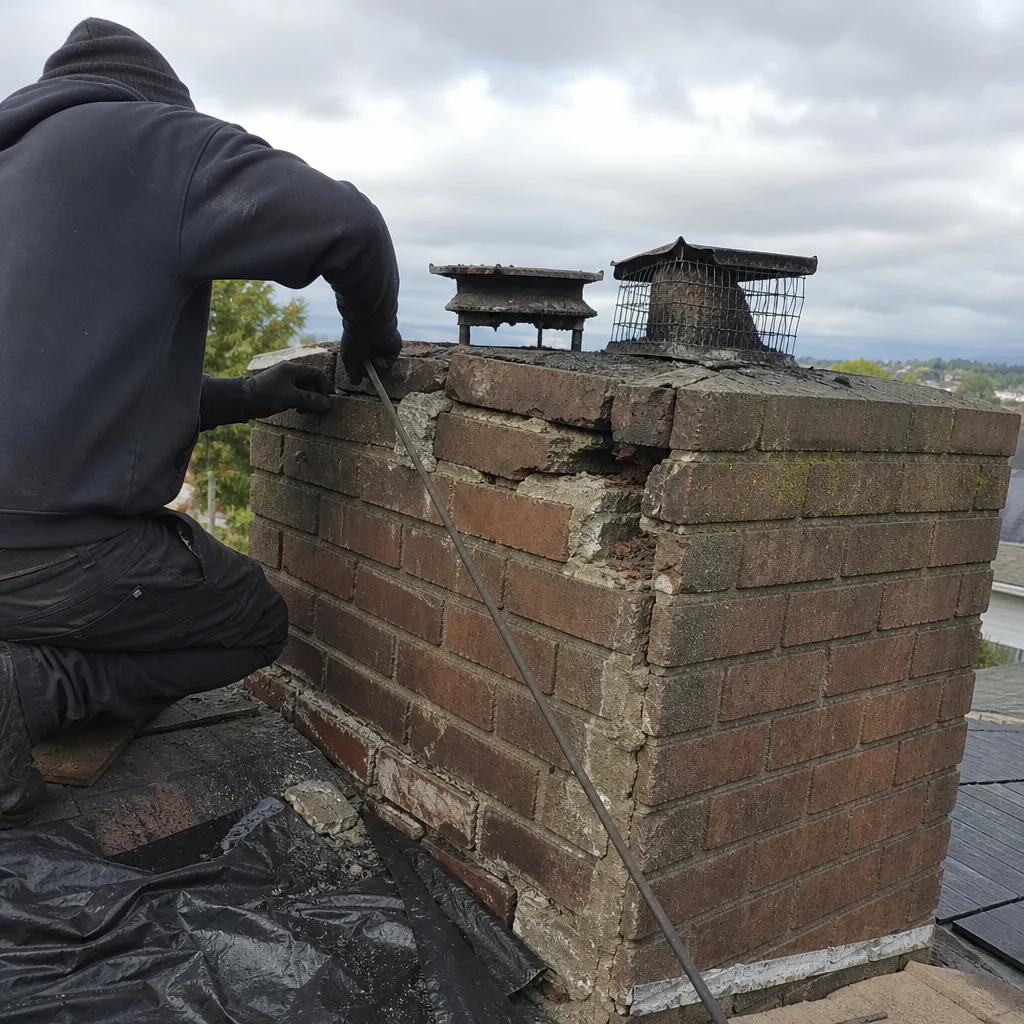 Before
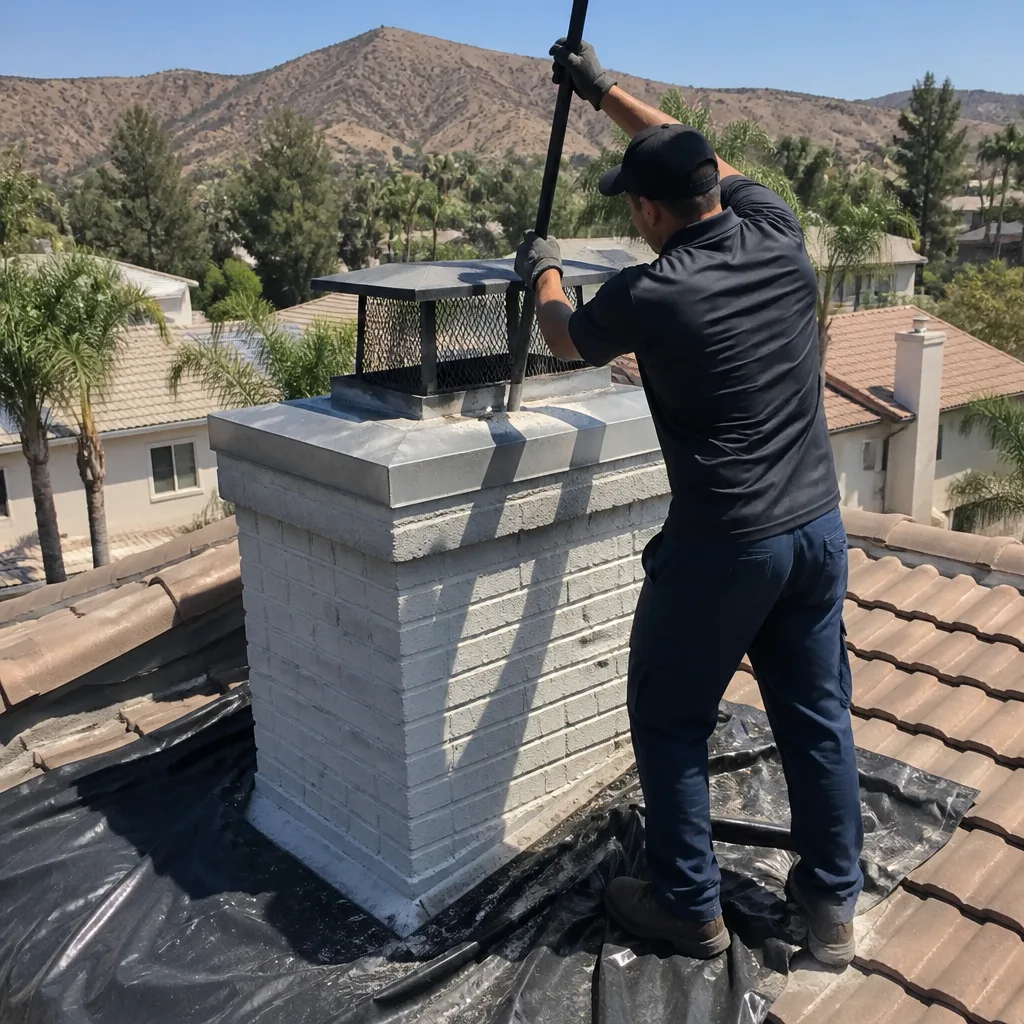 After
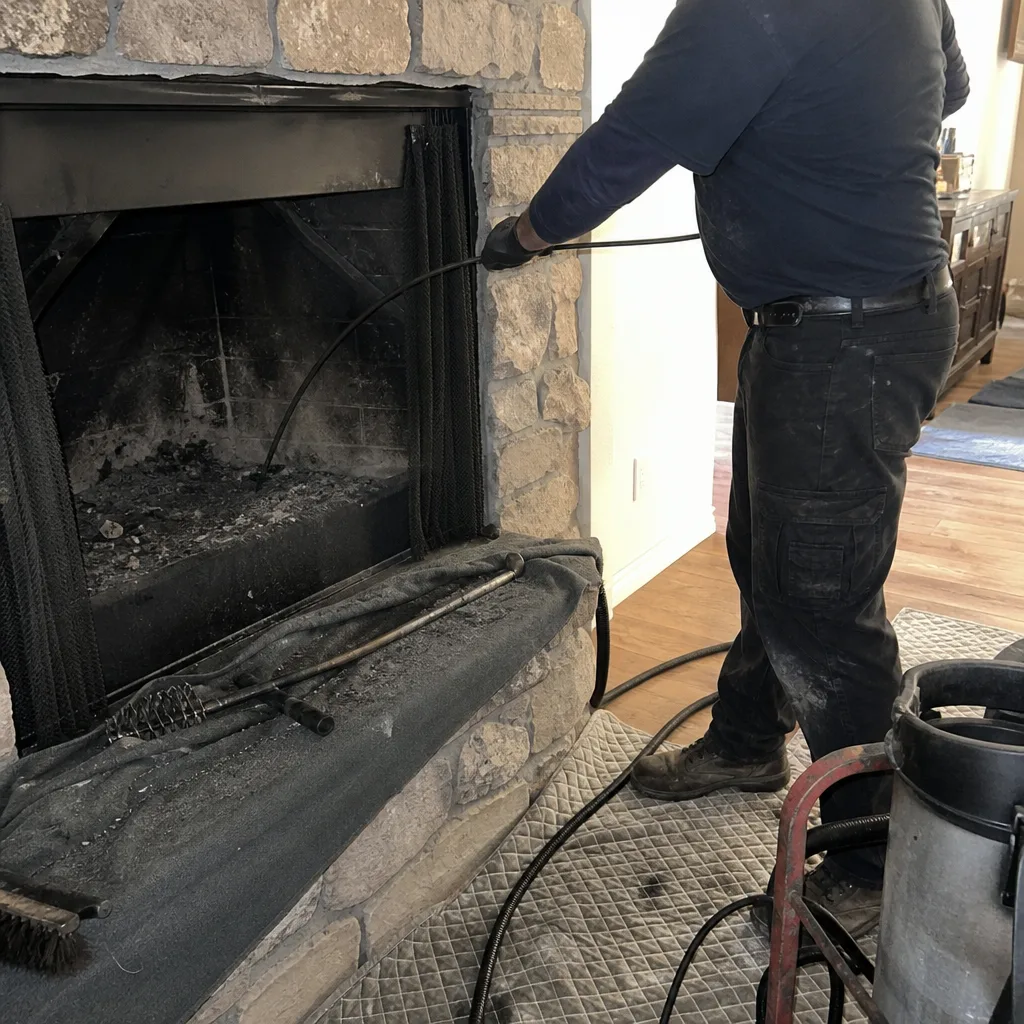 Before
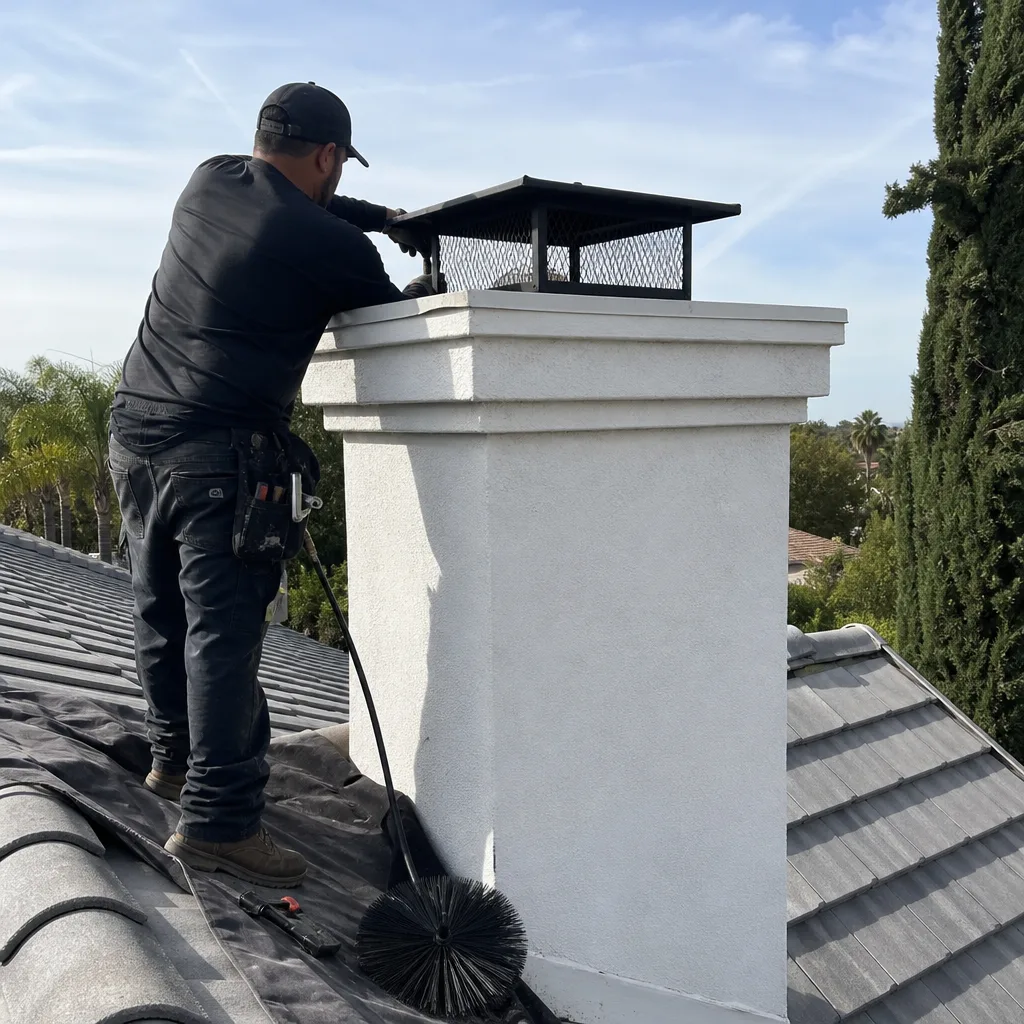 After
When to Call a Professional
Call a chimney professional whenever you observe: a roaring sound or visible flames during fireplace use, smoke rollback into the room, persistent odor from the fireplace, evidence of animal activity, a CO detector triggering during or after burns, or any visible damage to the chimney cap, crown, or flashing. Also call after any chimney fire, no matter how minor it seemed, and before your first fire each season if you haven’t had an inspection in the previous 12 months. If you’re in Menifee and any of these apply, don’t wait. Chimney Sweep Menifee offers free estimates in Menifee, call (866) 538-1538, and we’ll give you a straight answer on what your chimney needs and what it doesn’t.
Frequently Asked Questions
A standard chimney sweep in Menifee typically runs between $180 and $320, depending on flue condition, creosote stage, and whether wildlife debris or blockages need removal. Stage 2 creosote removal, camera inspection add-ons, and cap replacement shift the total upward. The cost of not sweeping is far higher: a chimney fire repair in Menifee routinely exceeds $3,000, and a full liner replacement can pass $6,000. Call (866) 538-1538 for an exact quote, estimates are free.
The National Fire Protection Association recommends annual inspection, with sweeping as needed based on usage and creosote accumulation. For Menifee homeowners who burn wood regularly through the winter, annual sweeping is the practical minimum, and heavy users may need a mid-season sweep if creosote accumulates faster than expected. Better to sweep early than to sweep an emergency.
It depends entirely on the condition of the existing liner. Moderate cracking and joint separation can often be addressed with HeatShield resurfacing, a ceramic coating that restores the flue’s integrity without full replacement. Severe damage, collapsed sections, or liners that have separated from the masonry require replacement. We don’t recommend liner work in Menifee without showing you camera footage of the damage, because you should know exactly what’s going into your flue and why. Call (866) 538-1538 for a camera inspection and an honest recommendation.
The creosote that builds up during regular burning becomes harder and more flammable with each season. Stage 2 creosote ignites under normal fireplace temperatures, and by the time you reach Stage 3, you’re one hot fire away from a chimney fire. Skipping a sweep doesn’t save money; it defers a small cost into a potentially large one, and it creates a safety hazard in the meantime. The same applies to dryer vents: one lint load too many and you have a fire inside the wall. Call (866) 538-1538 to get on the schedule before burn season.
Menifee’s combination of Santa Ana wind events, low humidity, and wildfire-adjacent geography creates elevated risk, particularly for ember intrusion. The wind conditions that drive wildfires also drive embers into unprotected chimneys, and the dry climate means roofing and structural materials ignite more readily once a fire starts. Homes in Menifee’s more exposed neighborhoods, especially those near open space, should treat ember-resistant screening as standard equipment. Our Chimney Sweep in Menifee service evaluates ember vulnerability as part of every visit.
Yes. The lint trap catches only the largest particles. Fine lint travels into the vent run, accumulates at bends and at the exterior termination, and over time creates a dense, highly flammable blockage. Dryer lint is one of the most combustible materials in your home, and a clogged vent forces hot air and lint to back up inside the dryer chassis. This is a fire-safety issue, not a drying-performance issue. We treat Dryer Vent Cleaning in Menifee as part of the same combustion-exhaust safety discipline as chimney work, because the failure mode is identical: flammable material accumulating in a vent that’s supposed to carry heat and particles out of the home.
The Bottom Line
Chimney emergencies in Menifee are predictable, and predictability is an advantage if you act on it. Stage 2 creosote removal, damper seal verification, and ember-resistant cap screening prevent the three most common emergencies: chimney fire, CO intrusion, and blockage. What to do in the first 60 seconds of a chimney fire is straightforward: call 911, close glass doors, evacuate, and don’t close the damper or spray water into the flue. Documentation matters at claim time, and a service record is your best evidence of diligence. The gap between a maintained and unmaintained Menifee chimney isn’t a minor difference. It’s the difference between a contained incident and a structure loss, and in Santa Ana country, that gap narrows fast when the wind picks up.
Written by the team at Chimney Sweep Menifee, serving Menifee since 2011.