
Last updated November 2, 2026
 Sweep & inspection
 Caps & crowns
 Flue relining
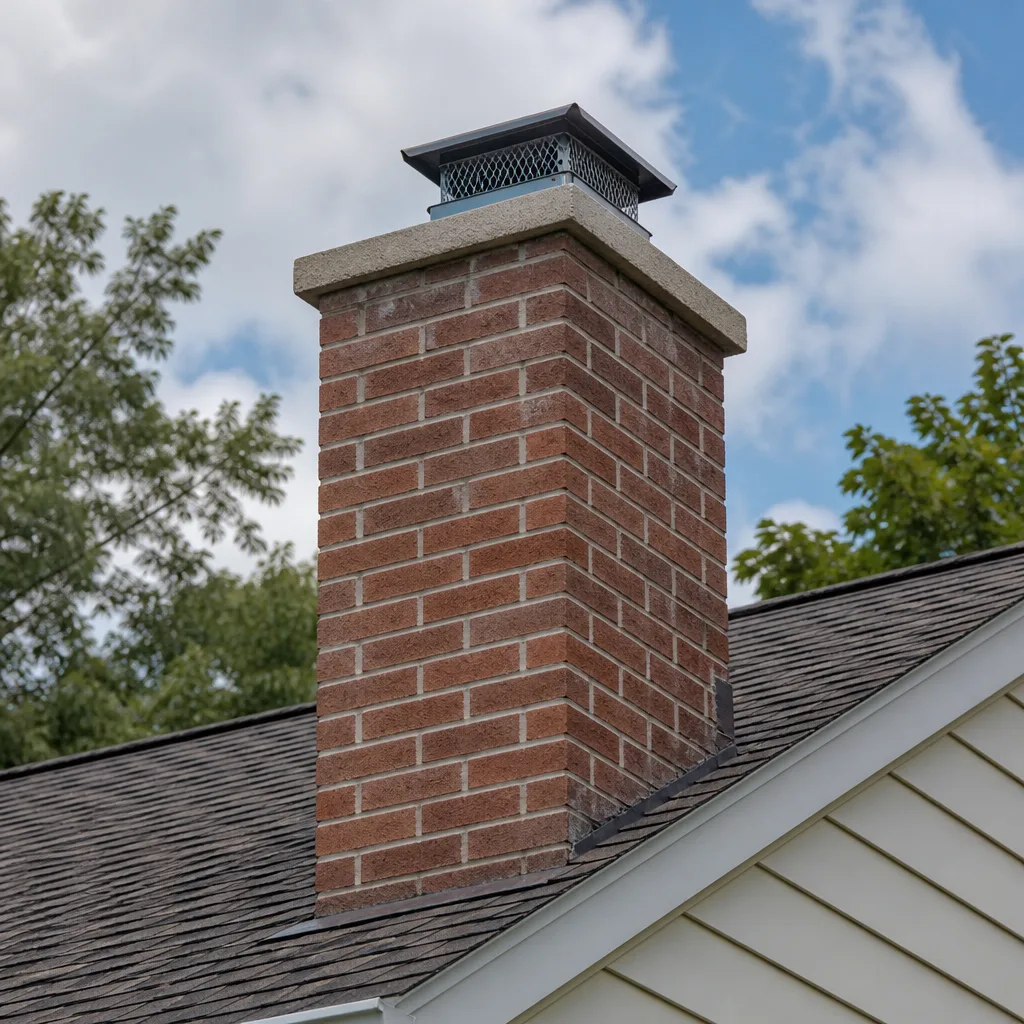 Masonry repair
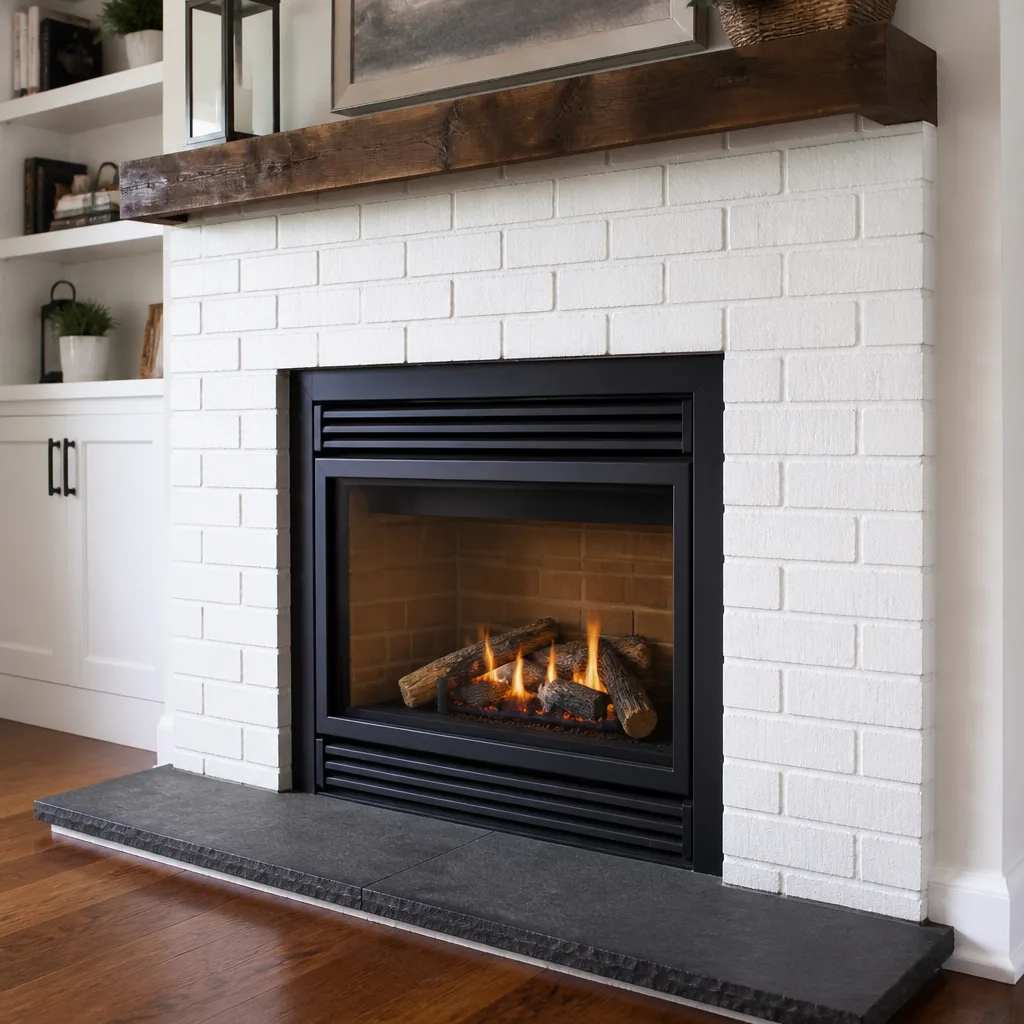 Gas fireplace service
Level 1 sweep and inspection to the NFPA 211 annual standard - flue, crown, cap, and flashing checked and photographed
Chimney sweep logs do not sweep chimneys. They loosen some creosote - which then falls where a brush and vacuum still have to collect it.
Chimney Sweep Maintenance Checklist for Menifee Homeowners
Most chimney maintenance checklists read like they were written for a house in Vermont. Menifee homeowners don’t deal with ice dams, frozen caps, or moisture-soaked masonry. What we see instead is a completely different failure profile: clay tile liners cracked from sudden high-heat burns after months of dormancy, galvanized caps oxidizing from relentless UV exposure, and mortar joints spalling because Menifee’s temperature swings force expansion and contraction cycles that northeastern chimneys never experience. This checklist is built around those specific failure points. You’ll learn what to check each season, what damage looks like in the Inland Empire’s dry climate, and when a visual inspection crosses the line into work that requires a trained technician.
Styles & brands we work with
- Sweep & inspection
- Caps & crowns
- Flue relining
- Masonry repair
- Gas fireplace service
Quick Answer
A Menifee homeowner should perform a visual chimney inspection twice a year (October and March), schedule a Chimney Sweep after every cord of wood burned or at minimum once per burning season, and watch for three regional warning signs: white powdery mortar joints (spalling), rust-colored streaking on the cap or chase cover, and a smoke shelf with more than 1/8 inch of dark, flaky creosote. If the chimney hasn’t been swept in over two years, or if you notice any of these signs, call a professional before the next fire.
Table of Contents
- Why Menifee Chimneys Fail Differently
- The Seasonal Maintenance Calendar for Menifee
- The DIY Visual Inspection Checklist
- What Normal Soot vs. Concerning Creosote Looks Like
- Component Lifespan Benchmarks: Liners, Caps, and Mortar
- The Dryer Vent Connection: Why It Belongs on the Same Checklist
- Common Mistakes to Avoid
- When to Call a Professional
- Frequently Asked Questions
- The Bottom Line
Why Menifee Chimneys Fail Differently
Menifee sits in a transitional climate zone that punishes chimney components in ways a homeowner in coastal San Diego or the Pacific Northwest will never see. The Inland Empire gets 110-degree summer days and near-freezing winter nights. That’s a 70-degree daily temperature swing during peak season, and it means the exterior masonry and metal components expand and contract dramatically every single day. Mortar joints crack. Galvanized steel caps oxidize. Clay tile liners, which are brittle to begin with, develop hairline fractures that widen with each thermal cycle.
Here’s the counterintuitive part: moisture is rarely the primary culprit in Menifee chimney failures. In humid climates, water intrusion is the enemy. Here, it’s dryness combined with heat stress. A galvanized cap in Menifee doesn’t rust from the inside out due to trapped moisture. It oxidizes from the outside in because UV radiation breaks down the zinc coating, and then the arid air accelerates surface corrosion once bare steel is exposed. That’s why we specify Chimney Repair in Menifee materials differently for this market. Galvanized steel has a shorter service life here than it does in coastal climates. Stainless steel and powder-coated aluminum hold up significantly better under sustained UV load.
The second Menifee-specific failure mode is creosote behavior. Because our burning seasons are shorter and often intermittent, homeowners frequently build small, hot fires on cold nights rather than long, steady burns. Those hot fires push the flue temperature up quickly, then the fire dies and the flue cools rapidly. That thermal shock cycle is exactly what cracks clay tile liners. And the creosote that does form tends to be the harder, more glazed type because the flue never sustains the low-and-slow temperatures that produce fluffy, easily-removed creosote. For help diagnosing these issues, see our Chimney Sweep Troubleshooting: Common Problems and How to Fix Them. Glazed creosote is harder to remove and more likely to ignite.
The Seasonal Maintenance Calendar for Menifee
Menifee’s climate means you don’t need a year-round chimney maintenance routine the way a homeowner in Minnesota might. But you do need to hit four specific windows. Here’s the month-by-month breakdown calibrated to our actual burning calendar.
October: Pre-Fire-Season Inspection
- Visual exterior check. Walk around the house and look at the chimney from all four sides. Check for cracked or missing mortar joints, white powdery deposits on brick faces (efflorescence from spalling), and rust streaking on the cap or chase cover. In Menifee, October is when you’ll first notice summer damage because the low sun angle makes surface defects easier to see.
- Interior smoke shelf check. Use a flashlight and a mirror to look up from the firebox toward the smoke shelf. If you see more than 1/8 inch of dark buildup, schedule a sweep before the first fire.
- Damper function test. Open and close the damper fully. If it sticks, squeaks, or doesn’t seal, the first fire of the season will push smoke back into the room. A frozen damper is also a sign that creosote or animal debris has accumulated on the mechanism.
- Cap and spark arrestor inspection. Check that the cap is still seated properly and the mesh spark arrestor isn’t clogged. In Menifee, bird activity picks up in fall, and a compromised spark arrestor is an open invitation for nesting.
January: Mid-Season Burn Check
- Creosote thickness check. After the holidays, when you’ve burned a half-cord or more, check the smoke shelf again. If buildup has exceeded 1/8 inch, schedule a mid-season sweep. Heavy holiday burning produces more creosote than any other period because fires are larger and the flue is running hot for extended sessions.
- Smoke test. On a cold morning, light a small piece of newspaper and hold it near the damper opening. If the smoke doesn’t draw upward immediately, you have a draft problem. In Menifee, this is often caused by a cold chimney, but if the problem persists after the flue warms up, it’s a blockage or a damper issue.
- Odor check. If you smell a campfire-like odor in the house when the fireplace isn’t in use, that’s creosote off-gassing. It means the buildup has reached a point where it’s releasing volatile compounds even at room temperature. This is a fire-risk indicator and a sign you shouldn’t ignore.
March: Post-Season Assessment
- Full interior inspection. Once burning season is over, do a thorough visual inspection of the firebox, damper, smoke shelf, and as much of the flue as you can see. Look for cracked firebrick, deteriorated mortar joints in the firebox, and any areas where the clay tile liner appears to be flaking or spalling.
- Exterior mortar assessment. March is the best month to evaluate exterior mortar because winter temperature swings have just finished their worst work. Any new cracks that appeared during burning season will be visible now. If you see cracks wider than 1/16 inch, or mortar that crumbles when probed with a screwdriver, the joint needs repointing.
- Cap and chase cover check. Once the rainy season is mostly done, evaluate whether your cap and chase cover made it through winter intact. Rust streaking on the chimney below the cap tells you the cap is corroding and leaking metal oxides onto the masonry.
July: Off-Season Prep
- Block the damper opening. If you’re not using the fireplace all summer, consider installing a top-sealing damper or at minimum keeping the standard damper closed. This prevents warm air from escaping in summer and keeps animals out. In Menifee, July is when birds and squirrels are most active looking for nesting sites in chimneys.
- Check for animal activity. Look for signs of nesting: twigs, grass, or debris falling into the firebox, or animal sounds coming from the flue. If you suspect a nest, do not attempt to smoke it out or remove it yourself. Call a professional who can safely remove the obstruction and assess any damage.
- Evaluate whether the chimney needs any repair work before fall. If your March inspection turned up issues you deferred, July is the time to address them. Chimney repair companies in Menifee have more availability in summer, and getting the work done before October means you won’t miss any burning season days.
The DIY Visual Inspection Checklist
Not everything on a chimney maintenance checklist requires a professional. Here’s what any homeowner can inspect themselves, and what requires a trained eye and specialized equipment.
What You Can Check from the Ground
- Cap and chase cover position. The cap should sit flush and level on the flue or chase top. If you can see daylight or a gap, it’s not seated correctly. This is a visual check only; getting on the roof to fix it is professional territory.
- Mortar joint condition. Look for white, powdery residue on the brick faces. In Menifee this is the single most common sign of mortar joint failure. The white powder is mineral salts leaching out of deteriorating mortar, and it’s more visible in our dry climate than in humid regions where rain washes it away before you notice it.
- Rust streaking. Rust-colored streaks running down the brick or stucco below the cap or chase cover mean the metal component above is corroding. In Menifee’s arid environment, this is almost always UV-driven oxidation of galvanized steel rather than moisture-driven rust.
- Flue tile position. From the ground, you can sometimes see the top flue tile sticking out of the chimney crown. The crown should slope away from the flue, and the flue tile should be centered and intact with no visible cracks.
What You Can Check Inside the House
- Firebox brick integrity. Look for cracked or spalled firebrick. A spalled brick face is a sign that the brick has absorbed heat and moisture over years and the surface layer has popped off. If more than a few firebricks show damage, the firebox needs professional evaluation.
- Damper seal. With the damper closed, feel around the edges for air movement. If you can feel a draft, the damper isn’t sealing, and you’re losing conditioned air up the flue all year.
- Smoke shelf visibility. Use a flashlight and a handheld mirror to look up from the firebox toward the smoke shelf. You should see a clean shelf with minimal dark buildup. If you see more than 1/8 inch of material, or if the buildup looks shiny and tar-like, a sweep is overdue.
- Water stains on the ceiling around the chimney chase. If you see water stains or bubbling paint near the chimney, you have a flashing or chase cover leak that predates the visual damage on the chimney exterior.
What Requires a Professional
- Full flue inspection. No homeowner can inspect the entire flue from the firebox. A professional uses a camera inspection system to see the full length of the liner and identify cracks, gaps, or separated tiles that are invisible from above or below.
- Creosote measurement. If you see any shiny, tar-like creosote on the smoke shelf, that’s glazed creosote, and it’s both a fire hazard and extremely difficult to remove without professional equipment. The National Fire Protection Association says any glazed creosote accumulation requires removal.
- Rooftop evaluation. Climbing onto a roof to inspect the cap, chase cover, and crown is dangerous, especially on Menifee’s concrete tile roofs. Leave this to a professional who has the right safety equipment and knows how to walk a tile roof without breaking tiles in the process.
- Liner integrity assessment. If you have a clay tile liner and you’ve heard popping or cracking sounds during fires, or if your chimney is over 20 years old and has never had the liner inspected, the liner may be cracked. A professional can run a camera down the flue and show you exactly what’s going on.
What Normal Soot vs. Concerning Creosote Looks Like
Most homeowners can’t tell the difference between normal soot and dangerous creosote, and the distinction matters. Here’s what we look for during a Chimney Sweep in Menifee.
Normal soot is fine, powdery, and gray or dull black. It brushes off easily with a finger and has a consistency similar to fireplace ash. A light coating of soot is expected in any chimney that gets used, and it’s primarily a cosmetic issue. If you see this on the smoke shelf and the coating is less than 1/8 inch thick, your chimney is functioning normally and a sweep may not be urgently needed.
Concern-grade creosote is different. Stage 2 creosote is flaky and dark brown to black, and it looks like dried coffee grounds or coarse sand stuck to the flue walls. It doesn’t brush off easily. Stage 3 creosote is the dangerous form: it’s shiny, tar-like, and dark brown to black, and it resembles a glazed caramel coating. This is the form that builds up when flue temperatures fluctuate and combustion is incomplete, which is exactly what happens with the intermittent burning pattern common in Menifee.
The practical test: if you can scrape a little material off the smoke shelf with a finger and it crumbles like powder, that’s soot. If it’s sticky, gummy, or leaves a tar-like residue, that’s creosote, and a sweep should be scheduled before the next fire. Glazed creosote is the leading cause of chimney fires, and it burns at temperatures exceeding 2,000 degrees Fahrenheit.
One Menifee-specific factor worth noting: our dry climate means creosote doesn’t absorb moisture the way it does in humid regions. Moist creosote is actually less flammable than dry creosote. In our arid environment, the creosote that does accumulate is drier and more ready to ignite. That’s another reason a seasonal sweep is more important here, not less, despite the shorter burning season.
Component Lifespan Benchmarks: Liners, Caps, and Mortar
Every chimney component has a service life, and knowing those benchmarks helps you plan maintenance instead of reacting to failures. Here are the numbers we use when evaluating chimneys in Menifee.
Clay Tile Liners: 30-50 Years, Hardware Dependent
A properly installed clay tile liner can last 30 to 50 years, but that lifespan assumes normal use and proper installation. In Menifee, the lifespan is often shorter because of thermal shock. A clay liner that sees frequent hot-fire, cold-downtime cycles will develop cracks at the mortar joints between tiles, and those cracks widen over time. If your home is over 20 years old and the chimney has never had a camera inspection, the liner is past the point where you should assume it’s fine. A cracked clay liner allows heat and combustion gases to reach combustible materials in the chimney chase, and it’s the most common cause of chimney fires in older Menifee homes.
Stainless Steel Liners: 20-30 Years, Installation Dependent
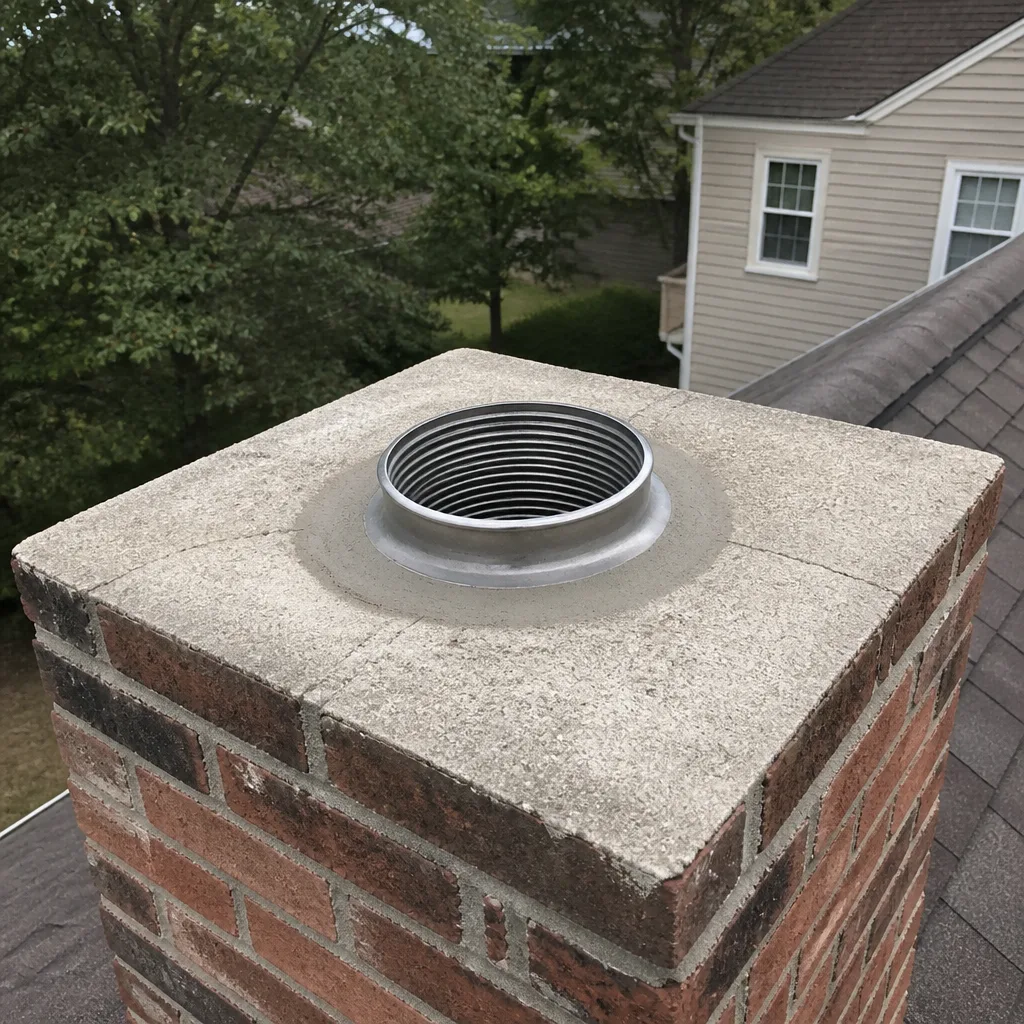
Stainless steel liners, including flexible systems like DuraFlex, have an expected service life of 20 to 30 years when properly installed. The liners themselves rarely fail from corrosion in our dry climate. What fails is the installation, particularly the top plate seal and the connection at the appliance. If you have a stainless steel liner, the maintenance checkpoints are the top plate and cap every five years and the appliance connection every year.
HeatShield Resurfacing: 15-20 Years, Re-evaluate Annually
HeatShield is a ceramic-based resurfacing system that coats the interior of a damaged flue. It can extend a clay liner’s life by 15 to 20 years when applied correctly. After application, we recommend an annual visual inspection of the resurfaced flue for the first three years, then every two years after that. The material bonds to the existing flue walls, and the most common issue is delamination if the original surface wasn’t properly prepared. In Menifee’s dry climate, the ceramic material cures more reliably than in humid regions, which is a regional advantage.
Galvanized Caps and Chase Covers: 5-10 Years in Menifee
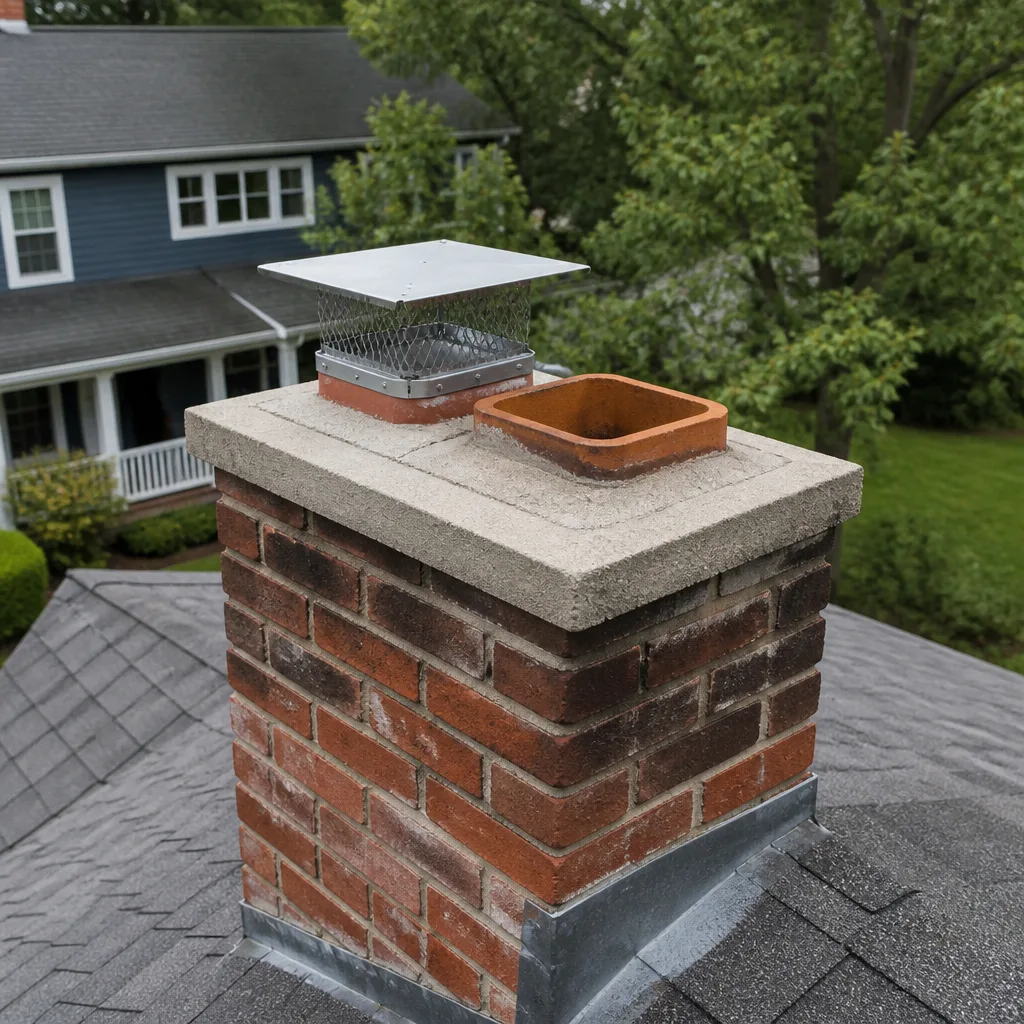
Galvanized steel caps and chase covers have a shorter service life in Menifee than in most other climates. UV exposure degrades the zinc galvanization in five to ten years, and once the zinc is gone, the bare steel oxidizes rapidly. If your cap or chase cover is galvanized and older than seven years, it’s worth having it evaluated. Replacement with stainless steel or powder-coated aluminum typically doubles or triples the remaining service life relative to galvanized. For guidance on selecting quality components, read our Choosing the Right Chimney Cleaning Brand: A Buyer’s Guide for Menifee. We specify Gelco caps and Famco venting components for this reason; they’re built for the sustained UV exposure and temperature swings common in the Inland Empire.
Mortar Joints and Crowns: 20-30 Years, But Degrade Faster in Arid Climates
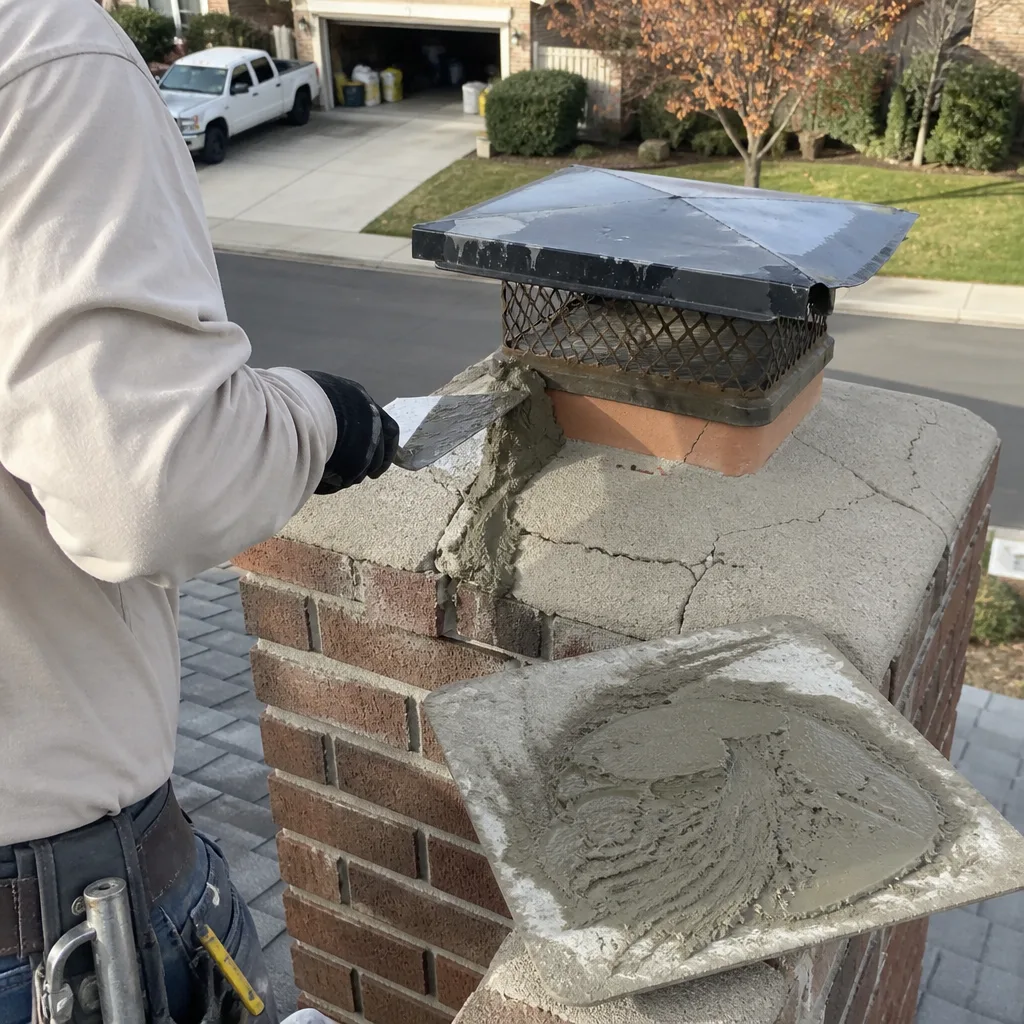
Exterior mortar joints typically last 20 to 30 years, but Menifee’s temperature swings accelerate the cycle. The daily expansion and contraction of brick and mortar causes micro-cracking that eventually becomes visible. Once mortar joints start showing white efflorescence or crumbling, the degradation accelerates because water and debris get into the voids and widen them. A chimney with spalling mortar joints in Menifee is a structural issue, not just cosmetic, and repointing is the standard repair. The crown, the concrete slab at the top of the chimney, follows a similar timeline. Crowns crack from thermal movement, and any crack wider than 1/16 inch allows water and debris into the chimney structure.
The Dryer Vent Connection: Why It Belongs on the Same Checklist
Most chimney maintenance checklists stop at the fireplace, which is a mistake. Your clothes dryer vents combustion byproducts and flammable lint through a duct system that has the same failure modes as a chimney: restricted airflow, flammable buildup, and a heat source. The National Fire Protection Association reports that dryer vent fires account for roughly 15,000 structure fires per year in the United States, and almost all of them involve lint accumulation that a homeowner couldn’t see.
If you’re maintaining your chimney, your dryer vent deserves the same attention. The lint that accumulates in a dryer vent is drier and more flammable than almost any creosote you’ll find in a chimney. Dryer Vent Cleaning in Menifee is one of the core services we provide, and it’s treated as a fire-safety service, not a convenience add-on. The same principle applies: you can’t see the hazard from outside, and the only way to know if a vent needs cleaning is to inspect it.
For Menifee homeowners, the practical checklist item is this: if you haven’t had your dryer vent cleaned in over a year, or if your dryer is taking longer than 40 minutes to dry a normal load, the vent is restricted. Lint accumulates faster in our dry climate because static electricity is higher in low-humidity environments, which makes lint cling to vent walls more readily. A single service visit can cover both the chimney and the dryer vent, which is the most efficient way to stay ahead of both combustion-exhaust hazards.
Common Mistakes to Avoid
- Assuming a chimney that isn’t used doesn’t need maintenance. Unused chimneys still deteriorate. Mortar joints still crack from thermal cycling, caps still oxidize from UV exposure, and animals still nest in unused flues. In Menifee, a chimney that hasn’t been used in years is often in worse condition than one that gets seasonal use because problems went undetected.
- Using a galvanized cap on a Menifee chimney as a long-term fix. Galvanized steel caps fail quickly in this climate. If a contractor quotes a galvanized cap as a permanent solution, they’re planning for you to replace it again in five to seven years. Stainless steel or powder-coated aluminum are the correct specifications for sustained UV exposure.
- Lighting a fire to “burn out” a bird nest or animal obstruction. Animal nests are combustible and burning them out is dangerous and illegal under many local codes. Plus, the smoke can back up into your house. Call a professional to remove the obstruction safely.
- Deferring a sweep because the fireplace “seems to work fine.” A chimney can function normally while accumulating dangerous levels of creosote on the upper flue walls, far out of your line of sight. The smoke shelf only tells you about the lower chimney. Only a professional inspection with a camera can see the full flue.
- Ignoring mortar spalling as “just cosmetic.” In Menifee, spalling mortar joints are structural deterioration. Each day of thermal cycling widens the gaps. Once the mortar is compromised, water and debris get into the brick structure, and the deterioration compounds. Spalling mortar is always a repair item, not an observation.
- Cleaning a dryer vent yourself with a brush from a big-box store. Those kits only reach the first few feet of the vent. The blockage is almost always further down the run, where the vent passes through walls or under floors. And improper cleaning can actually compress lint into a denser plug rather than removing it. Chimney Sweep Menifee home inspections use professional equipment that reaches the full vent run.
When to Call a Professional
Here’s the threshold: any time you see glazed creosote on the smoke shelf, hear cracking sounds during fires, notice crumbling mortar joints with visible gaps wider than 1/16 inch, or haven’t had the full flue inspected in over two years, you’ve crossed into professional territory. The same applies if you see rust streaking below the cap, if your dryer vent hasn’t been professionally cleaned in over a year, or if you suspect any animal nesting. These are not DIY items. Chimney Sweep Menifee offers free estimates in Menifee; call (866) 538-1538 and we’ll assess the situation with a camera inspection and give you a clear, photo-documented report before any work is recommended.
Frequently Asked Questions
After every cord of wood burned, or at minimum once per burning season. In Menifee, the burning season is typically November through March, which means one professional sweep per year is the correct cadence for a wood-burning fireplace. If you burn more than a cord per season, or if you burn mostly soft woods like pine, you’ll need a mid-season sweep as well. Gas fireplace inserts should be inspected annually but usually only need a sweep every two to three years. Call (866) 538-1538 for an exact recommendation based on your usage patterns; estimates are free.
A standard chimney sweep in Menifee typically runs between $150 and $300 for a single-flue, wood-burning fireplace, depending on the level of creosote buildup and whether the chimney has any accessibility challenges. Gas inserts run toward the lower end; heavily glazed flues that require chemical treatment or mechanical removal are higher. We quote a flat price before any work starts, based on the inspection findings, so there are no surprises on the invoice.
Not necessarily. If the cracks are minor and the flue is otherwise sound, HeatShield resurfacing can seal the cracks and extend the liner’s service life by 15 to 20 years without a full liner replacement. If the structural integrity is too compromised, or if the flue is misaligned or separated, a new liner is the correct fix. The only way to know is a camera inspection. We’ll show you the footage and explain the options before recommending any work.
A chimney that isn’t maintained accumulates creosote, and dry creosote in a Menifee chimney is a fire hazard waiting for the right conditions. The first visible sign is usually a smoky fire or a persistent odor. The first serious consequence is a chimney fire, which can crack the liner and breach the chimney structure. After that, you’re looking at a full liner replacement or a masonry rebuild rather than a sweep and inspection. The cost difference between annual maintenance and deferred-major-repair is often ten to one or more.
You can perform the visual checks outlined in this guide, and we encourage you to do so. But no homeowner can inspect the full flue length, and the dangerous buildup is usually in the upper flue where you can’t see it. A professional inspection includes a camera run that documents the condition of every foot of the liner. If you’re comfortable with the visual exterior and firebox checks, a once-a-year professional inspection and sweep covers the rest.
Yes. A restricted dryer vent is a fire hazard with the same root cause as a dirty chimney: flammable material accumulating in an exhaust pathway that carries heat. Menifee’s dry air makes lint cling to vent walls more readily than in humid climates, so the accumulation rate is higher here. We recommend a professional dryer vent cleaning every 12 months for a household that runs the dryer three or more times per week. If you’re already scheduling a chimney sweep, the Chimney Sweep in Menifee visit can include the dryer vent in the same appointment.
The Bottom Line
A Menifee chimney maintenance checklist has to be built for Menifee’s climate. The inspections that matter most are UV damage checks on caps and chase covers, mortar spalling checks after winter temperature swings, and creosote thickness checks on the smoke shelf before and after burning season. Component lifespans run shorter here for galvanized metal and clay liners, and longer for stainless steel when properly specified. The maintenance schedule is straightforward: visual checks in October and March, a professional sweep after each cord burned, and an annual dryer vent cleaning. If you follow this calendar and act on what you find, you’ll avoid the expensive repair curve entirely. If you’re not sure what you’re looking at, call us; we’d rather tell you everything looks good than have you guess. For more guides & resources, visit our blog.
Written by the team at Chimney Sweep Menifee, serving Menifee since 2011.
See the difference
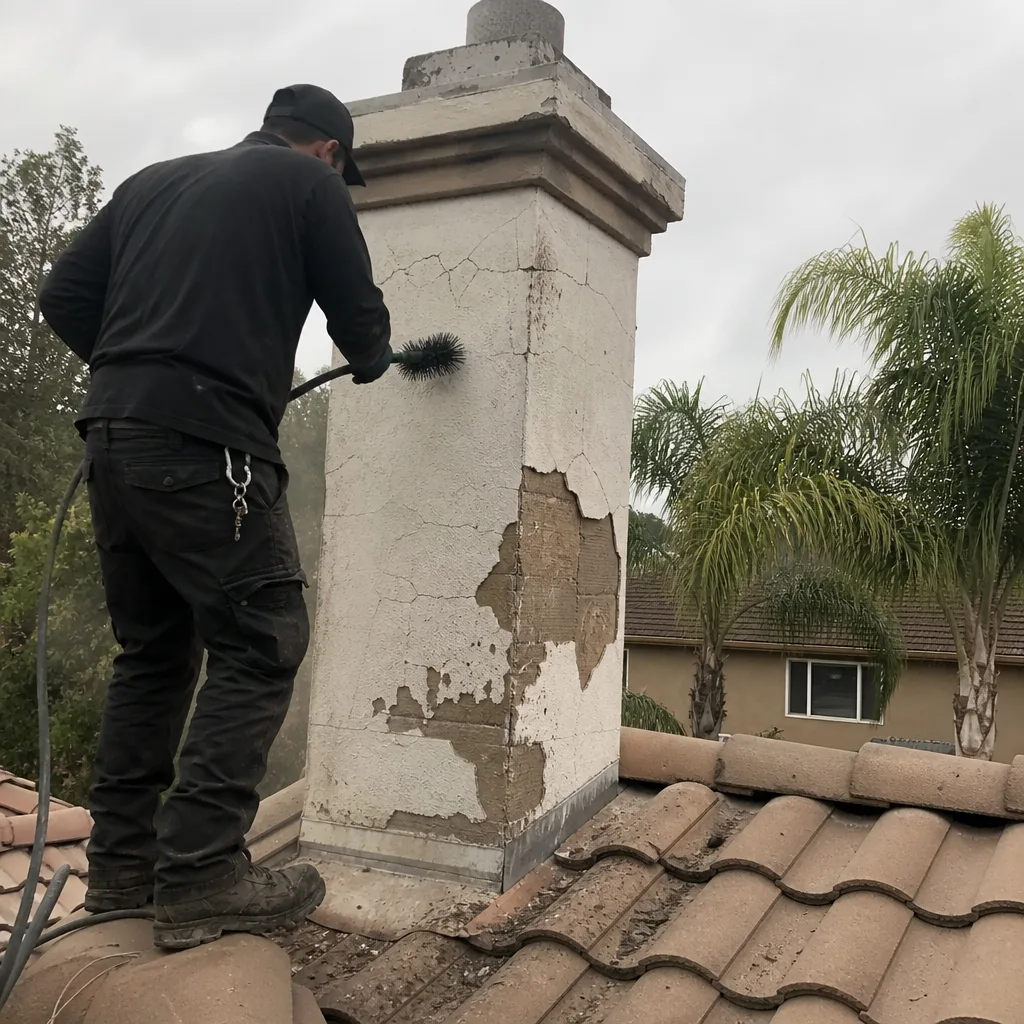 Before
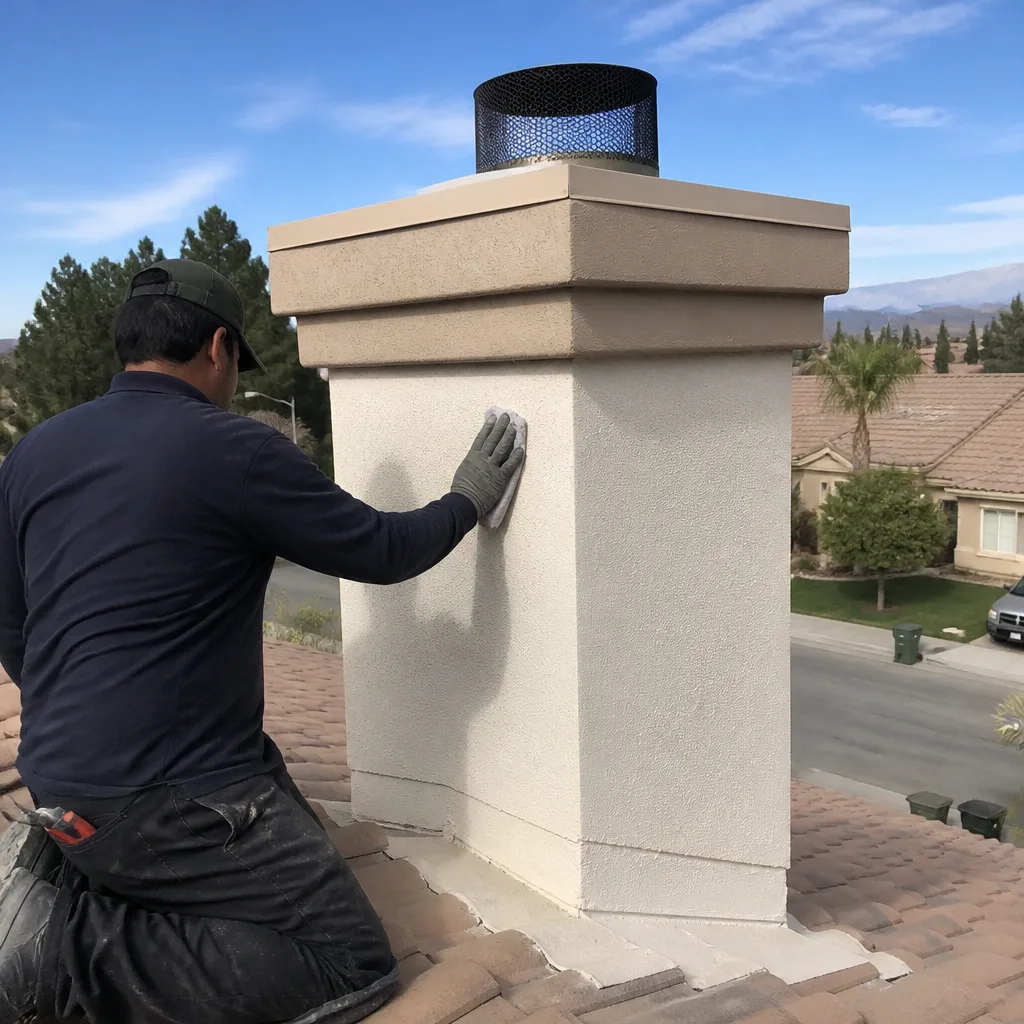 After
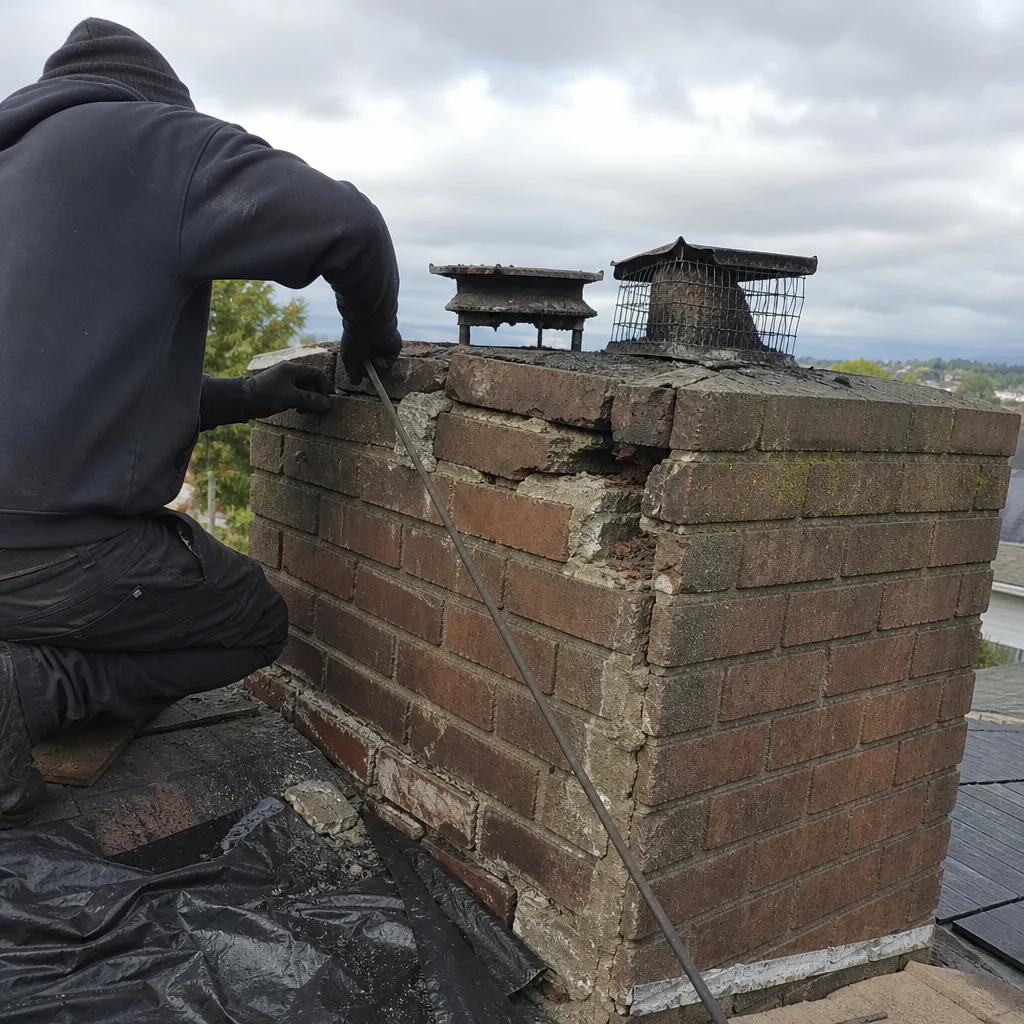 Before
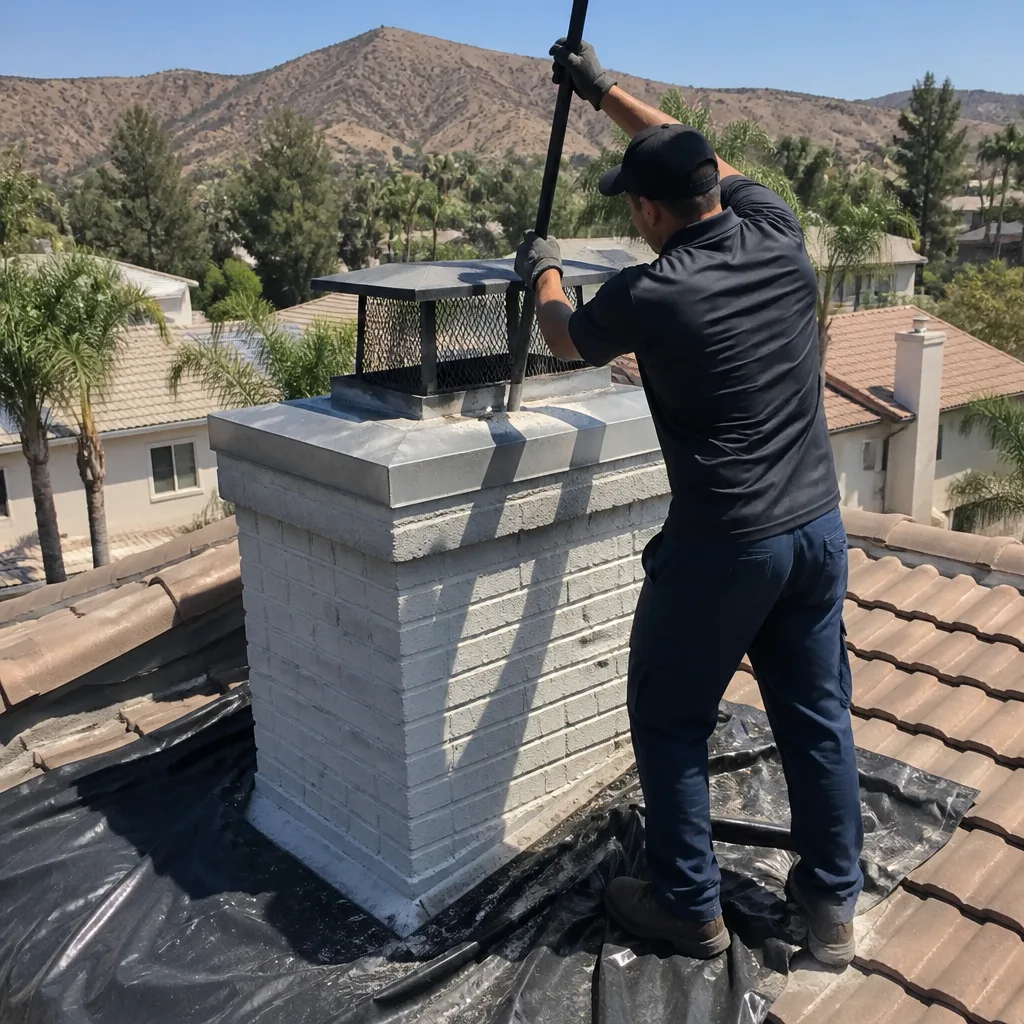 After
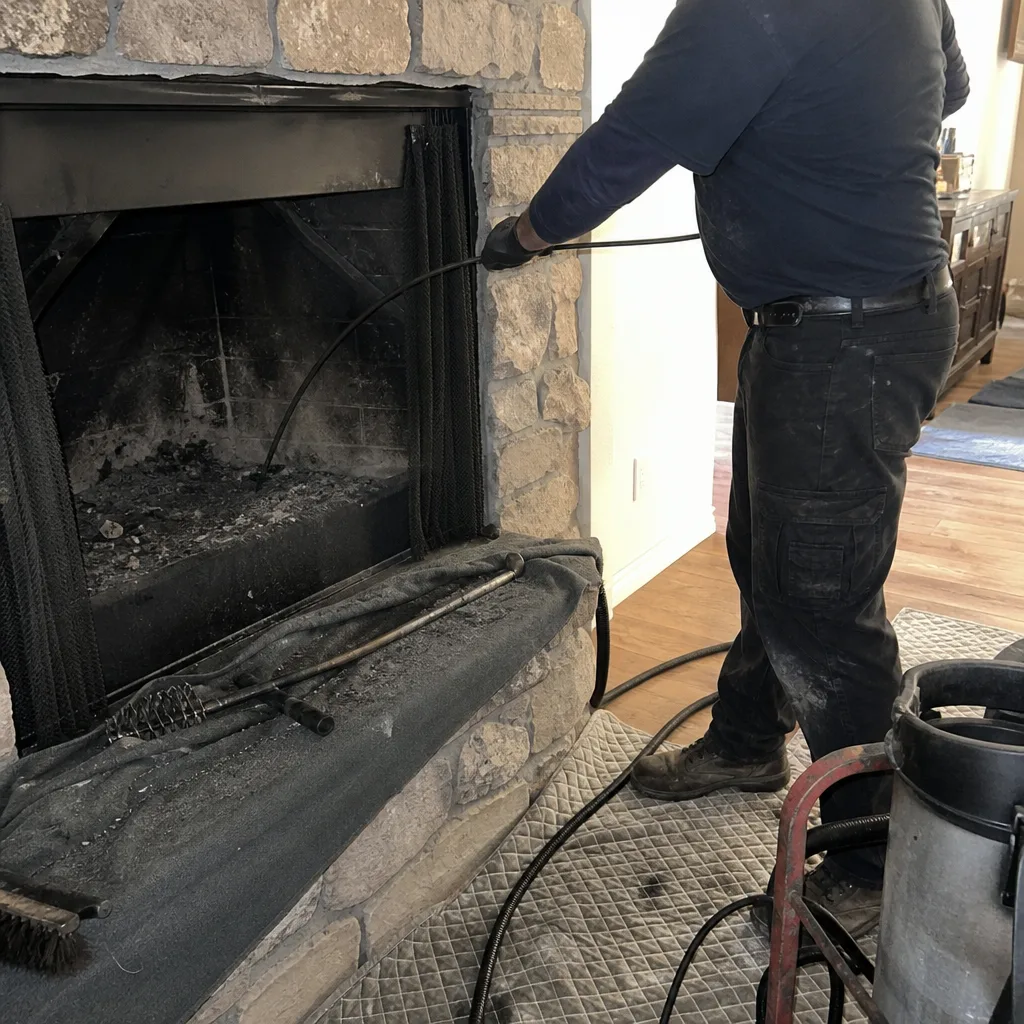 Before
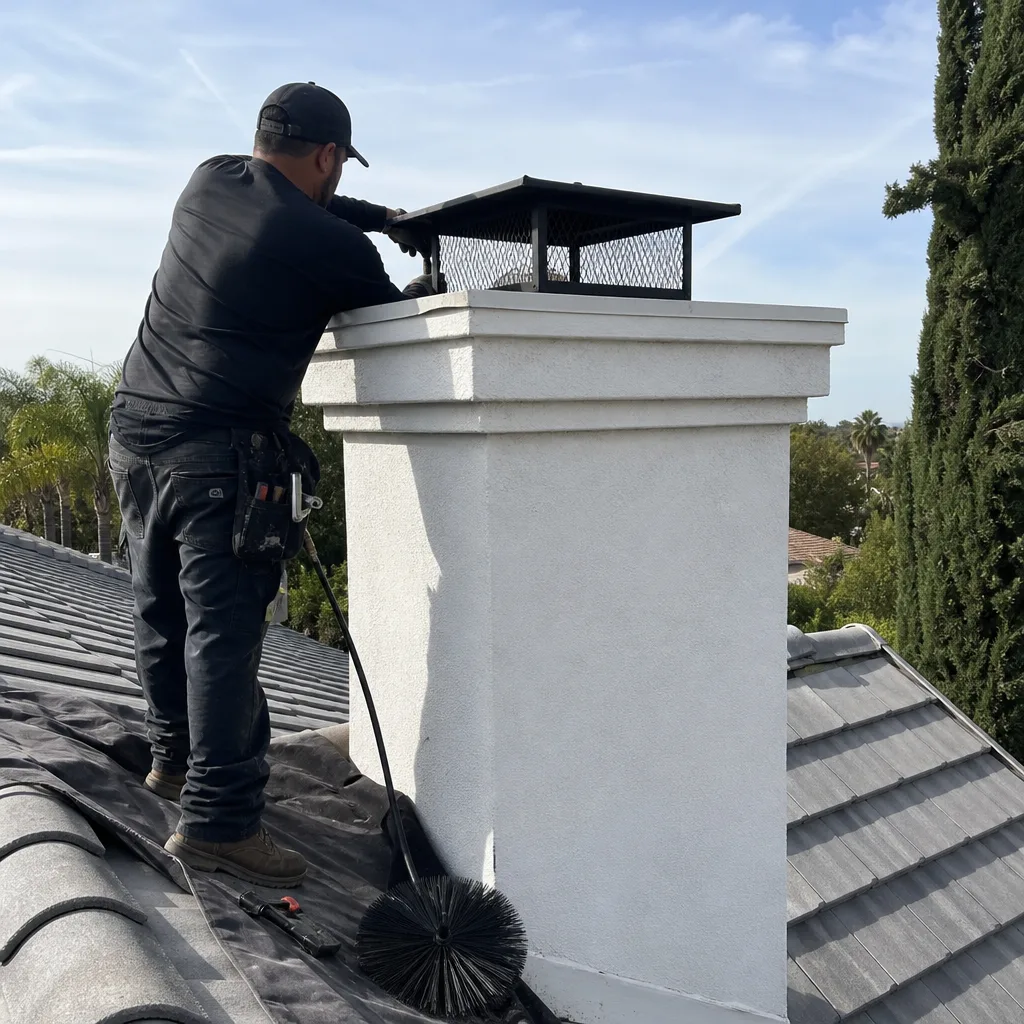 After