
Last updated November 2, 2026
 Sweep & inspection
 Caps & crowns
 Flue relining
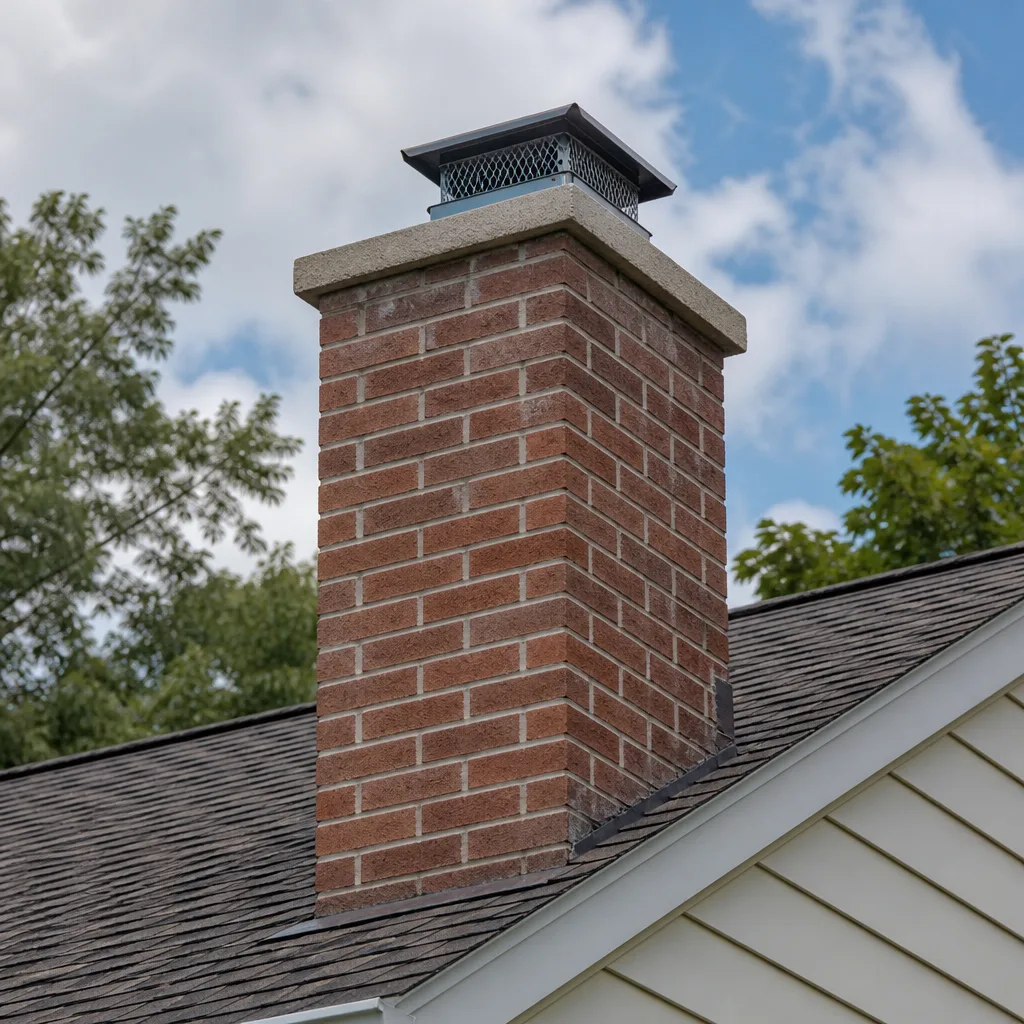 Masonry repair
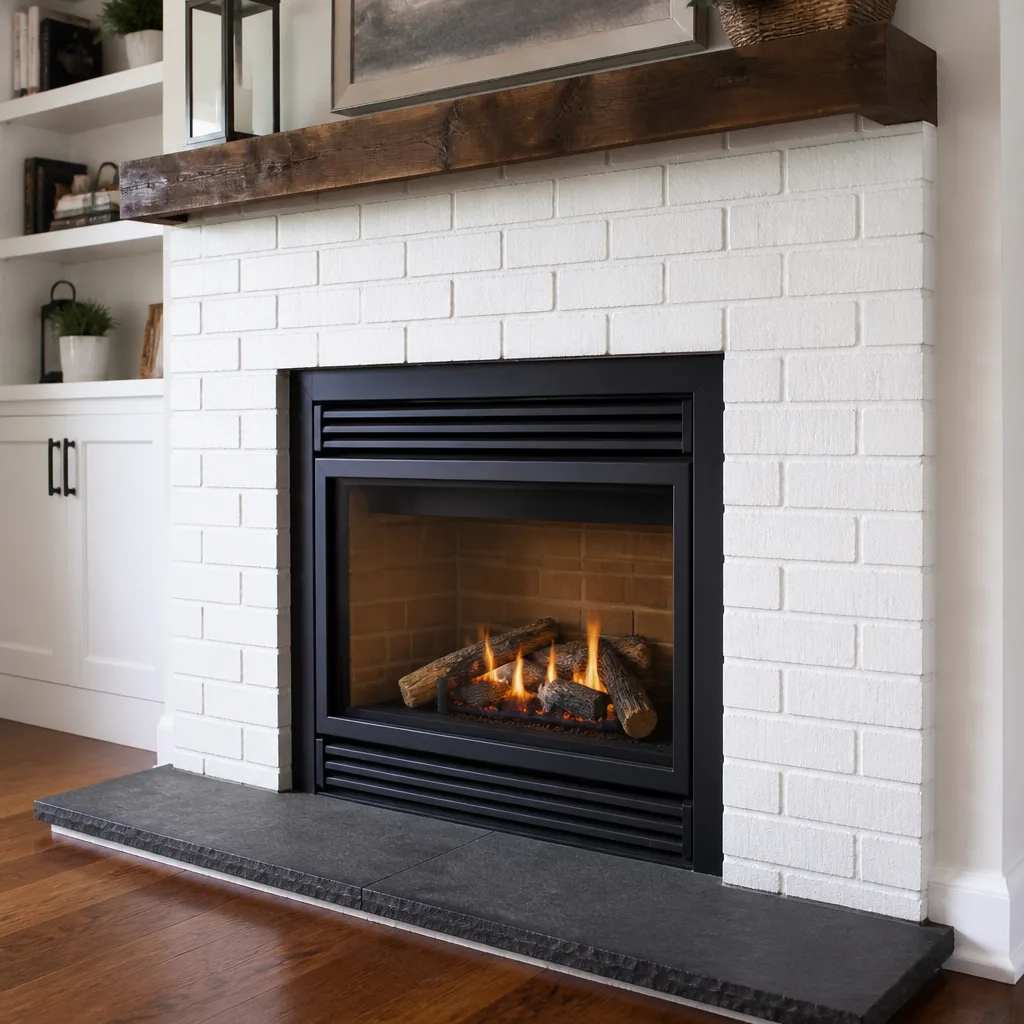 Gas fireplace service
Level 1 sweep and inspection to the NFPA 211 annual standard - flue, crown, cap, and flashing checked and photographed
Chimney sweep logs do not sweep chimneys. They loosen some creosote - which then falls where a brush and vacuum still have to collect it.
Chimney Cleaning Warning Signs: A Menifee Homeowner’s Reference Guide
A fireplace that smells like a campfire in July, when you haven’t burned a log since February, is more urgent than any soot stain you’ll ever see. That smell means your damper seal has failed and combustion gases are drifting back into your living space. Most Menifee homeowners wait for visible problems, but the signs that matter are quieter: odor profiles, draft behavior, and subtle firebox changes that signal liner failure, Stage 2 creosote, or blockage. This guide walks through what those signs look like, what they mean, and when they need attention this week versus next season. For more guides & resources, see our blog.
Quick Answer
The chimney cleaning warning signs that matter most for Menifee homeowners are persistent odors (campfire smell in warm weather, musty or acrid smells), draft reversal (smoke pushing back into the room), visible firebox deterioration (spalling brick, rust staining), and unusual sounds during or after burning. For a complete reference, see our Chimney Sweep Maintenance Checklist for Menifee Homeowners. Any of these indicate your chimney needs inspection within days, not months, because they point to creosote buildup, liner damage, or blockage rather than cosmetic wear.
Styles & brands we work with
- Sweep & inspection
- Caps & crowns
- Flue relining
- Masonry repair
- Gas fireplace service
Table of Contents
- The Four Odor Profiles That Pinpoint the Problem
- Draft Reversal: What Backward Airflow Tells You
- Visual Firebox Warning Signs You Should Not Ignore
- Popping and Cracking Sounds: Normal Expansion or Trouble?
- How Menifee’s Climate Accelerates Chimney Deterioration
- Same-Week Service or Scheduled Maintenance: A Decision Framework
- What a Professional Chimney Inspection Actually Examines
- Creosote Stages: Why Stage 2 Is the Silent Danger
The Four Odor Profiles That Pinpoint the Problem
Your nose is the most underrated diagnostic tool you own. Chimney problems announce themselves through distinct smells, each tied to a specific failure mode. We’ve walked into dozens of Menifee homes where the homeowner noticed a smell months before any visible issue, and the odor profile told us almost everything we needed to know before we even set up the ladder.
The campfire-in-July smell. This is the one most homeowners dismiss. You haven’t burned anything since winter, but on warm days the living room smells faintly of last season’s fires. This points to a damper that isn’t sealing, which allows warm air in the flue to sink back down and carry creosote odor with it. The fix is often straightforward: a damper adjustment or replacement. The bigger issue is that the same pathway letting odor down is also letting conditioned air escape up your flue year-round. In Menifee’s summer heat, that’s a real energy cost as well as a smell problem.
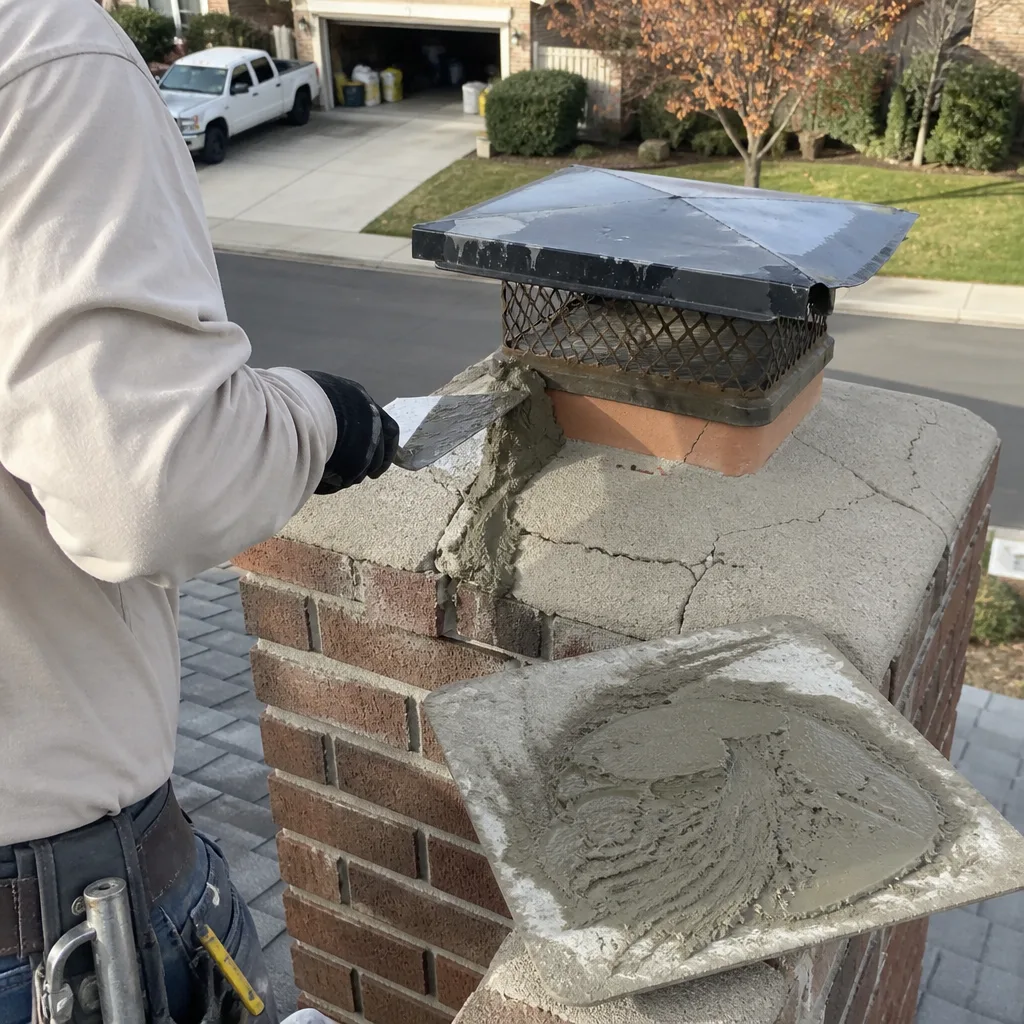
The musty or wet smell. This one usually shows up after rain. It’s damp, earthy, sometimes faintly moldy. What you’re smelling is water intrusion, typically through a failed chimney cap, cracked crown, or deteriorating mortar joints. Water in the flue mixes with creosote to create an acidic slurry that eats at liner and masonry. In Menifee, the seasonal rain patterns mean intermittent wetting and drying cycles that accelerate spalling. A wet-smelling chimney isn’t a cleaning issue; it’s a cap or crown issue that will get more expensive the longer it waits.
The acrid or sharp smell. If your chimney smells sharp, almost chemical, even when cold, that’s active creosote. Stage 2 creosote has a distinct tar-like sharpness, and it signals that last season’s burns produced heavy deposits that never got removed. This is the smell that precedes most chimney fires. It’s not subtle and it shouldn’t be waited out. A sweep removes the immediate risk, but if you’re getting Stage 2 buildup repeatedly, there’s usually a burn-practice or liner-surface issue underneath.
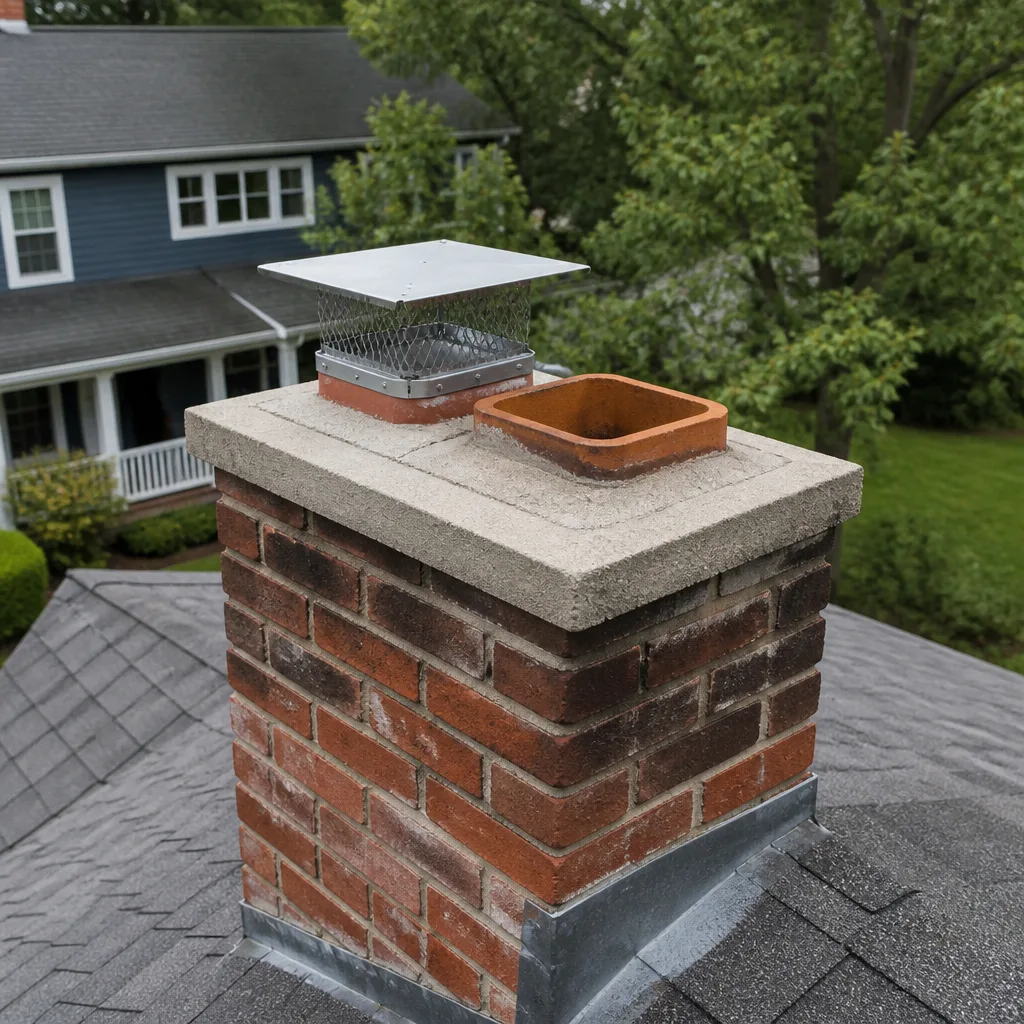
The sulfur-adjacent or organic smell. If there’s a smell you can’t quite place, something between wet animal and rotten egg, you likely have animal intrusion or organic debris in the flue. Birds, squirrels, and raccoons find chimneys with missing or damaged caps to be convenient nesting spots. Nests block airflow, which pushes smoke and carbon monoxide back into the house. Decomposing organic material has its own distinct smell. A proper cap with proper screening stops this entirely. We specify Gelco caps on chimney repairs in Menifee for exactly this reason: their screening is sized to keep out local wildlife while maintaining draft.
Draft Reversal: What Backward Airflow Tells You
Draft reversal means smoke flows into your living room instead of up the flue. It’s one of the clearest chimney warning signs a Menifee homeowner can observe, and it’s never normal. If you have to crack a window to get your fireplace to draw, or if smoke puffs back into the room when you open the door to add a log, something is wrong with the system’s airflow mechanics.
Three things typically cause it, and each tells you something different about your chimney:
- Blockage. A nest, collapsed liner section, or heavy creosote accumulation reduces the flue’s effective diameter. The same fire that used to draw fine now can’t get enough air moving. This is the most urgent cause because it’s also a carbon monoxide risk.
- Cap condition. A damaged or missing cap changes how wind interacts with the flue opening. Menifee’s Santa Ana wind events create specific downdraft patterns that a properly installed cap should deflect. When the cap is gone or the screen is clogged, those winds push straight down the flue.
- Negative house pressure. This one surprises people. Modern homes in Menifee, especially newer construction in areas like Audie Murphy Ranch or the newer developments off Scott Road, are built tight. Exhaust fans, dryer vents, and HVAC systems pull air out of the house, and when the house can’t get enough makeup air, it pulls down the chimney. The fix isn’t the chimney at all, it’s ventilation. But a professional who understands combustion exhaust should evaluate both, because the pressure problem and the chimney problem interact.
If you’re getting draft reversal on a regular basis, the responsible move is an inspection that looks at the full airflow path: cap, flue diameter, liner condition, damper seal, and house pressure. Our Chimney Sweep Troubleshooting: Common Problems and How to Fix Them breaks down each of these in more detail. Guessing at one of those without checking the others is how people end up paying for fixes that don’t work.
Visual Firebox Warning Signs You Should Not Ignore
Some chimney problems you can see if you know what to look for. The firebox, the area right around where the fire burns, is the most accessible diagnostic surface you have. Here’s what matters and what’s just cosmetic.
Spalling firebrick. Spalling means the surface of the firebrick is flaking, pitting, or crumbling away. It looks like the brick is shedding. This happens when water gets into the brick and expands during heating and cooling cycles. In Menifee, where winters are mild enough that chimneys go through fewer hard freeze-thaw cycles than mountain communities, spalling is more often caused by combustion-side heat stress than weather. Either way, spalled firebrick in the firebox means the refractory material is failing and can no longer protect the structure behind it. It’s a repair issue, not an aesthetic one.
White efflorescence on exterior masonry. If you see white, chalky deposits on the outside of your chimney, that’s efflorescence. It means water is moving through the masonry and carrying soluble salts to the surface. It’s not harmful by itself, but it’s a marker of water intrusion, and in Menifee’s climate, water intrusion into chimney masonry eventually means spalling, cracked crowns, and liner deterioration. A single white streak is worth investigating. Widespread efflorescence means the chimney’s water management has already failed.
Rust staining on the damper plate or firebox floor. Rust anywhere in the firebox means water is reaching metal components. The damper plate is usually the first place it shows. If your damper handle is stiff, the plate shows rust, or the firebox floor has reddish staining after rain, water is coming down the flue. That water is also washing creosote off the liner walls and carrying it into places it shouldn’t be. The rust itself is a symptom; the water is the problem.
One more firebox sign that gets dismissed: if the back wall of the firebox has a white or gray haze that won’t scrub off, that’s not ash. It’s the residue of incomplete combustion, and it means your fire is burning cooler than it should. Cooler fires make more creosote, and more creosote means more risk.
Popping and Cracking Sounds: Normal Expansion or Trouble?
Some sounds are normal. A fireplace ticking as it warms up is just metal expanding. A soft crackle from the wood itself is, of course, the point of having a fire. But there’s a line between normal expansion noise and something else, and it’s worth knowing where that line is.
Normal expansion sounds happen in the first 10 to 15 minutes of a fire. They’re rhythmic: tick, tick, tick. They come from the damper assembly, firebox panels, and flue liner heating up and settling into their hot dimensions. They fade as the fire reaches a stable temperature.
Warning-sign sounds are louder and less regular. A sharp crack or pop from the chimney structure, not the wood, can indicate a liner section shifting or a masonry joint failing under thermal stress. If you hear a pop that sounds like it came from inside the chimney itself, not the firebox, that’s worth noting. Creosote can also ignite in small amounts and make a sound like rain on a metal roof. If you hear that sound, and then it stops when you reduce the fire, you likely had a small creosote ignition, which is a warning shot. The chimney survives it, but the next one may not be small.
After-fire sounds matter too. If the chimney continues to make cracking or settling noises 30 minutes or more after the fire has gone out, that’s thermal contraction working on a system that already has structural weaknesses. Hairline cracks in masonry grow a fraction each cycle. In a chimney that’s already got water intrusion or spalling, those cycles matter more. One way to think about it: if the popping sounds are getting louder or more frequent season over season, something in the system is degrading. Normal expansion noise doesn’t change year to year. Deterioration does.
How Menifee’s Climate Accelerates Chimney Deterioration
Menifee has a specific climate profile that affects chimneys differently than coastal or mountain communities. Understanding this helps you understand why some chimneys here fail in predictable ways.
Menifee runs hot in summer and mild in winter, with occasional, concentrated rain events rather than long wet seasons. That combination means chimneys here go through long dry periods interrupted by sudden moisture loading. Masonry absorbs water during the rain, then dries quickly in the heat. That’s a wet-dry cycle, and it’s harder on mortar and brick than steady moisture because it moves salts through the material and creates crystallization pressure inside the pores.
The summer heat is also a factor in the flue itself. When a chimney sits unused for four or five months in Menifee’s summer, the creosote left over from winter baking cures. It hardens, loses moisture, and adheres more firmly to the liner walls. Stage 2 creosote, which is already tar-like and difficult to remove, becomes even more stubborn when it’s been baked all summer. This is why we recommend a sweep in spring, after the burning season ends, rather than waiting until fall. It removes the deposits before they cure in the Menifee heat.
Santa Ana wind events, which hit the Menifee area in fall and early winter, also matter for chimney performance. The high, dry winds create pressure differentials that make weak caps, damaged crowns, and marginal draft problems more visible. If your chimney only misbehaves on windy days, that’s a cap or crown issue, and the winds are doing the diagnostic work for you.
Same-Week Service or Scheduled Maintenance: A Decision Framework
Not every chimney warning sign requires someone on a ladder this week. But some do. Here’s a practical framework for deciding, based on what we advise Menifee homeowners when they call.
Same-week service. These signs mean you should stop using the fireplace and get an inspection scheduled within days:
- Smoke pushing back into the room during normal use, even occasionally
- An acrid, sharp creosote odor that persists when the fireplace is cold
- A campfire smell in the house during summer months when you haven’t burned anything
- Hearing a rain-on-tin-roof sound from the chimney during a fire
- Any visible smoke staining around the ceiling, walls, or mantel near the fireplace opening
- Rust staining that appears or worsens after a rain event
These are indications of active blockage, liner failure, or combustion-gas intrusion. They don’t self-resolve, and they don’t improve with time.
Scheduled maintenance. These signs mean you should book a sweep or inspection at your convenience, before the next burning season, but the house isn’t in immediate hazard:
- A thin layer of soot or minor creosote visible on the firebox walls after a season of burning
- Mild draft inconsistency only on very windy days, with no smoke intrusion
- Light efflorescence on exterior masonry with no cracking or spalling present
- A damper that’s slightly sticky but still seals adequately
- Routine annual maintenance when none of the urgent signs are present
If you’re unsure which category you’re in, that uncertainty itself is a data point. A professional inspection with a camera resolves it in under an hour, and it’s cheaper than guessing wrong. Chimney Sweep Menifee offers free estimates throughout Menifee, and our technicians will show you the camera footage so you can see exactly what’s happening in your flue before deciding anything.
What a Professional Chimney Inspection Actually Examines
When a trained chimney professional shows up at a Menifee home, the inspection follows a structured path. Knowing what that looks like helps you understand what you’re paying for and what findings mean.
A standard Level 1 inspection, which is what most annual service visits include, covers the readily accessible portions of the chimney. The technician checks the firebox for spalling and cracks, examines the damper for seal and operation, looks up the flue with a light, inspects the cap and crown from the roof, and checks the exterior masonry for water damage. If you’ve been burning regularly and haven’t changed fuels or appliances, this is usually sufficient.
A Level 2 inspection adds a camera scan of the flue interior. This is what we recommend when any of the same-week warning signs are present, or when a property has changed hands. The camera shows liner cracks, hidden creosote accumulation, deteriorated mortar joints between flue tiles, and blocked sections that a visual check from the top or bottom would miss. This is also what’s required after a chimney fire or any event that may have damaged the structure.
What matters most is that the inspection uses tools that see what the homeowner can’t. A flashlight and a mirror won’t find a cracked flue tile 15 feet down. A camera will. And if the camera finds liner damage, that’s where material choices matter. For flues with non-standard sizes or offsets, our sweep and inspection service in Menifee uses camera documentation so you see the same evidence our technician sees, before any repair recommendation is made.
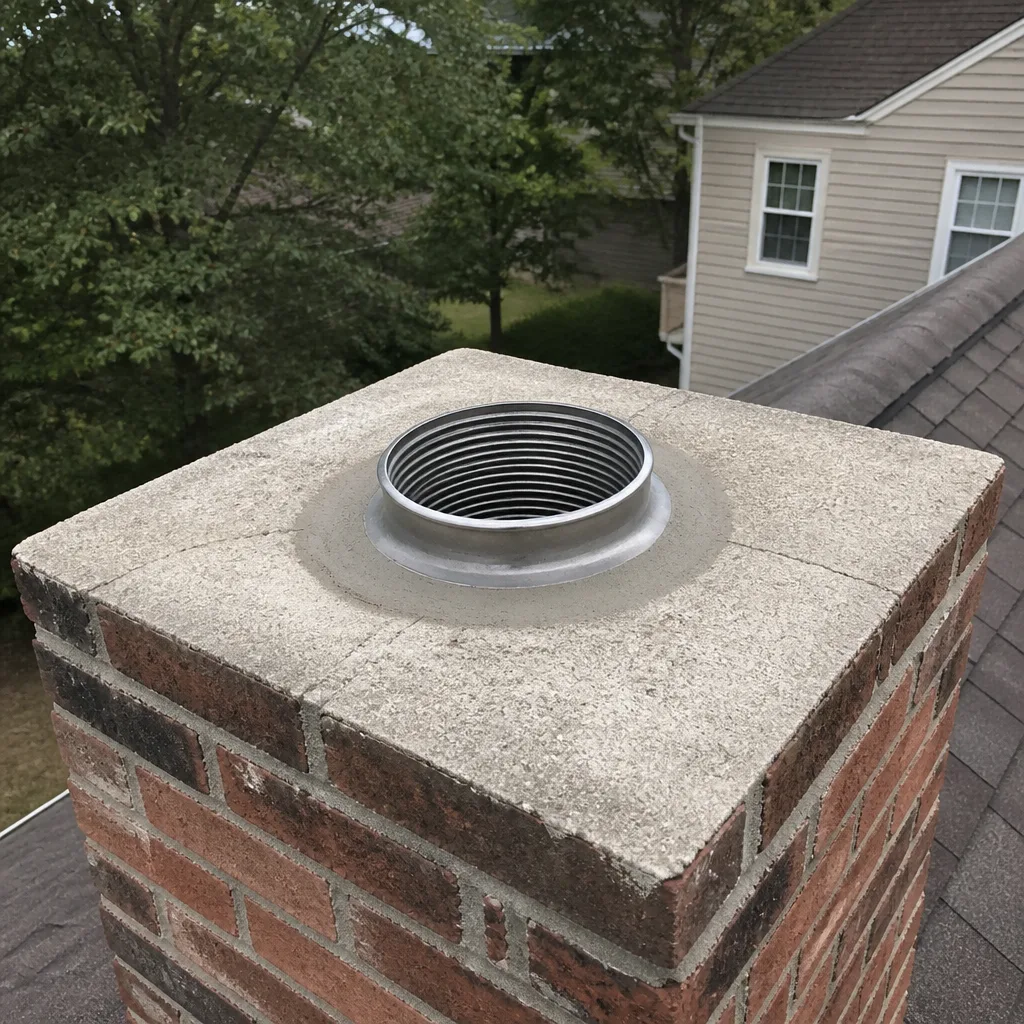
We specify HeatShield for resurfacing applications where the liner has surface deterioration but retains structural integrity. It’s a cerfractory material designed specifically for flue restoration, and it can extend liner life without full replacement. When a liner is too far gone for resurfacing, DuraFlex flexible liner systems allow us to reline flues with offsets and irregular dimensions that rigid liners can’t accommodate. The point is: different liner problems get different solutions, and the solution follows from what the camera actually shows.
Creosote Stages: Why Stage 2 Is the Silent Danger
Creosote is the residue left behind when wood smoke cools and condenses on the flue walls. It’s not one substance; it’s a spectrum, and the stages of creosote tell you how far along your chimney is toward a potential fire.
Stage 1 creosote is flaky, sooty, and relatively easy to remove with standard brushing. It’s what every wood-burning chimney produces, and it’s what a routine annual sweep addresses. This is normal wear.
Stage 2 creosote is where problems start. It’s a hardened, tar-like glaze that bonds to the flue wall. It doesn’t brush off; it requires mechanical removal with specialized tools or chemical treatment to break down. Stage 2 creosote is the danger most homeowners don’t see because it develops inside the flue, above the sightline from the firebox. It ignites at a lower temperature than Stage 1 and burns hotter. It’s the primary fuel source for chimney fires in Menifee homes that are swept on a less-than-annual schedule.
Stage 3 creosote is the full glaze: a hardened, shiny, tar-like coating that can be an inch thick or more. At this stage, the flue diameter is reduced, airflow is compromised, and a chimney fire is not just possible but likely under the right conditions. Stage 3 often requires chemical treatment over multiple visits before mechanical removal is even possible.
What pushes a chimney from Stage 1 to Stage 2 and 3 is primarily burn practice: burning unseasoned wood, burning at low temperatures, or choking the fire down overnight. The flue doesn’t get hot enough to keep combustion byproducts in gas form, so they condense on the walls. In Menifee, where winter nights can be cool enough for overnight burning but not cold enough to justify a large, hot fire, the practice of smoldering small loads overnight is a common creosote producer. If that’s your burning pattern, an annual sweep isn’t just recommended; it’s essential. Skipping it is how Stage 2 develops silently behind the scenes.
Common Mistakes to Avoid
- Burning unseasoned wood from local sources without checking moisture content. Wood sold in Menifee as “seasoned” often isn’t. Invest in a moisture meter; anything above 20% moisture content produces excess creosote regardless of how often you sweep.
- Ignoring a mild campfire smell in summer as “just how fireplaces smell.” Fireplaces should not smell when not in use. This smell means your damper seal has failed, and that same pathway is carrying conditioned air out of your home during Menifee’s hottest months.
- Waiting until October to book a sweep. Menifee has a short, mild burning season. Every sweep company in the area gets calls in the same two weeks of October. Book in spring, after the last fire, and you’ll get service faster and avoid the fall rush.
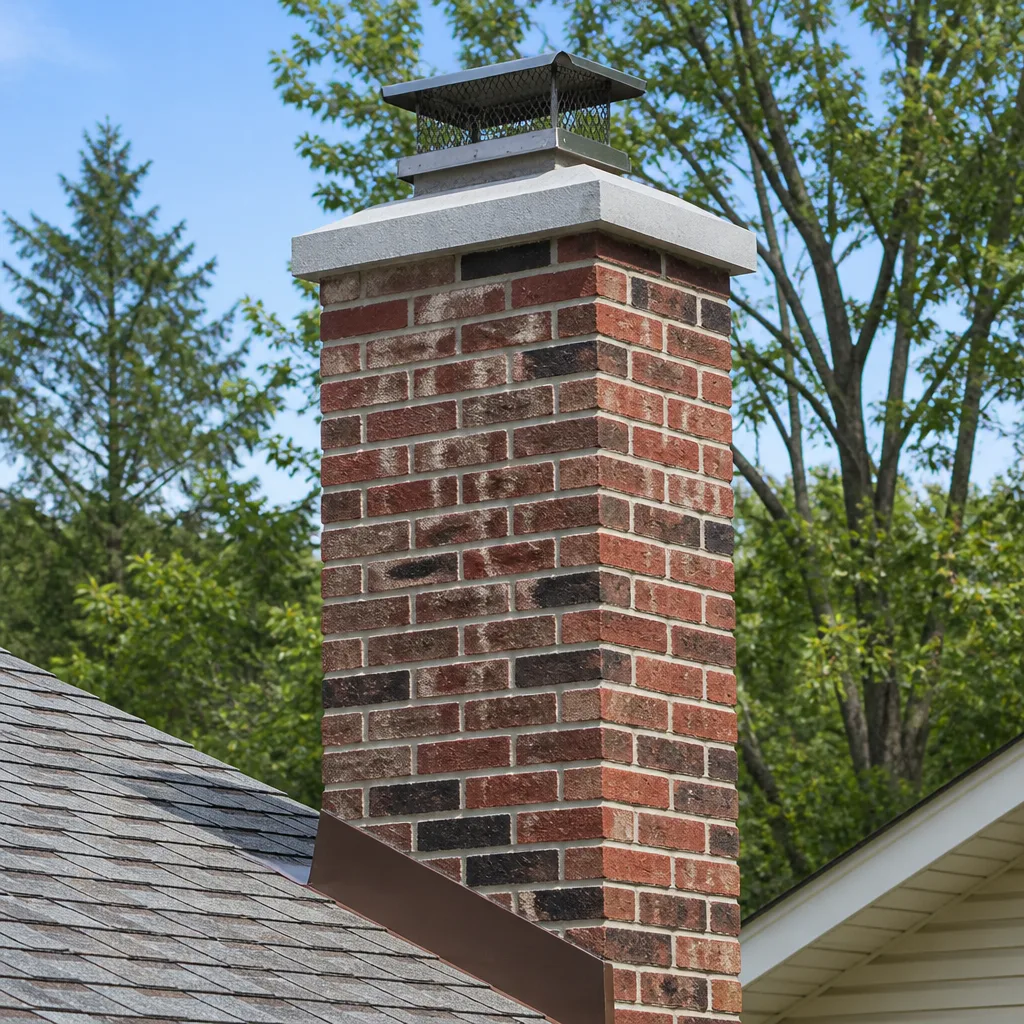
- Assuming a chimney cap is optional or cosmetic. A missing cap is how rain gets in, how animals get in, and how downdrafts push smoke back into your living room. It’s one of the cheapest components on the chimney and one of the most important for system health.
- Neglecting the dryer vent as part of combustion safety. Your clothes dryer is a combustion-exhaust appliance. Dryer vent cleaning in Menifee handles the same fire-safety logic at the appliance level that chimney sweeping handles at the fireplace level. Lint accumulation in the vent is the equivalent of Stage 2 creosote in the flue: fuel, waiting for heat.
- Painting over or sealing exterior chimney masonry without addressing water intrusion first. Sealing over efflorescence or small cracks without fixing the water source traps moisture inside the brick and accelerates spalling. Fix the water path first, then address the surface.
See the difference
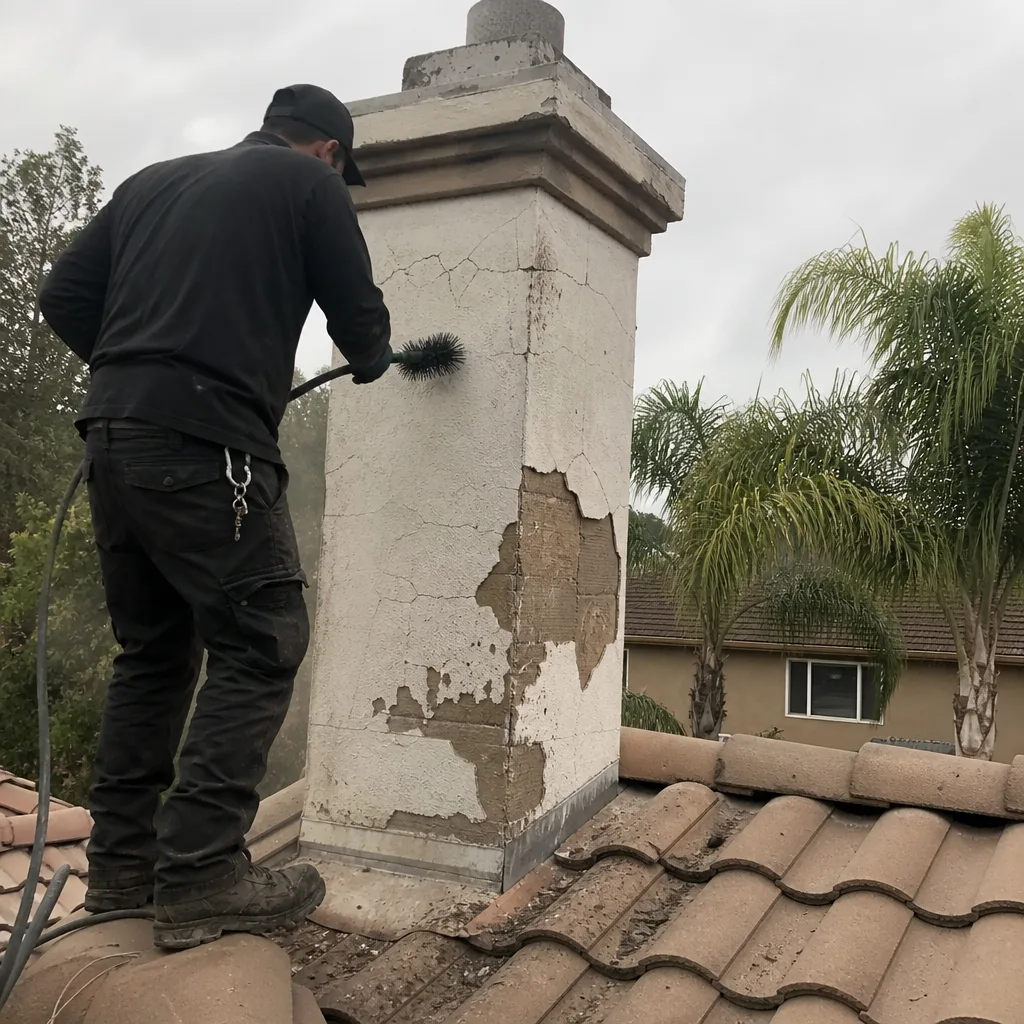 Before
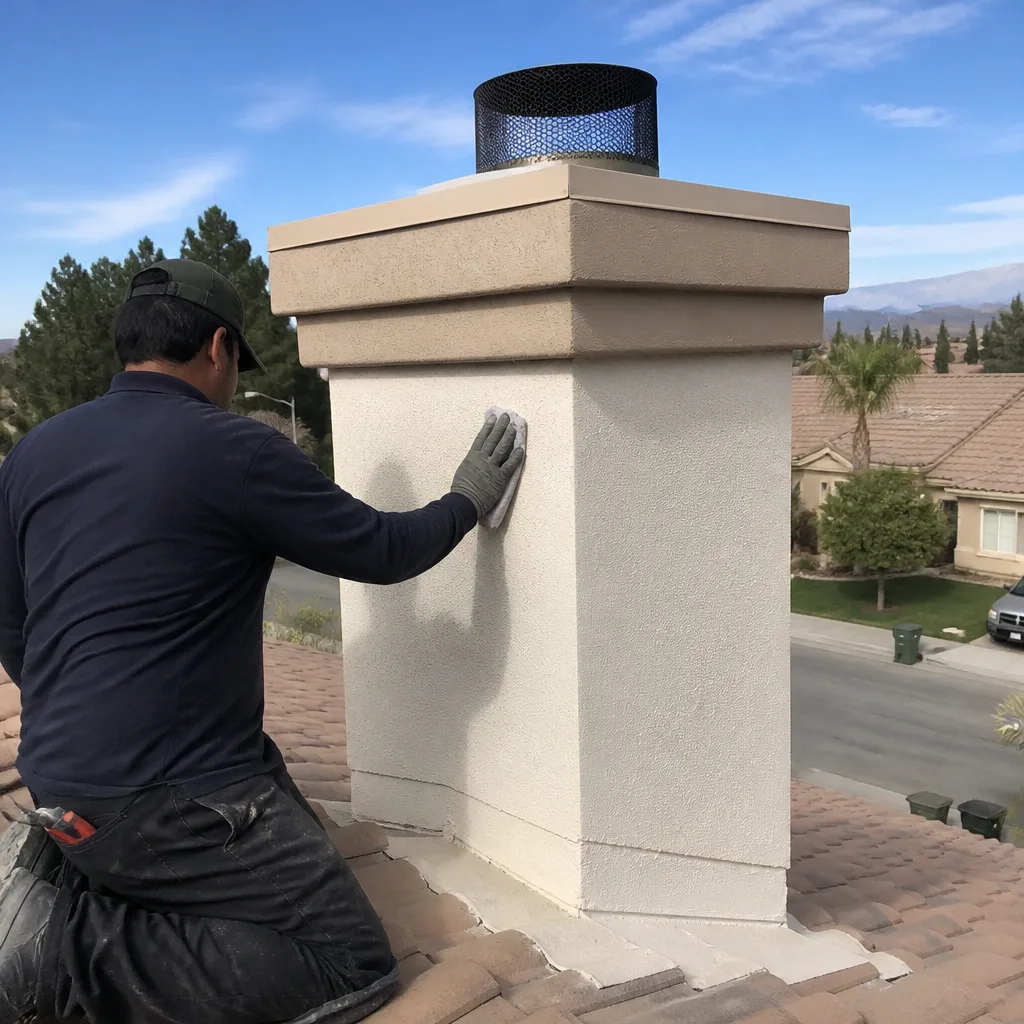 After
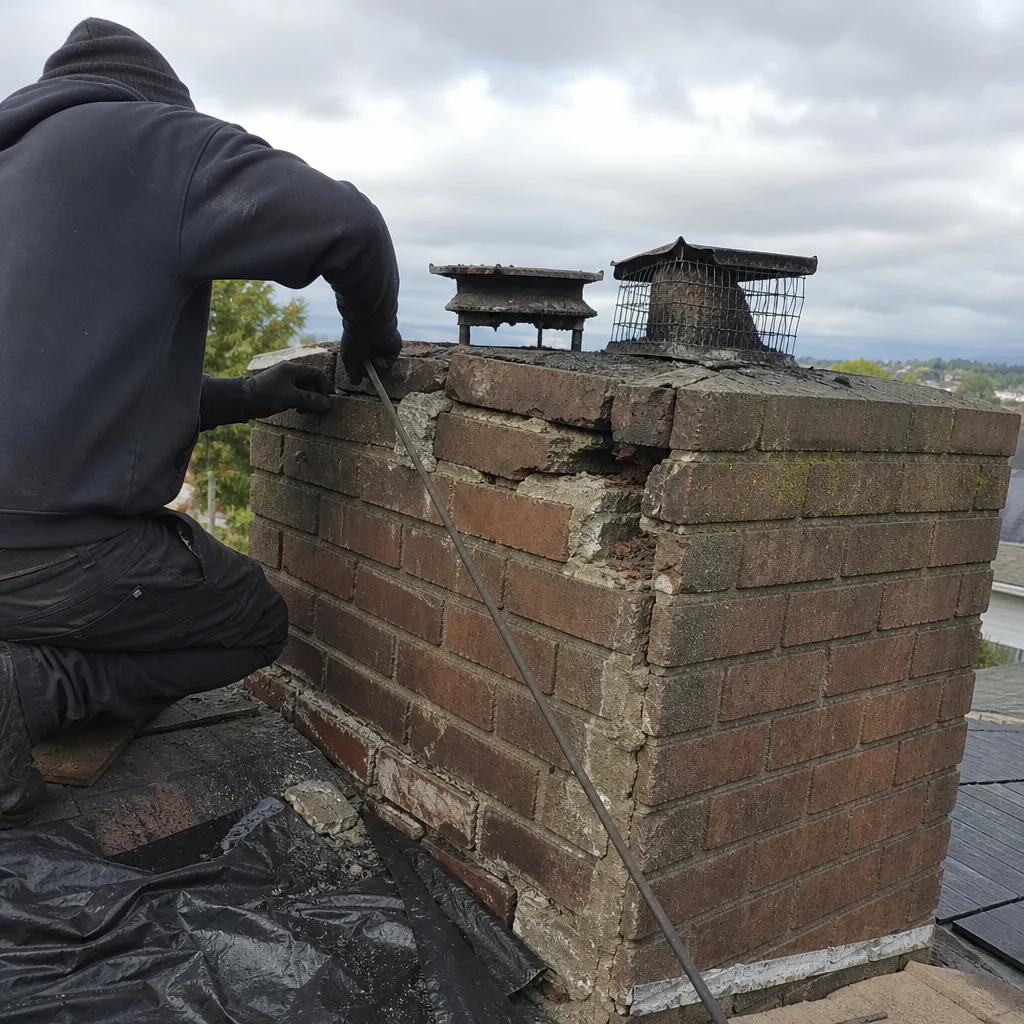 Before
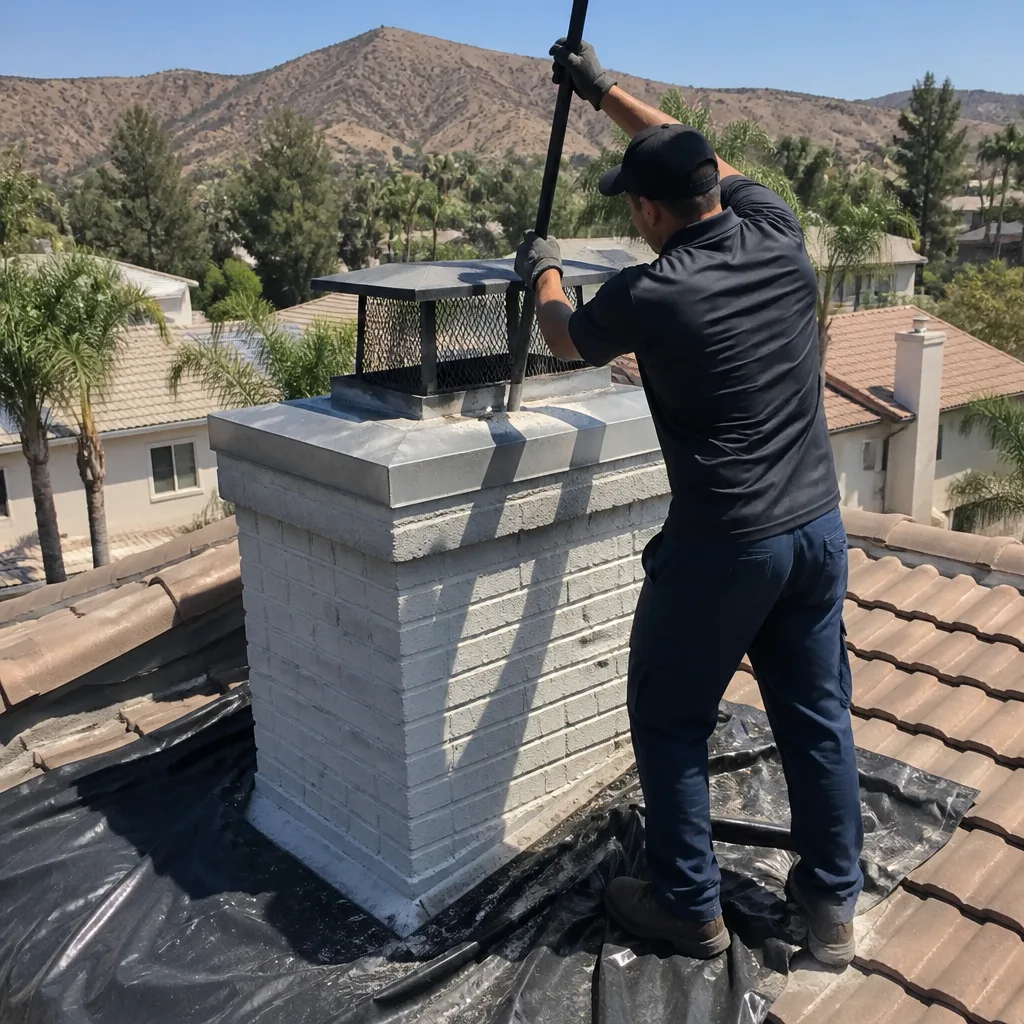 After
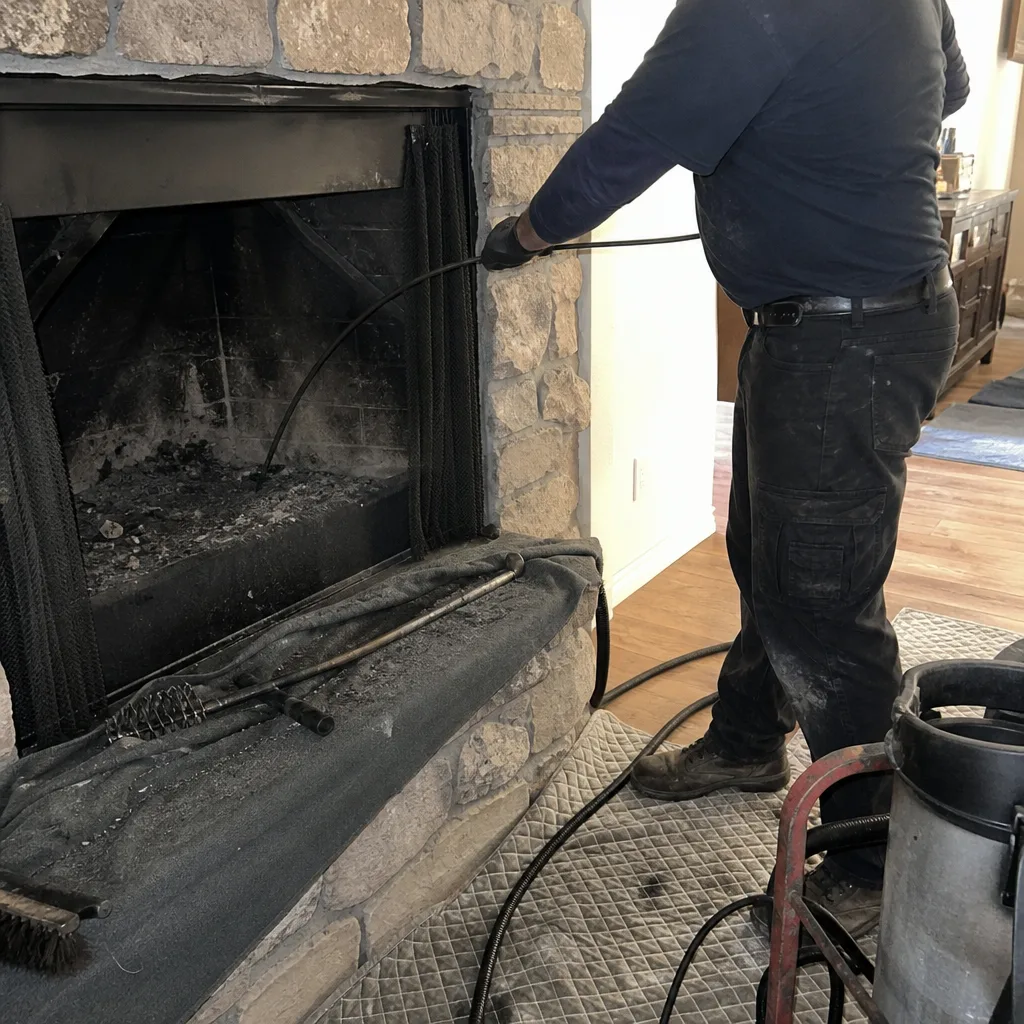 Before
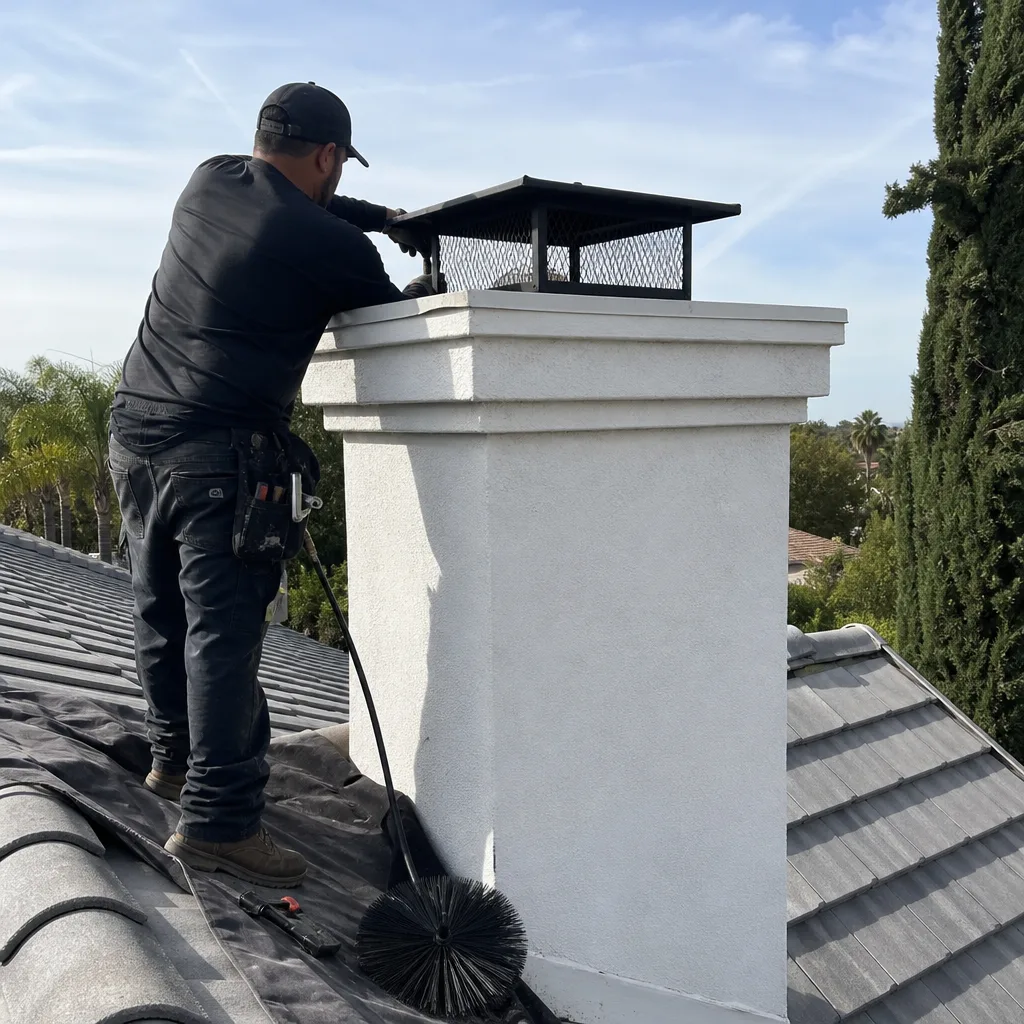 After
When to Call a Professional
If any of the urgent warning signs above match what you’re seeing in your Menifee home, call for an inspection. Stop using the fireplace until it’s checked. Specifically: if you’ve noticed smoke pushing back into the room, a persistent acrid or summer campfire smell, rust staining after rain, or popping sounds from the chimney structure itself, those are professional-level diagnostics, not DIY checks. A camera inspection answers the question in under an hour, and you’ll see the evidence for yourself. Chimney Sweep Menifee offers free estimates in Menifee. Call (866) 538-1538 to schedule an inspection, and we’ll bring the camera, find the problem, and walk you through your options with no pressure and no upsell.
Frequently Asked Questions
You need a chimney cleaning if you see 1/8 inch or more of soot buildup on the firebox walls, smell a campfire-like odor when the fireplace isn’t in use, notice smoke pushing back into the room, or if it’s been more than one burning season since your last sweep. The National Fire Protection Association recommends annual inspection regardless of visible signs.
Chimney sweeping in Menifee typically ranges from $150 to $350 depending on the level of creosote, flue height, and whether the chimney is accessible from a standard roof pitch or requires special equipment. Homes with significant Stage 2 or Stage 3 creosote often fall at the higher end because removal requires specialized tools and more time. Call (866) 538-1538 for a free estimate on your specific chimney.
You can verify a liner recommendation with a camera inspection. If the liner has cracks, gaps between flue tiles, or visible deterioration, the recommendation is real. If the technician can’t show you footage of the liner problem, get a second opinion. We show our Menifee customers the camera footage before any liner discussion, and if the liner has surface deterioration but is structurally sound, HeatShield resurfacing can often address it without full replacement.
Annually, at minimum, if you burn wood regularly. Menifee’s short burning season means some homeowners think they can stretch it to every other year, but creosote doesn’t care how long your burning season is. A spring sweep after the last fire is ideal because it removes deposits before summer heat bakes them into hardened Stage 2 glaze.
Creosote accumulates, hardens, and eventually becomes a fire risk. The flue diameter narrows, which reduces draft and pushes more smoke and carbon monoxide into the living space. Moisture trapped in the creosote accelerates liner deterioration. What starts as a $200 sweep becomes a $1,500 cleaning plus possible liner repair if the Stage 2 creosote has sat all summer. The math doesn’t favor skipping it.
Yes. The wet-dry cycling caused by Menifee’s concentrated rain events followed by long hot dry periods stresses mortar and brick more than steady moisture would. It moves salts through masonry, causes crystallization pressure inside pores, and accelerates spalling. A dry climate doesn’t mean a dry chimney; it means a chimney that gets soaked and then baked, which is harder on the materials than either condition alone.
The Bottom Line
The warning signs that matter most for Menifee homeowners are the subtle ones: a campfire smell in July, a damp chimney after rain, a firebox that’s flaking, a draft that only fails on windy days. None of these is dramatic, and all of them point to real problems that get more expensive with time. The fix is a professional inspection with a camera, followed by repairs using materials that are specified for the actual problem, not whatever is on the truck. Sweep, repair, and dryer vent cleaning all live under the same combustion-safety roof, and a single call covers all three. If something on this list matches what you’re seeing in your Menifee home, call (866) 538-1538 for a free estimate and get eyes on it before the next season makes it worse.
Written by the team at Chimney Sweep Menifee, serving Menifee since 2011.