
Last updated November 2, 2026
 Sweep & inspection
 Caps & crowns
 Flue relining
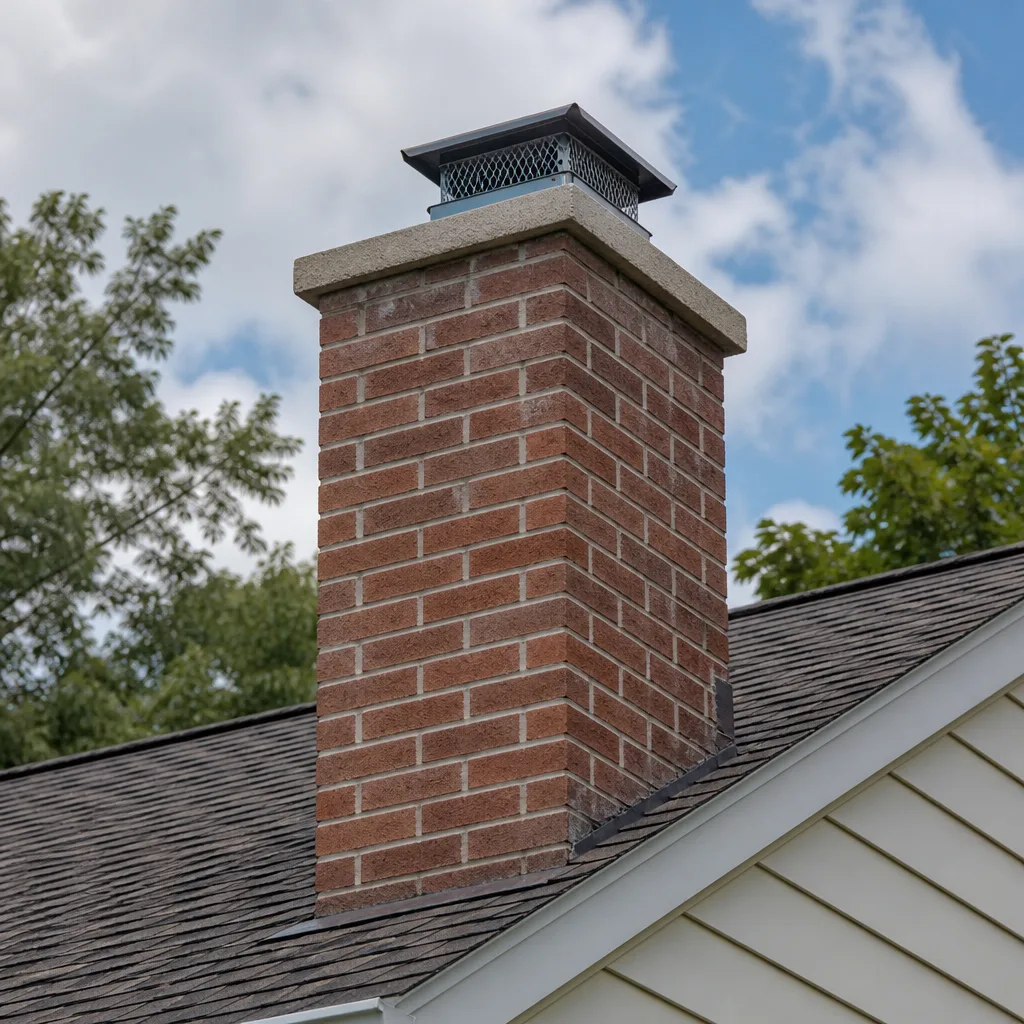 Masonry repair
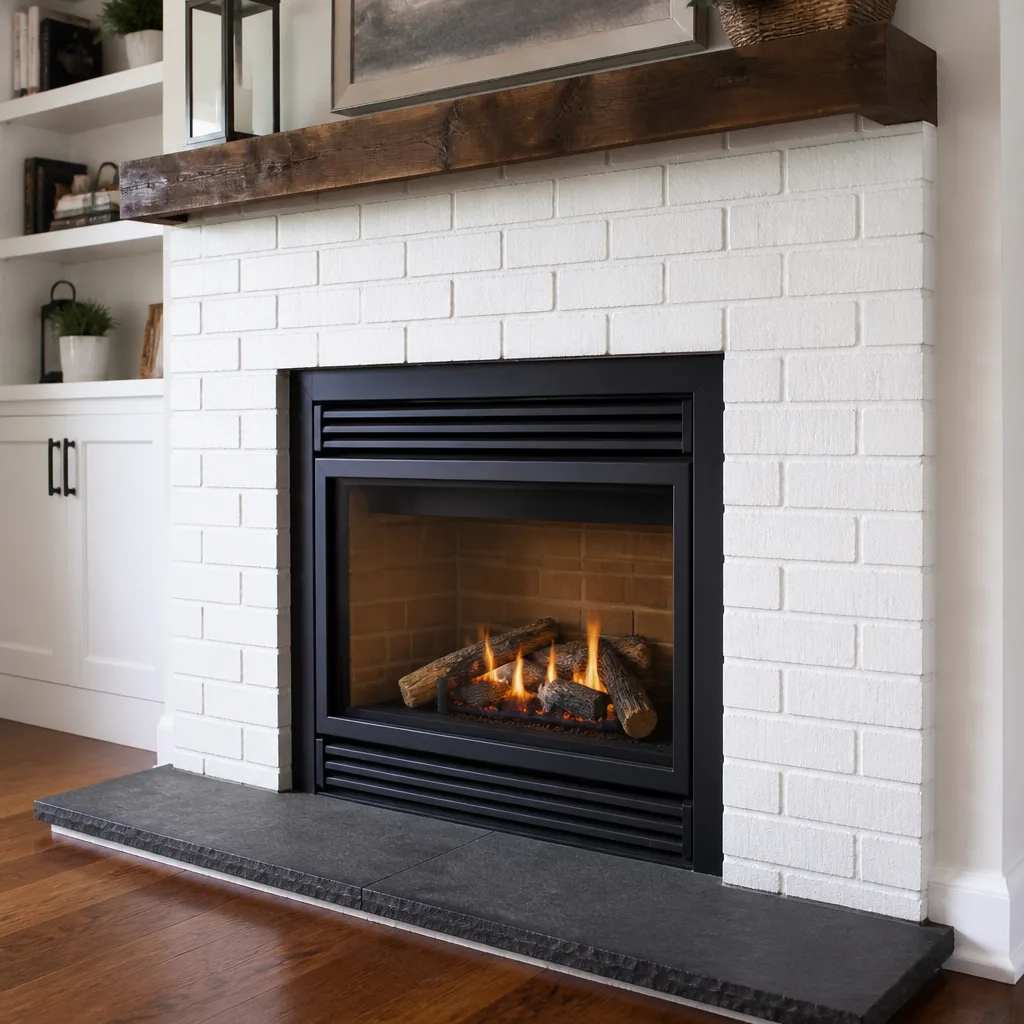 Gas fireplace service
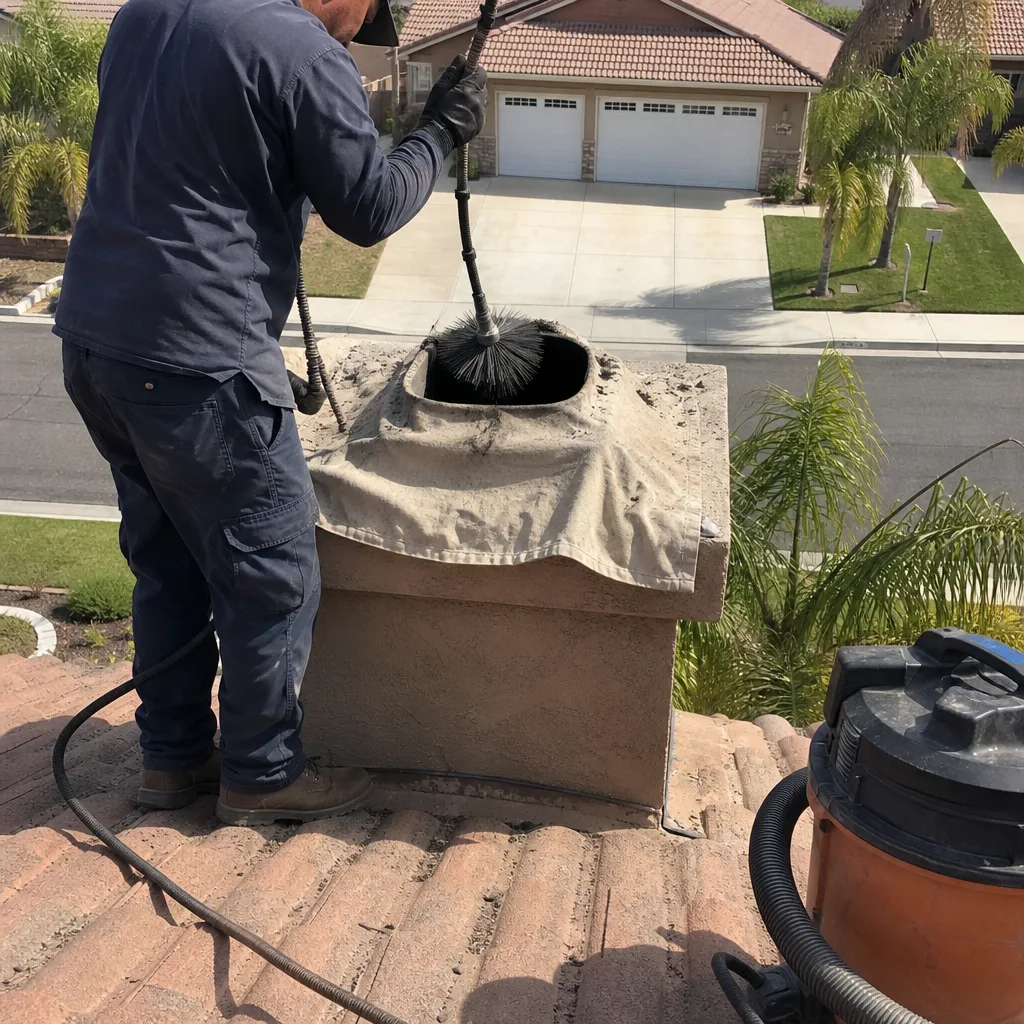
Level 1 sweep and inspection to the NFPA 211 annual standard - flue, crown, cap, and flashing checked and photographed
Chimney sweep logs do not sweep chimneys. They loosen some creosote - which then falls where a brush and vacuum still have to collect it.
Seasonal Chimney Cleaning Care for Menifee: Year-Round Homeowner’s Guide
October in Menifee is prime chimney fire risk season, and it has almost nothing to do with lighting fires. Santa Ana winds start pushing dry leaves, dead grass, palm fronds, and dust into uncapped or open-damper flues that have sat untouched since March. When homeowners finally light that first fire in November, the debris has had weeks to bake in the flue. This guide maps chimney care to what actually happens climatically in Menifee and the Inland Empire, not to a seasonal calendar written for the Northeast. You’ll learn what to check before fire season, what Santa Anas do to your flue, why post-season inspections catch problems a sweep alone misses, and how summer dormancy damages chimneys in ways most homeowners never see until it’s too late.
Quick Answer
Seasonal chimney care in Menifee means scheduling a professional sweep and inspection before first use in late September or early October, closing dampers and checking caps before Santa Ana wind events, doing a post-season inspection in March or April, and inspecting chase covers and caps during summer dormancy. Because Menifee’s climate produces wildfire ash fallout, Santa Ana debris loading, and long idle periods, a single annual cleaning is not enough. Homeowners should plan on one pre-season sweep plus one visual inspection at season’s end, with a third check if regional wildfires deposited ash in the flue.
Styles & brands we work with
- Sweep & inspection
- Caps & crowns
- Flue relining
- Masonry repair
- Gas fireplace service
Table of Contents
- Pre-Fire Season in Menifee: September to October
- Santa Ana Season Protocols: October Through February
- The Mild-Use Winter: What Actually Happens in Your Flue
- Post-Season Inspection: March and April
- Summer Dormancy: June Through August
- Wildfire Ash Fallout: A Distinct Inland Empire Hazard
- What Goes Into Your Flue: Materials That Last in Menifee’s Climate
- Common Mistakes to Avoid
- When to Call a Professional
- Frequently Asked Questions
- The Bottom Line
Pre-Fire Season in Menifee: September to October
The first fire of the season should happen after a sweep and inspection, not before. In Menifee’s climate, the flue has been dormant since March or April. During those months, the interior of the chimney has gone through repeated thermal cycles: hot summer days followed by cool desert nights. This expansion and contraction opens hairline cracks in mortar joints and can loosen flue tiles. Add the dust, cobwebs, and debris that settle in a dormant flue, and the first fire of November becomes a test of a system that hasn’t been checked in six months.
We recommend booking a chimney sweep in Menifee in September or early October for several reasons that are specific to Southern California’s risk environment:
- Debris loading has peaked. Summer winds and early Santa Ana events push leaves, palm fronds, and construction dust into uncapped or open-damper flues. A September sweep clears this before it becomes kindling inside the flue.
- You’re not competing for appointments. Most Menifee homeowners call for chimney service the week after Thanksgiving, when the first cold snap hits. Booking in September or October gets you a full inspection before the rush, when technicians can spend more time on diagnosis.
- Wildfire ash settles during fire season. If regional fires burned during summer or early fall, ash and particulates can drift into flues. A pre-season sweep removes this contamination before it bakes onto flue walls during your first fire.
- Repairs can be scheduled before you need the fireplace. If the inspection turns up a cracked flue tile or a damaged cap, you have weeks to address it before you actually want to use the fireplace.
A pre-season sweep in Menifee is not the same as a pre-season sweep in Boston or Minneapolis. In cold-weather regions, chimneys are swept at season’s end because creosote accumulation is the primary concern during heavy winter use. In Menifee, the primary pre-season concern is debris loading and flue degradation from long dormancy. That changes what a technician looks for and what you should ask about.
What a Pre-Season Sweep Should Include in Menifee
- Full flue inspection by camera. Any sweep that doesn’t offer a camera inspection is guessing. A camera sees what the eye can’t: cracked flue tiles, separated mortar joints, animal nests, and hidden creosote deposits. This is the single most important part of the pre-season visit.
- Cap and spark arrestor inspection. Menifee’s summer winds and birds mean caps get dented, spark arrestors get clogged, and mesh can tear. A damaged cap lets debris in and can create a fire hazard when embers escape.
- Damper operation check. A damper that doesn’t fully close during summer allows dust, bugs, and debris into the firebox. A damper that doesn’t fully open creates smoke backdraft on first use.
- Flue wall evaluation. The technician should assess creosote level, but also look for condensation staining, spalling, and tile misalignment, all of which are more common in flues that sit idle for months in Menifee’s dry heat.
- Smoke chamber review. This area is frequently skipped by low-bid sweeps. It’s also where smoke turbulence and creosote accumulation often begin. Any thorough pre-season inspection includes it.
If you have a gas fireplace or insert, the pre-season checklist is different. Gas flues need inspection for blockages, corrosion, and proper venting, but they don’t accumulate creosote the way wood-burning flues do. A gas fireplace that hasn’t been serviced in years can still present carbon monoxide risks from blocked vents or failing gaskets. The pre-season window is the right time to verify that your gas appliance is venting properly before cold-weather use.
Santa Ana Season Protocols: October Through February
Santa Ana winds are the most under-discussed chimney hazard in Menifee. These winds routinely gust to 40-60 mph in the foothills and can exceed 80 mph in passes. They pick up everything: leaves, palm fronds, roofing granules, gravel, and embers from any regional fire. When they hit an uncapped chimney or a chimney with an open damper, they drive that debris directly into the flue.
Here’s the counterintuitive part: the greatest Santa Ana risk is not during a burn season, but before and after it. In October and November, homeowners haven’t started using their fireplaces regularly. A Santa Ana event can load a flue with debris, and that debris sits there until the first fire. In March and April, the same thing happens in reverse: homeowners stop using fireplaces, leave dampers open, and Santa Anas fill dormant flues with material that will bake in the summer heat.
We’ve seen flues in Menifee that were swept in September and were already loaded with debris by November because a single Santa Ana event passed through after the sweep. That’s why the protocol below includes a pre-wind check and a post-wind inspection.
Santa Ana Protocol for Menifee Homeowners
- Close the damper before high-wind events. This is the single most effective action. An open damper is an open channel for wind-driven debris. If you’re not using the fireplace, the damper should be closed anyway, but it’s especially critical during Santa Ana warnings.
- Inspect the cap after any wind event over 40 mph. Caps can shift, dent, or lose spark arrestor mesh. A quick visual from the ground may not be enough. If you hear metal rattling during the wind, have the cap inspected before the next burn.
- Before lighting the first fire after a Santa Ana, check the firebox for accumulated debris. Look for leaves, dust, and small branches that have blown down the flue. If you can see debris in the firebox, the flue likely has more of it above.
- If you smell smoke during a Santa Ana event without a fire burning, your home is experiencing backdraft. Wind pressure can reverse airflow in a chimney, pulling ash and soot smells back into the house. This is a sign the damper isn’t sealing well or the chimney has negative pressure issues. Close the damper and consider a cap with a wind-resistant design.
- After a wind event that carried regional fire smoke, have the flue inspected before burning. Smoke residue can bind with existing creosote to create a more tenacious deposit. We’ll cover this more in the wildfire ash section below.
Homeowners with Gelco caps or other wind-resistant cap designs are better protected against Santa Ana debris loading, but no cap is perfect. High winds push debris sideways and upward, which can defeat even well-designed spark arrestors. The protocol above applies whether you have a $150 cap or a $400 cap.
The Mild-Use Winter: What Actually Happens in Your Flue
Menifee winters are mild, which means most homeowners burn fires for ambiance and occasional warmth rather than daily heating. This low-use pattern creates a specific set of chimney conditions that a single annual cleaning doesn’t address. In our experience, low-use chimneys in Menifee develop problems differently than high-use chimneys in cold climates, and understanding that difference is key to proper seasonal care.
When a wood-burning fireplace is used occasionally rather than daily, the flue never gets hot enough, long enough, to burn off the deposits that form during a fire. Each burn cycle deposits a thin layer of creosote or soot. In a daily-use fireplace, this layer builds up predictably and is removed by the next hot fire. In a weekend-use fireplace, the layer sits and hardens during idle days, then gets covered by another layer. Over a mild Menifee winter, this can create a harder, more tenacious deposit than a cold-climate homeowner would see in the same number of burns.
Add the fact that Menifee nights drop into the 30s and 40s in December and January, and you get another condition: condensation. When a warm fire heats the flue and then the chimney cools rapidly overnight, moisture from the fire’s combustion can condense on the flue walls. In a low-use chimney, this condensation doesn’t evaporate consistently. It mixes with soot and creosote to form a heavier, stickier deposit. Over multiple seasons, this is the material that eventually ignites in a chimney fire.
What to Watch for During a Mild Menifee Winter
- Smoke smell between fires. If you smell smoke in the house on days when you haven’t burned, your damper may not be sealing or there’s a draft issue in the home. This gets worse during Santa Anas but can occur any time.
- Slow-to-start fires. A fire that struggles to draw or produces smoke into the room on startup suggests a blocked or partially blocked flue. This is harder to diagnose in mild use because you may only light a fire once a week, but the pattern repeats.
- Unusual deposits on firebox walls. Black, shiny tar-like deposits in the firebox are a sign that the chimney is running cooler than it should and creosote is condensing back down. In Menifee’s mild winters, this is more common than most people expect.
- Condensation staining on the hearth or firebox floor. Rust-colored staining can indicate moisture coming down the flue, either from condensation or from a cap that isn’t shedding water properly.
None of these signs means you should stop using the fireplace. They do mean a professional inspection is warranted. A thorough chimney repair in Menifee can diagnose the underlying issue and fix it before it becomes a larger hazard. The key is not to ignore the signs and assume that mild use means no problems.
If you have a gas insert, the mild-winter concern is different. Gas appliances produce water vapor as a combustion byproduct. When that vapor hits the cooler flue walls in a more frequently idle system, it condenses into liquid water. This water can rust metal components, damage flue tiles, and create stains on interior walls. The fix is often a properly sized liner, which is where material specification matters. A liner that’s sized correctly for your appliance vents moisture efficiently and protects the flue from condensation damage.
Post-Season Inspection: March and April
After the last fire of the season, most Menifee homeowners simply close the damper and forget about the chimney until October. That’s a mistake. The post-season period is when a flue reveals what the winter’s use actually did, and catching problems in March or April means fixing them during the mild months rather than discovering them during the fall rush.
Here’s what to look for after a mild Menifee winter:
- Creosote loading. Even light seasonal use produces enough creosote in a low-burn environment to warrant a professional evaluation. If you burned more than a dozen fires over the winter, consider a sweep before summer dormancy. If you burned fewer, a visual inspection may be sufficient, but err on the side of a professional look.
- Condensation staining. Menifee homes with chimneys on exterior walls see more condensation staining than homes with interior chimneys, because the flue cools faster between burns. Look for water marks or rust-colored streaks on the firebox walls or hearth. These indicate moisture issues that will worsen during summer.
- Loose or missing mortar joints. The thermal cycling of Menifee winter nights (fire in the evening, 40-degree night, 70-degree day) stress the mortar in brick chimneys. By March, small cracks can open into larger gaps. Early spring is the right time to evaluate mortar joints before summer heat expands them further.
- Damper seal check. Run a simple test: close the damper, then hold a lit match or lighter near it. If the flame flickers, air is moving through the closed damper. That means the seal is worn or the damper isn’t seating correctly. This air leakage carries dust, insects, and summer heat into the house.
- Cap and chase cover condition. If you can safely see the top of your chimney from the ground, check for obvious damage: a bent cap, a missing spark arrestor, a cracked chase cover. If you can’t see it clearly, have it checked during the post-season inspection.
The post-season window is also the right time to address any repair that came up during the winter but wasn’t urgent enough to handle immediately. Cracked flue tiles, masonry gaps, and damper replacements are easier to schedule in April than in November. A chimney repair done in spring means your chimney is ready when you want it in fall, not when you’re competing for appointments with every other homeowner in Menifee.
Summer Dormancy: June Through August
Summer is when Menifee chimneys take the most damage and get the least attention. The flue sits idle for four to five months, exposed to the Inland Empire’s relentless sun, 100-degree heat, and dry air. The chimney itself doesn’t care that nobody’s using it. Thermal expansion from the hot exterior wall, UV degradation of caps and chase covers, and debris accumulation from summer winds all continue whether or not you burn a fire.
What Summer Does to Your Chimney
- UV damage to caps and chase covers. A standard galvanized or painted steel cap or chase cover absorbs full summer sun all day. UV breaks down paint and protective coatings, leading to rust. A rusted chase cover lets water into the chase, which then rots framing, damages flue liners, and creates a path for moisture into the attic or living space. In Menifee’s summer climate, this process accelerates compared to coastal areas because the sun is more intense for more hours per day.
- Thermal expansion in masonry. Brick chimneys expand in 100-degree heat and contract at 60-degree nights. This daily cycle, repeated for four months, stresses mortar joints. Cracks that were small in March are larger by August.
- Debris accumulation from summer winds. Menifee’s summer winds are nothing like Santa Anas, but they still push dust, pollen, and small debris into open flues. A chimney that was clean in April can be dirty again by September.
- Animal intrusion. Birds and small animals look for cool, dark spaces in summer. A chimney without a properly fitting cap or with damaged spark arrestor mesh is an invitation. Bird nests, raccoon activity, and squirrel debris are all common summer issues in Menifee chimneys.
The solution is not to run a fire in August to scare off animals or dry out the flue. The solution is a summer inspection that covers the cap, chase cover, damper seal, and flue condition. This inspection can be done in 30 minutes and can be combined with other chimney services to make the visit worthwhile.
One thing we recommend for Menifee homeowners during summer: inspect the cap and chase cover from the ground after the first 100-degree stretch of the season. Look for signs of rust, bent metal, or shifting. If you see anything concerning, have it checked before fire season begins. Catching a failing chase cover in July means a simple repair or replacement. Missing it until November means water has had four more months to do damage inside the chimney.
Summer Inspection Checklist for Menifee Homeowners
- Look at the cap from the ground. Check for rust streaks, dents, or a cap that appears tilted. Use binoculars if you have them.
- Check the damper seal. With the damper closed, hold a tissue near the damper opening. If it moves, the seal is leaking.
- Look for water stains on the ceiling near the chimney. Summer monsoon events, when they occur, can push water into a damaged chase or flashing. Check the attic if accessible.
- Listen for animal sounds. Scratching or chirping from the chimney area in summer indicates an intrusion. Don’t light a fire to scare them out. Call a professional for removal and a proper cap installation.
- Schedule a late-summer sweep. If you skipped a post-season inspection, a late-summer sweep covers the bases: debris removal, flue evaluation, and cap inspection, all before the first fire.
See the difference
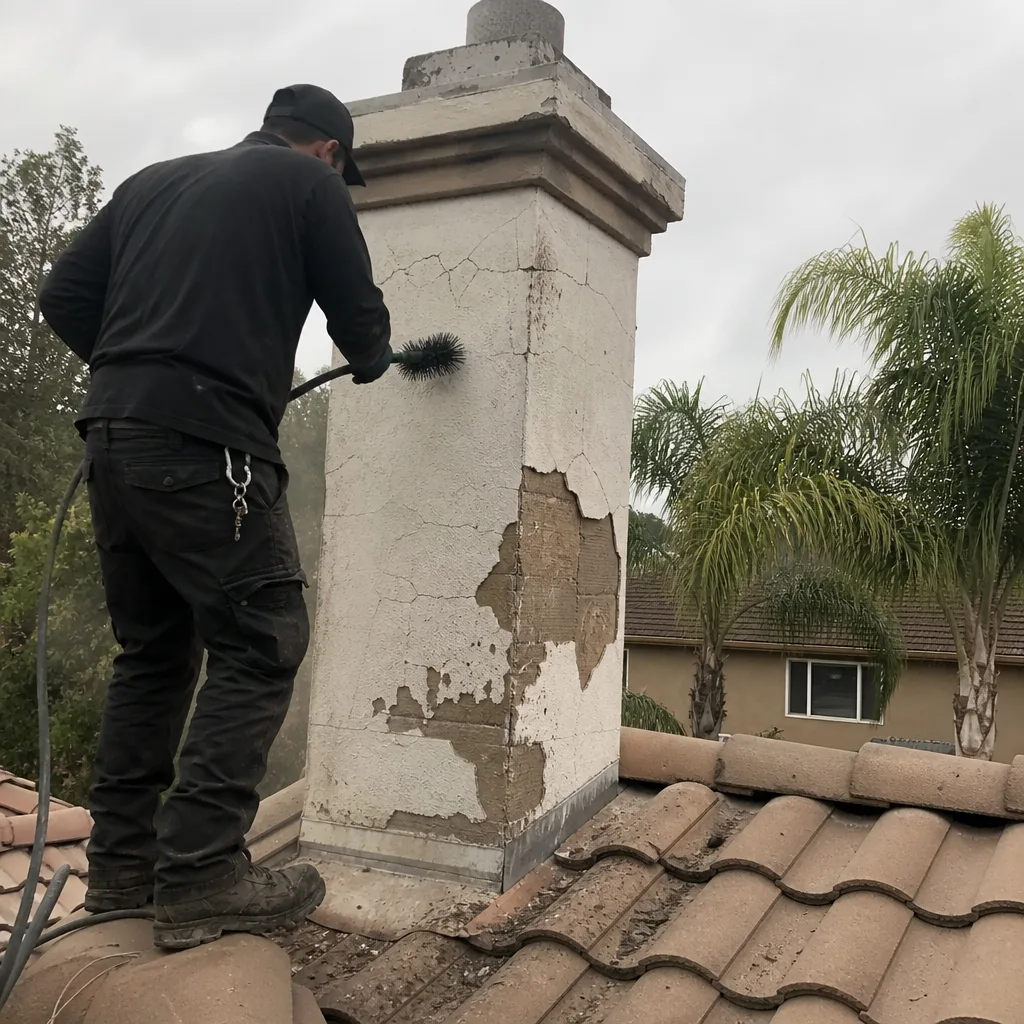 Before
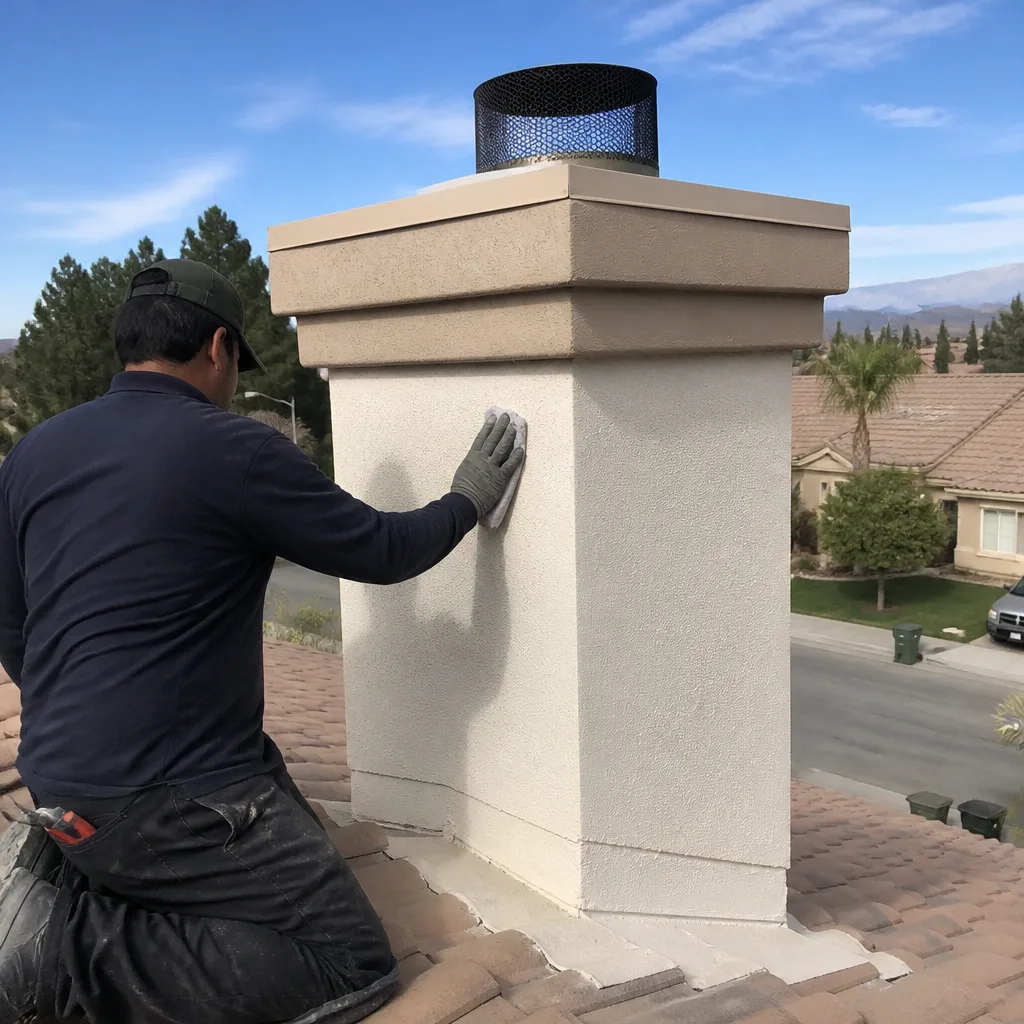 After
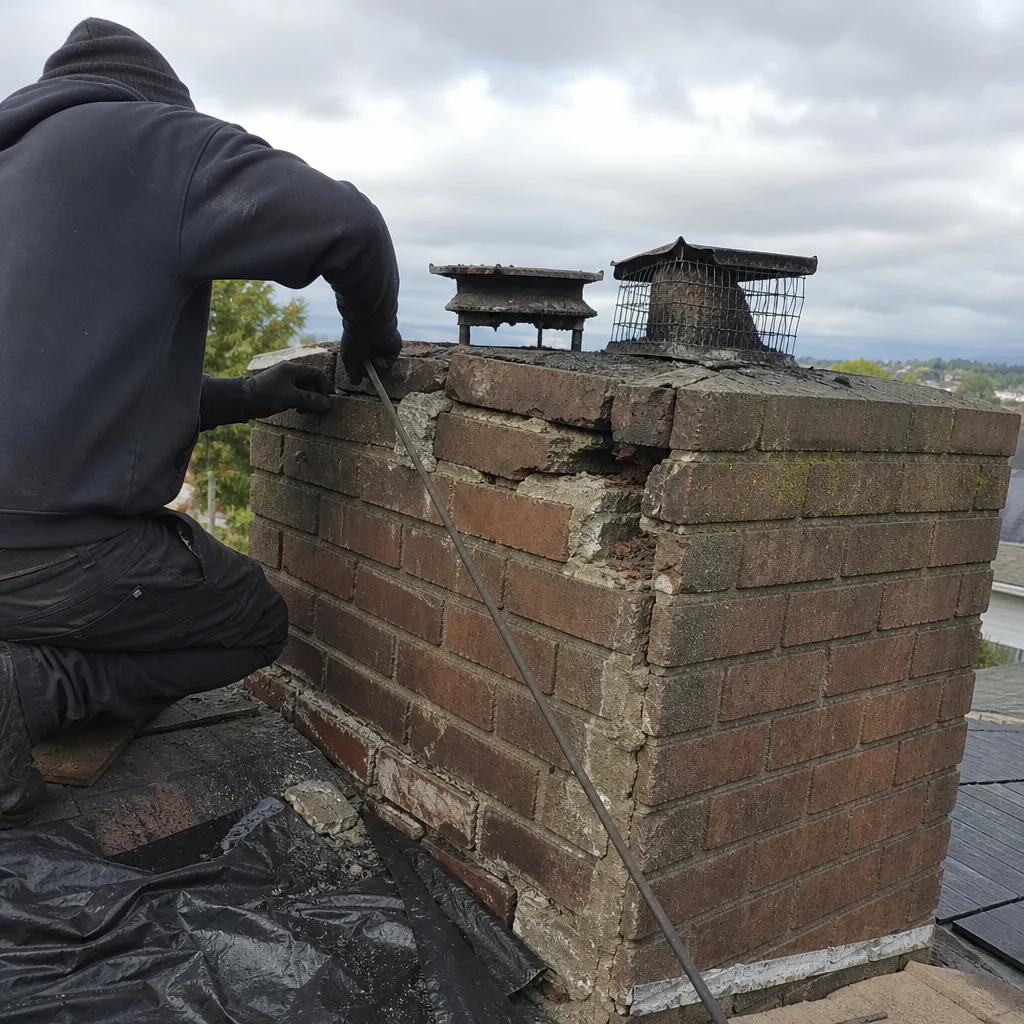 Before
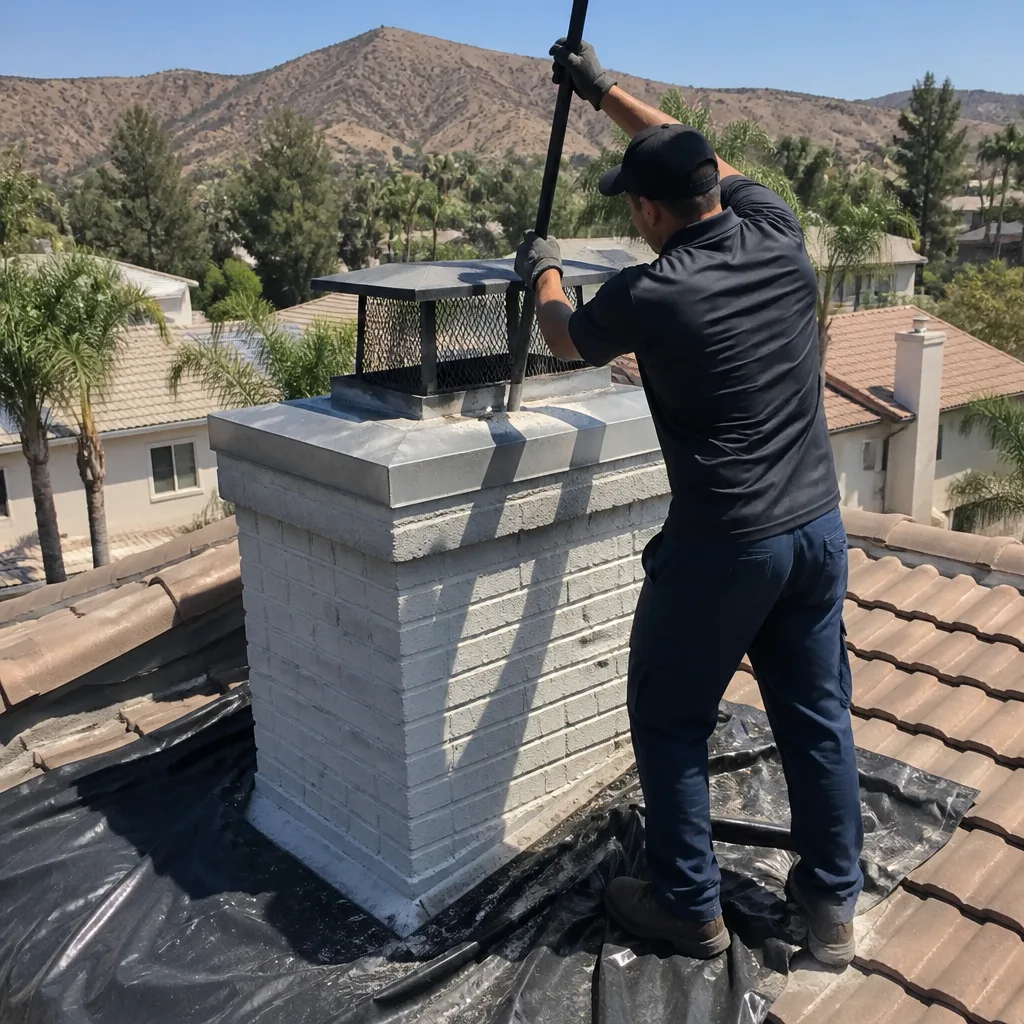 After
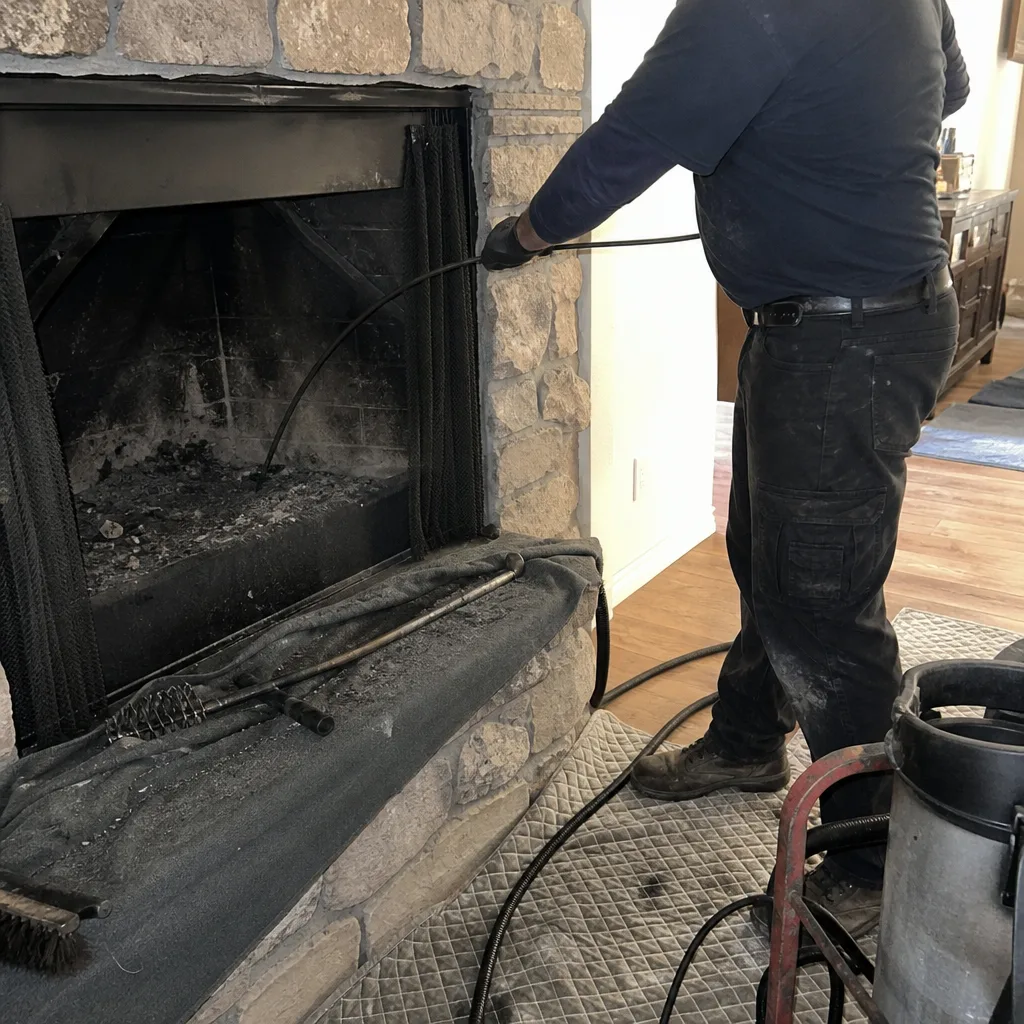 Before
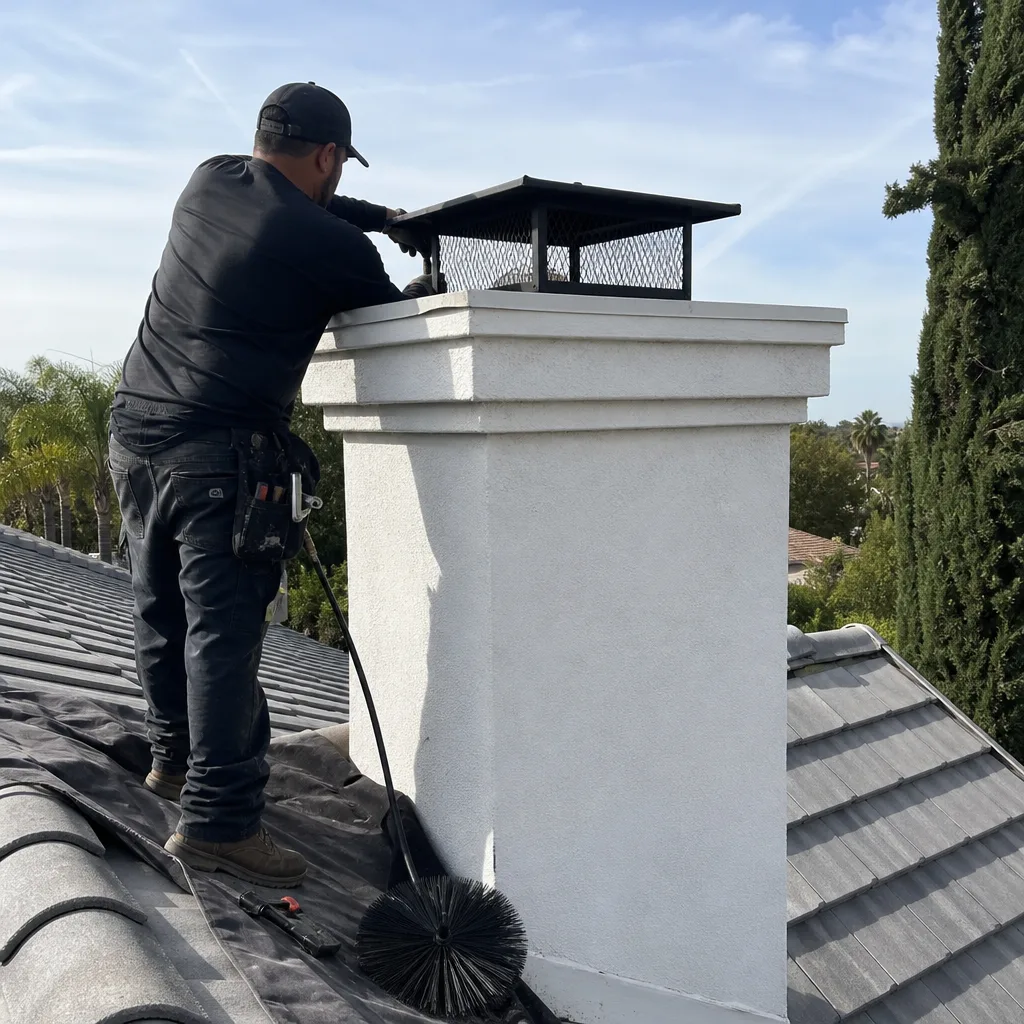 After
Wildfire Ash Fallout: A Distinct Inland Empire Hazard
Menifee sits in a fire-prone region. Regional wildfires in the San Bernardino Mountains, Riverside County foothills, or San Jacinto area often produce ash fallout that drifts across the Inland Empire. This ash is not the same as the fine dust that accumulates naturally. It’s a complex mixture of burned organic matter, chemical residues from burned structures, and fine particulates that can coat chimney flues, caps, and fireboxes.
The problem is not just that ash is dirty. The problem is that wildfire ash contains compounds that can bond with existing creosote and create a more difficult, more flammable deposit than normal soot or creosote alone. If you have a wood-burning fireplace with any creosote accumulation and a regional fire deposits ash in your flue, the combination can create a material that’s harder to remove and more likely to ignite on a subsequent burn.
If you burned fires during the previous winter and then experienced ash fallout in the summer or fall, the safe move is to have the flue inspected and swept before your first fire. This applies even if you had a sweep in the previous year. Wildfire ash changes the conditions inside your flue in ways that normal dust accumulation doesn’t.
How to Assess Flue Contamination After Regional Fires
- Check for ash on horizontal surfaces around your home. If you see ash on patio furniture, window sills, or vehicles, your chimney cap and flue have been exposed to the same fallout.
- Look for ash or soot in the firebox. A fine gray or black residue in the firebox, especially on top of any existing soot, suggests ash has come down the flue.
- Smell the flue. A chemical or acrid smell, different from normal wood smoke, can indicate contaminated deposits. This is subjective but worth noting.
- Have the flue camera-inspected. This is the definitive method. A camera inspection shows whether ash has bonded with existing creosote and whether the deposit is in a condition that requires professional removal.
We don’t recommend trying to burn off wildfire ash contamination. Unlike normal creosote, which burns at a predictable temperature, the mixed composition of wildfire ash can ignite unpredictably or create odors that are difficult to eliminate. The safe approach is a professional sweep and inspection, ideally before the first fire of the season.
What Goes Into Your Flue: Materials That Last in Menifee’s Climate
Menifee’s climate punishes cheap chimney materials. The combination of intense UV exposure, thermal cycling, Santa Ana winds, and dry air means that the cheapest cap at the hardware store will fail within a few years, and a thin-walled liner will degrade faster than it would in a coastal climate. When we specify materials for a repair or replacement, we choose products that are designed for real-world weather exposure, not just for the showroom.
Here’s the material stack we work with and why:
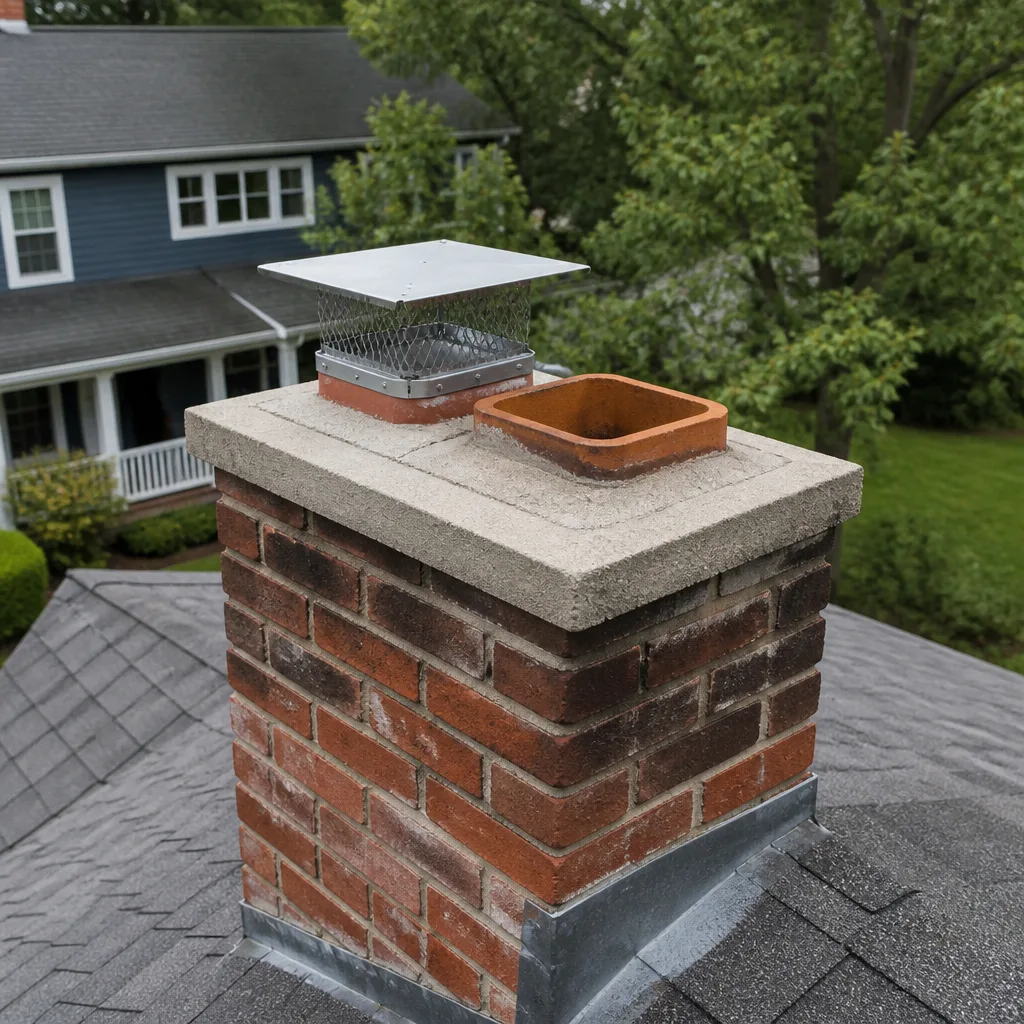
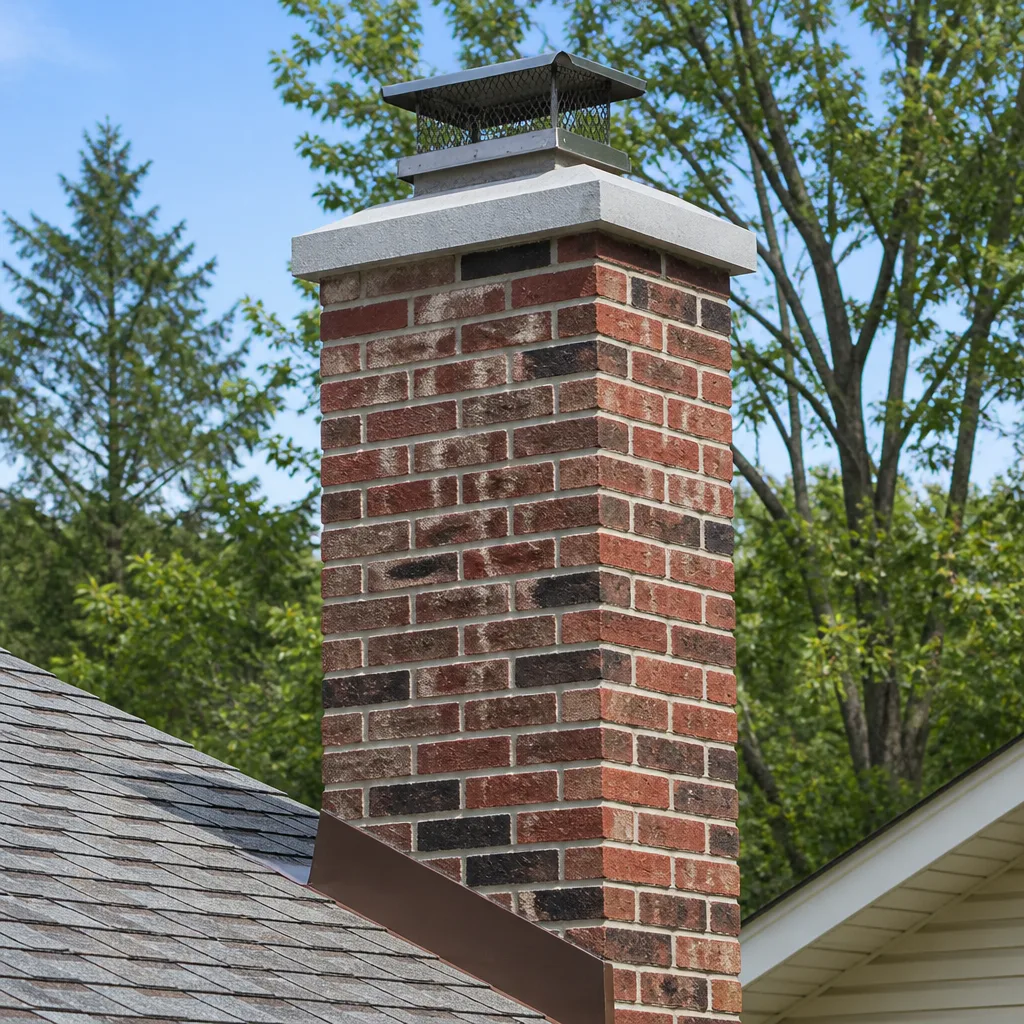
- Gelco caps and chase covers. We specify Gelco because their galvanized and stainless steel caps are built for sun exposure. In Menifee’s summer, a cheap painted cap will start rusting within a season or two. Gelco caps are specified for durability under sustained UV load, which is exactly what a Menifee chimney top endures from June through September. A properly sized, properly installed Gelco cap also keeps out the debris that Santa Anas push into open flues.
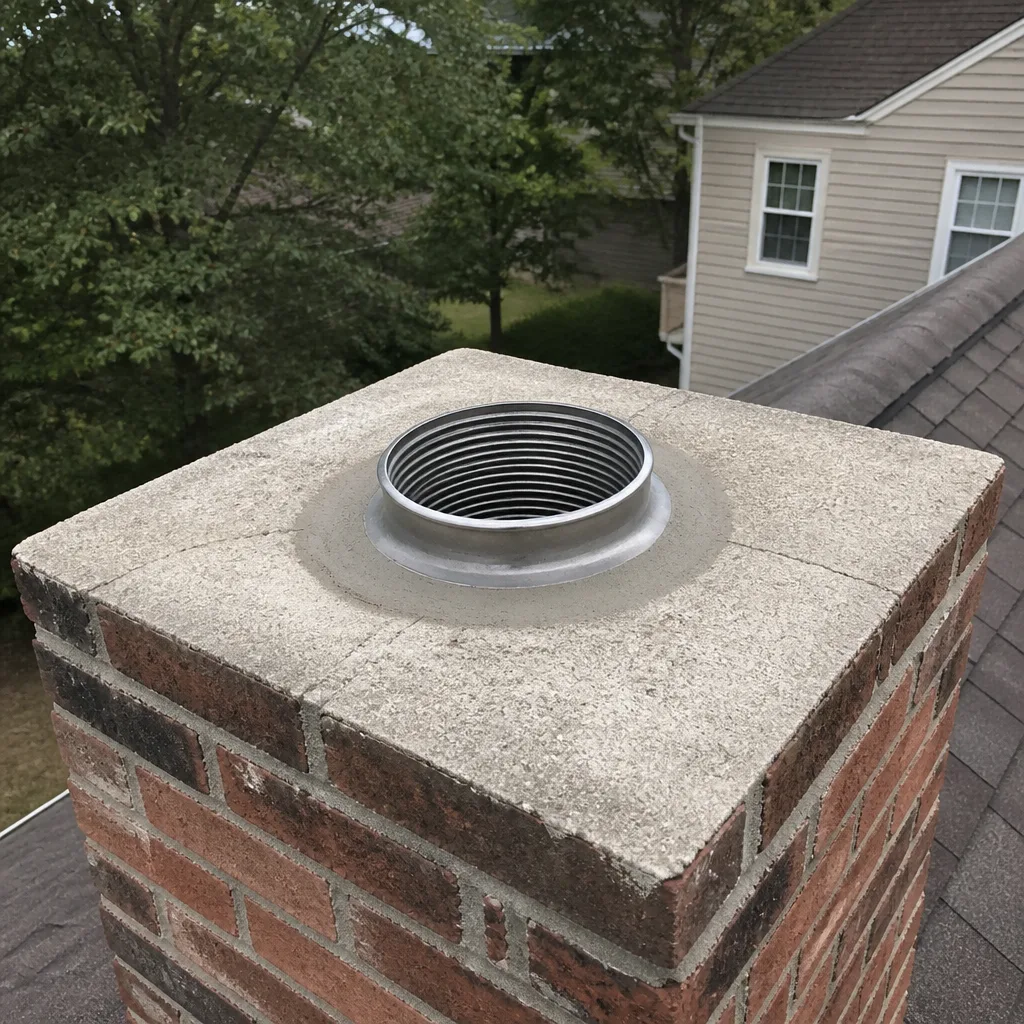
- DuraFlex liner systems. When a chimney needs a new liner, especially for a gas appliance or a non-standard flue configuration, we specify DuraFlex flexible liners. These are aluminum or stainless steel liners designed to handle the tight turns and offsets that rigid liners can’t. In Menifee, where many homes were built with unusual flue configurations during different housing booms, a flexible liner often solves a problem that a rigid pipe simply cannot.
- HeatShield resurfacing. When a flue has cracked tiles or deteriorating mortar joints but doesn’t need a full liner replacement, HeatShield chimney restoration is often the right call. This is a ceramic resurfacing system that restores the flue’s integrity without tearing out the existing liner. For many Menifee homeowners, it’s the cost-credible middle option between ignoring the problem and paying for a full liner replacement.
- Olympia Chimney and Famco components. For venting and connector components, we use Olympia Chimney and Famco products because they’re specified for the kind of thermal and environmental conditions we see in the Inland Empire. These are not generic parts. They’re products that chimney professionals recognize, and that matters when you’re putting something into a system that carries hot gases out of your home.
The point of naming these materials is not to impress you with jargon. It’s to let you know what’s going into your flue if we’re doing the work. A cheap liner or a big-box cap may look the same on day one, but Menifee’s climate tends to reveal the difference within a few seasons. If a contractor can’t or won’t tell you what brand of cap or liner they’re installing, that’s a red flag.
Common Mistakes to Avoid
- Lighting the first fire before a sweep or inspection. In Menifee’s climate, the flue has been dormant for six months and likely has debris, dust, or animal activity. The first fire should happen after a professional look, not before.
- Leaving the damper open during summer. An open damper is an open channel for dust, insects, animal intrusion, and summer heat loss. Close it when you’re not using the fireplace, and verify the seal isn’t leaking.
- Ignoring Santa Ana season. Homeowners think about Santa Anas as fire risk for wildlands, not for chimneys. High winds drive debris into open flues and can create backdraft issues. A pre-wind damper check is a simple step that prevents a lot of downstream problems.
- Treating a mild winter as a no-maintenance winter. Low-use fireplaces in Menifee still accumulate creosote, and the idle periods between burns actually create harder, more tenacious deposits. Low use does not mean no maintenance.
- Skipping the post-season inspection. March and April are when the winter’s damage becomes visible. Waiting until October means you’re discovering problems at the same time everyone else in Menifee wants their chimney serviced.
- Assuming a cap is permanent. Caps and chase covers take the brunt of Menifee’s UV load and wind. A cap that worked perfectly for five years may be rusting through by year six. Annual inspection is the only way to catch it before water damage occurs.
- Burning off a contaminated chimney. If you suspect wildfire ash or animal debris in your flue, don’t try to burn it out. Mixed-material deposits can ignite unpredictably. Professional removal is the safe approach.
When to Call a Professional
Some chimney issues are visible and straightforward. Others are hidden and only become obvious when they’re expensive. Call a professional if you see any of these: visible cracks in the firebox or exterior masonry, rust staining on the chimney or cap, water in the firebox after rain, smoke smell in the house when no fire is burning, a damper that won’t fully open or close, or any sign of animal activity in the chimney. These are not do-it-yourself repairs. They’re diagnostics that require camera inspection and trained eyes.
If you’ve skipped a sweep for more than a year, if regional fires deposited ash in your area, or if you can’t see the top of your chimney to assess cap condition, schedule an inspection. Chimney Sweep Menifee offers free estimates in Menifee. Call (866) 538-1538 to book a sweep, inspection, or repair. One call covers chimney sweeping, chimney repair, and dryer vent cleaning in Menifee, so you can resolve every combustion-exhaust issue in a single visit.
Frequently Asked Questions
A wood-burning chimney should be swept at least once per year, ideally before first use in September or October, even if you only burn occasionally. Menifee’s low-use pattern creates harder creosote deposits than daily-use fireplaces in cold climates, so the annual sweep is not optional. If you burn more than 30 fires per season, consider a second sweep mid-season.
A standard chimney sweep in Menifee typically runs between $180 and $340, depending on the flue condition, accessibility, and whether a camera inspection is included. Repairs, liner work, and cap replacement are quoted separately after the inspection. The exact price depends on what the inspection finds. Call us at (866) 538-1538 for a free estimate, and we’ll give you a flat price before any work begins.
Not necessarily. Cracked tiles can sometimes be addressed with HeatShield resurfacing, a ceramic restoration system that seals the flue without a full liner replacement. The decision depends on the extent of the damage, the flue’s condition, and the appliance type. The key is to see the camera footage yourself. We won’t recommend a repair without showing you the evidence.
Creosote accumulates, debris builds up, and small problems become larger ones. In Menifee’s climate, the most common progression is condensation staining in the first year, visible creosote deposits in the second, and a flue that’s primed for a chimney fire by the third. The risk is not theoretical. Chimney fires happen in the Inland Empire every year, and most of them start in flues that hadn’t been cleaned in multiple seasons.
Yes. Santa Ana winds drive debris into open flues, can shift or damage caps, and can create backdraft pressure that pulls ash and soot odors into your home. A chimney that sits unused during Santa Ana season is still exposed to wind-driven debris loading. Close the damper, check the cap after major wind events, and have the flue inspected if you see debris in the firebox.
Yes, and it matters for the same reason. Both systems carry combustion exhaust out of your home, and both become fire hazards when they’re not maintained. Lint-clogged dryer vents are a leading cause of house fires in the U.S., and the same safety principles apply to dryer vents as to chimneys. We include dryer vent cleaning in Menifee as part of what we do because the fire-prevention logic is identical.
The Bottom Line
Menifee’s chimney care calendar doesn’t match the seasonal guidebooks written for colder climates. Here, the real seasons are fire season, Santa Ana season, mild-use winter, and summer dormancy, and each one creates its own set of conditions inside your flue. A pre-season sweep in September or October, a damper check before every Santa Ana event, a post-season inspection in March or April, and a summer cap and chase cover check are the four non-negotiable tasks. Skip any one of them and you’re leaving a gap in the year-round safety of your home. If you’re not sure where to start, call us for a free estimate at (866) 538-1538. We’ll help you map out the right care schedule for your specific chimney, your specific fireplace, and your specific corner of Menifee.
Written by the team at Chimney Sweep Menifee, serving Menifee since 2011.