
Last updated November 2, 2026
 Sweep & inspection
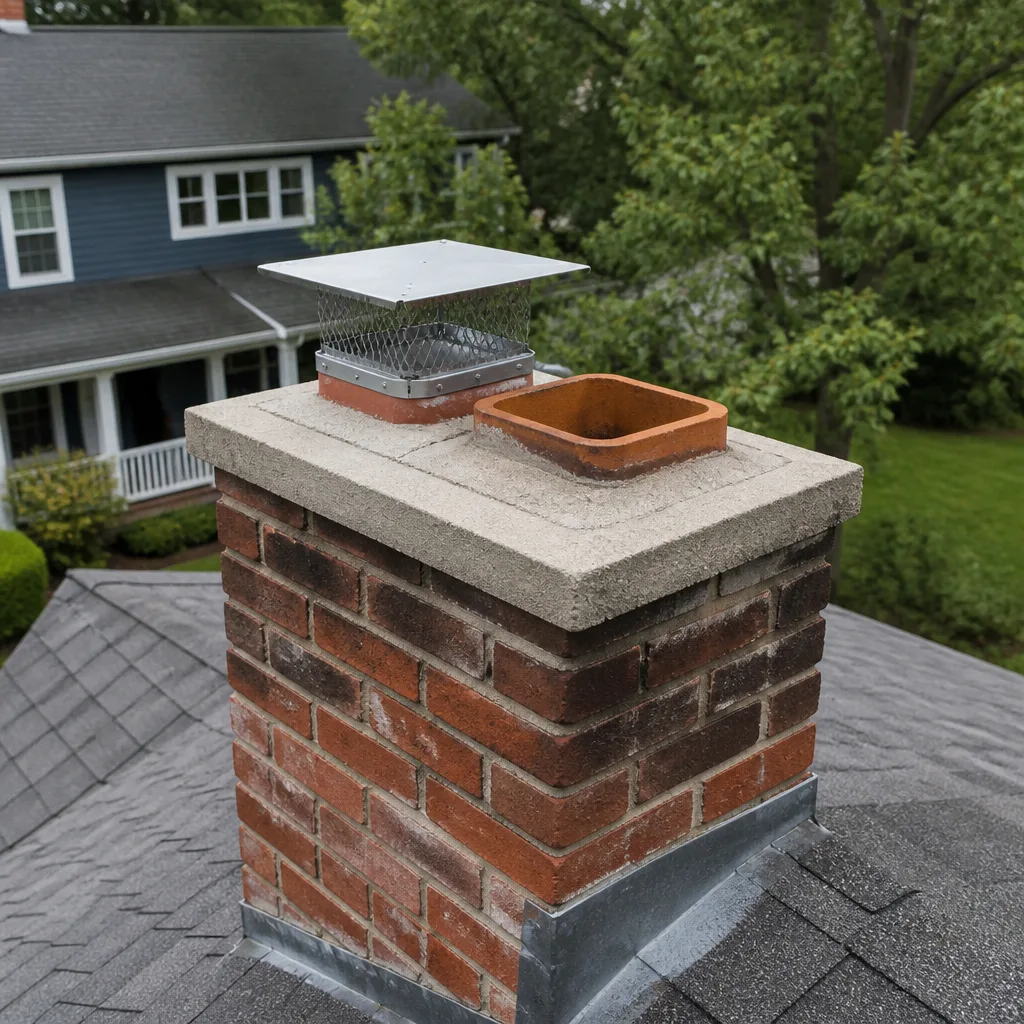
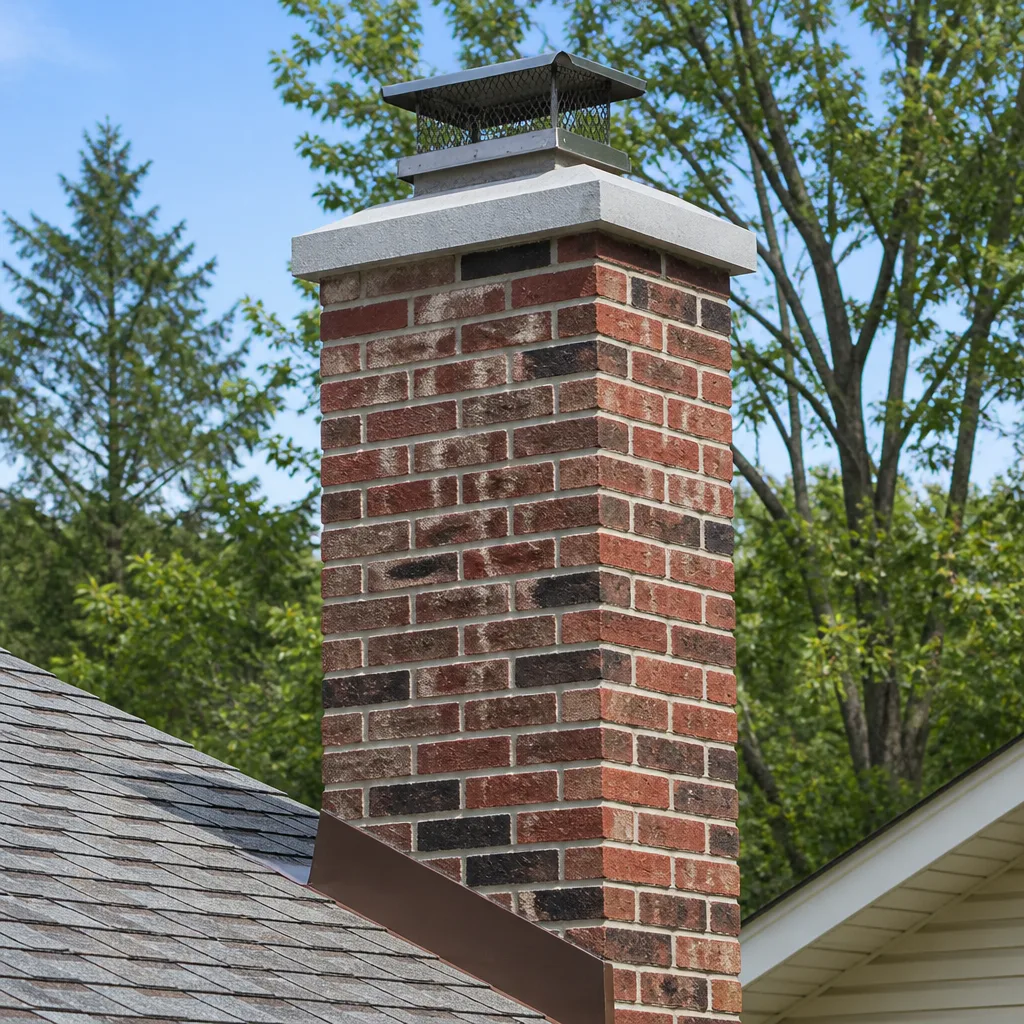 Caps & crowns
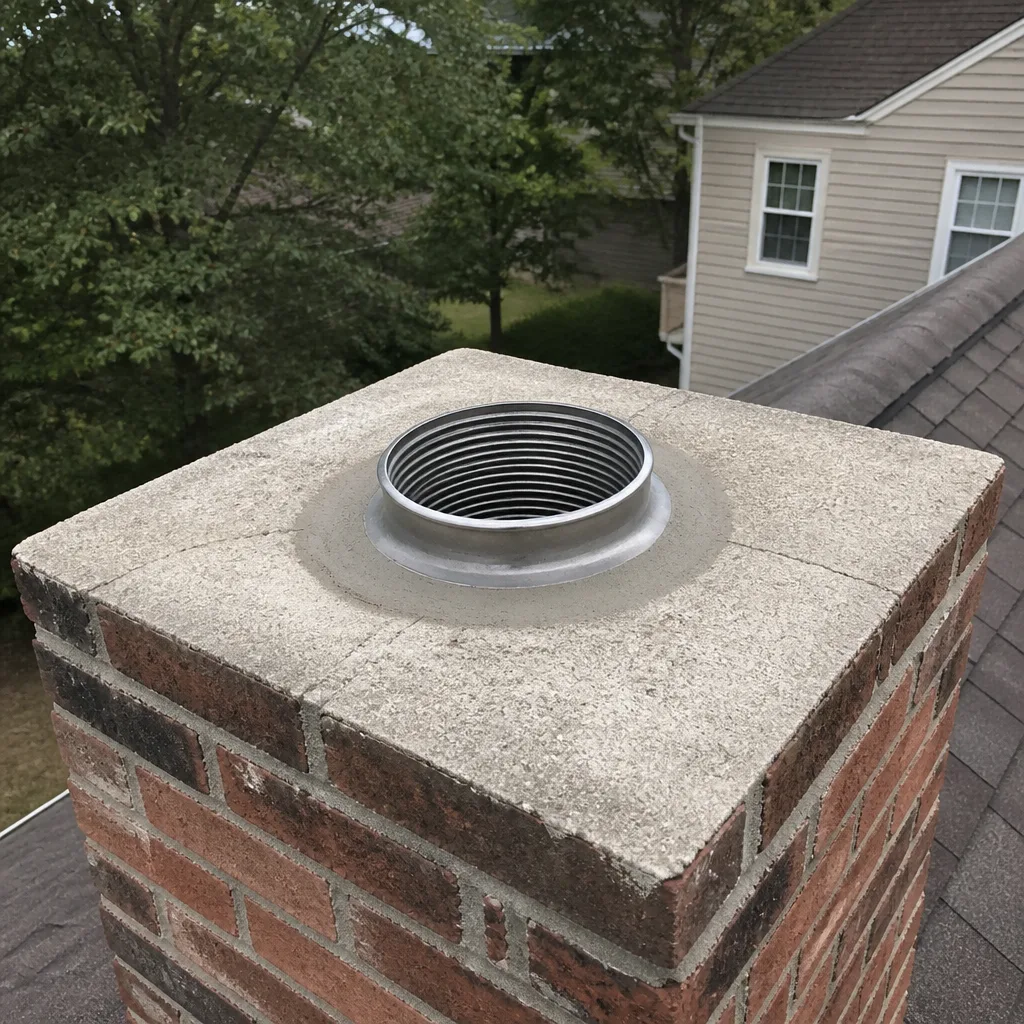 Flue relining
 Masonry repair
 Gas fireplace service
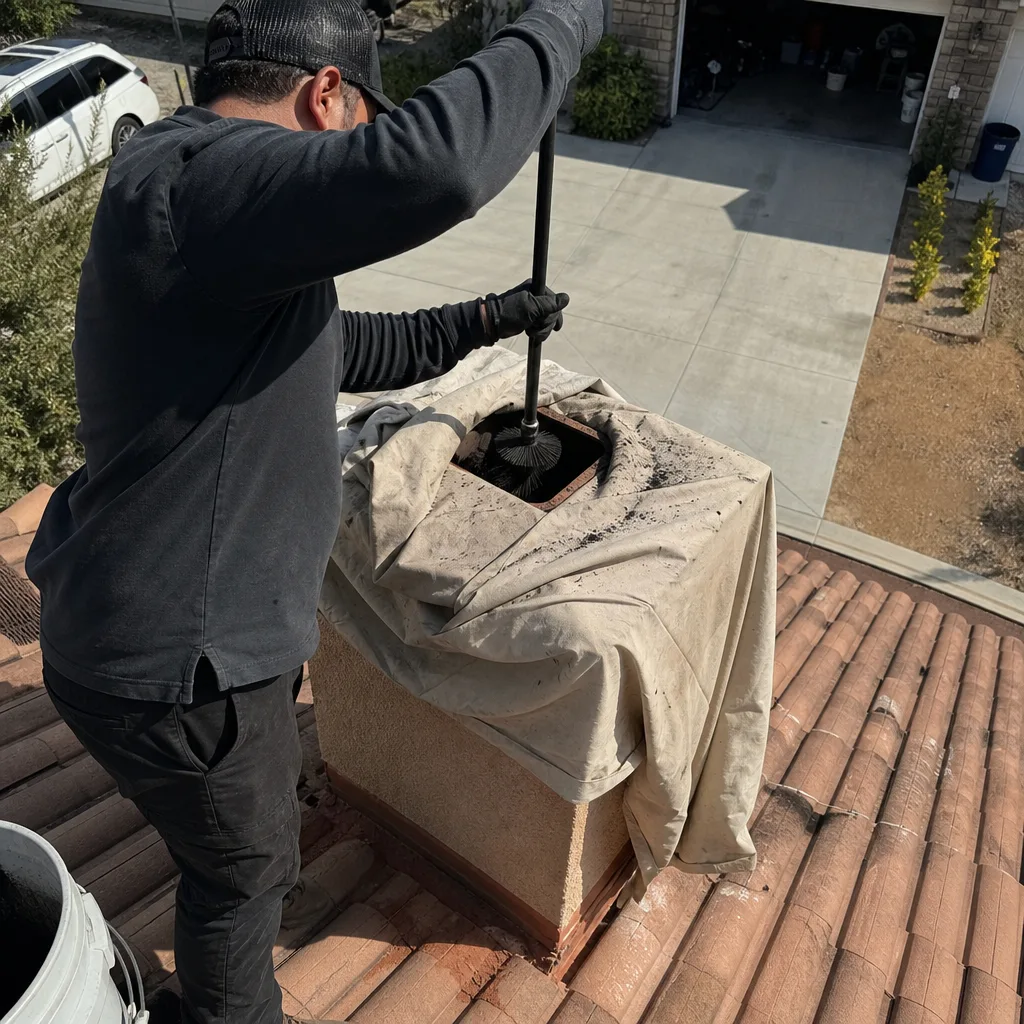
Level 1 sweep and inspection to the NFPA 211 annual standard - flue, crown, cap, and flashing checked and photographed
Chimney sweep logs do not sweep chimneys. They loosen some creosote - which then falls where a brush and vacuum still have to collect it.
DIY vs Professional Chimney Cleaning: The Menifee Homeowner’s Decision Guide
Here’s a fact that surprises most Menifee homeowners: the basic rod-and-brush kit a professional chimney sweep uses costs less than $80 online. The tools aren’t the barrier. The barrier is that a sweep is only half the job. Every legitimate chimney cleaning includes a Level 1 inspection, which means the technician checks the flue liner, smoke chamber, damper, and firebox for cracks, blockages, or stage 2 and 3 creosote before any brush touches the wall. You can remove creosote from a liner you haven’t confirmed is intact. That’s the part DIY skips, and it’s the part that keeps your family safe. This guide walks through exactly which situations DIY chimney cleaning makes sense for, which ones it doesn’t, and how to decide without guessing.
Quick Answer
DIY chimney cleaning is reasonable only when you have a recent professional inspection on record confirming an intact liner, a single-story flue you can access safely from the roof, and only stage 1 creosote buildup. Every other situation, including gas appliances, stage 2 or 3 creosote, or any chimney that hasn’t been inspected in over a year, belongs with a Chimney Sweep in Menifee who can inspect and clean in one visit.
Styles & brands we work with
- Sweep & inspection
- Caps & crowns
- Flue relining
- Masonry repair
- Gas fireplace service
Table of Contents
- What DIY Chimney Cleaning Actually Requires
- When DIY Chimney Cleaning Is Reasonable
- What DIY Cannot Replicate
- The 3 Stages of Creosote and Why They Matter
- The Honest Cost Comparison: DIY vs Professional
- Liability and Home Insurance Implications
- Menifee-Specific Factors That Change the Equation
- Common Mistakes to Avoid
- When to Call a Professional
- Frequently Asked Questions
What DIY Chimney Cleaning Actually Requires
Let’s be specific about what a DIY sweep involves for a typical Menifee single-flue masonry fireplace. You need a chimney brush sized to your flue (usually 6, 8, or 10 inches in diameter for most residential chimneys in the area), fiberglass or polypropylene rods that connect together, a tarp or plastic sheeting to seal the fireplace opening, a shop vacuum with a HEPA filter, a ladder rated for roof access, and basic safety gear including a dust mask, goggles, and gloves. If you don’t already own a ladder tall enough for your roofline and a shop vac, add those to your shopping list.
The prep work matters more than the brushing itself. You’ll seal the fireplace opening with plastic and painter’s tape, which never seals perfectly. You’ll lay drop cloths from the fireplace to the nearest exit because soot travels. You’ll climb onto the roof, remove the chimney cap, and feed the brush down until you feel it reach the smoke shelf. You’ll scrub in short up-and-down strokes, adding rod sections as you go. Then you’ll climb down, wait 15 to 20 minutes for dust to settle, vacuum the firebox and smoke shelf from below, and reassemble everything.
- Purchase a brush and rod kit matched to your exact flue diameter, plus a HEPA shop vac if you don’t own one.
- Seal the fireplace opening with plastic sheeting and tape, and run drop cloths across the floor to the door.
- Access the roof with a proper extension ladder and remove the chimney cap.
- Scrub the full flue length from the top down, adding rods as needed.
- Let dust settle, then vacuum the firebox, smoke shelf, and damper area thoroughly.
- Dispose of creosote and soot waste properly, never in household trash while still warm.
Realistically, a first-time DIY sweep of a single-flue Menifee fireplace takes three to five hours including setup, cleanup, and at least one trip back onto the roof because you forgot something. A professional crew completes the same job in 45 to 90 minutes and leaves no trace they were there. The mess difference is not subtle. Soot finds its way into paint, carpet, and HVAC filters if your sealing job isn’t perfect.
When DIY Chimney Cleaning Is Reasonable
We’re not anti-DIY. There are specific conditions under which cleaning your own chimney in Menifee is a defensible choice. The first is documentation. If you have a written Level 1 inspection from a qualified chimney professional within the past 12 months confirming the liner is intact, the smoke chamber is sound, and only stage 1 creosote is present, then mechanical brushing is low risk. See our guide on How to Hire a Chimney Cleaning Contractor in Menifee: A Step-by-Step Guide to understand what qualifies a professional. You’re not solving a problem. You’re performing maintenance on a system that has already been verified.
The second condition is access. A single-story home with a shallow roof pitch in Menifee’s flat and gently rolling terrain is one thing. A two-story home with a steep Spanish tile roof is another entirely. Spanish tile cracks under foot pressure, and a fall from a second-story roof in Menifee’s dry, hot summers can be fatal. If your roof requires a safety harness and you don’t own one, DIY stopped being reasonable.
The third condition is creosote stage. Stage 1 creosote is a light, dusty, grayish film that brushes off easily. Stage 2 is a dark, granular or flaky material that looks like graham cracker crumbs and requires more aggressive mechanical effort plus possible chemical treatment. Stage 3 is a hard, shiny, tar-like glaze that professional sweeps often remove with specialized chemicals before mechanical action. If you don’t know which stage you have, that’s the inspection gap that makes DIY unsafe.
The final condition is your personal tolerance for detail. A competent DIY chimney cleaning involves measuring your flue correctly before buying a brush, because an undersized brush leaves creosote behind and an oversized one gets stuck. It involves taking the chimney cap off and reinstalling it correctly. It involves knowing what normal liner surface looks like versus spalling, cracked tile, or a failed mortar joint. If that level of detail sounds tedious rather than satisfying, DIY isn’t for you.
What DIY Cannot Replicate
Here’s the uncomfortable truth: the brushing is the easy part. What a chimney professional does before and after the brush is what protects your home and family. The first is the smoke chamber inspection. The smoke chamber is the inverted funnel section between the firebox and the flue, and it’s the highest-heat area in the system. In Menifee fireplaces we see regularly, the smoke chamber is where refractory mortar gaps appear, where cracks develop, and where creosote accumulates in stair-stepped corners. You cannot inspect this from the roof with a brush in your hand. You can’t see it from below without specialized lighting and a mirror.
The second is liner camera assessment. A Level 2 inspection uses a video camera run the full length of the flue. This is how professionals identify cracked clay tiles, gaps at tile joints, and areas where heat has migrated into the surrounding masonry. In Menifee, where summer temperatures regularly exceed 100 degrees and winter fires create rapid thermal cycling, clay tile liners expand and contract in ways that create hairline cracks over time. Without a camera, you won’t know. With a camera, you’ll see exactly what’s going into your flue and whether it’s fit for continued use.
The third is stage 2 and 3 creosote recognition and treatment. Stage 2 creosote often requires chemical treatment before mechanical removal, and stage 3 creosote is where chimney fire risk becomes acute. A seasoned sweep can identify the stage by sight and touch. A homeowner reading about creosote stages online is guessing. When we specify HeatShield for liner resurfacing in Menifee homes, it’s because the camera footage showed joint gaps or minor cracking that brushing couldn’t address. That’s an inspection finding, not a cleaning activity.
The fourth is the documented inspection record itself. A professional sweep leaves you with a written report of what was found. That report matters for home insurance, for resale disclosure, and for your own records if something goes wrong later. A DIY cleaning leaves you with nothing except a dirty tarp and a sore shoulder.
The 3 Stages of Creosote and Why They Matter
Creosote is the combustion byproduct that forms when wood smoke condenses on the cooler walls of the chimney. Understanding the three stages is the single most important piece of knowledge a homeowner can bring to this decision, because each stage demands a different response.
Stage 1: Dusty Soot Film
Stage 1 creosote is a fine, grayish-brown powder or film. It brushes off with light mechanical action. It accumulates in any wood-burning chimney over a normal burn season. This is the only stage where DIY brushing is appropriate, and only when a professional inspection has confirmed the liner is sound.
Stage 2: Granular Flakes
Stage 2 creosote looks like black or dark brown flakes, similar to coarse coffee grounds or graham cracker crumbs. It has a granular texture and clings more tightly to the flue wall. It usually requires more aggressive polypropylene brushing, and some professionals apply a chemical treatment first to loosen the bond. DIY brushing at this stage often leaves the majority behind, which gives the homeowner false confidence.
Stage 3: Tar Glaze
Stage 3 creosote is a dense, shiny, tar-like glaze that looks like black glass in severe cases. It is extremely difficult to remove mechanically and usually requires chemical treatment agents designed for glazed creosote before mechanical action begins. It is also the stage where chimney fire risk is highest. If you see shiny black material on your flue walls or if your fires produce a strong tar smell, do not attempt DIY removal. A professional who has worked with Olympia Chimney products and other professional-grade treatment agents is equipped for this. This is also the stage where a liner is most likely to have suffered damage from previous heat events.
Most Menifee homeowners who burn oak or eucalyptus from local firewood sources see stage 1 after a season of normal use. But if you’ve burned unseasoned wood or operated the fireplace with a consistently low, smoldering fire, stage 2 can develop in a single season. Stage 3 typically develops over multiple seasons of neglected maintenance.
The Honest Cost Comparison: DIY vs Professional
The actual cost question is more nuanced than most articles admit. Here’s the breakdown for a Menifee single-flue masonry chimney. For full pricing context, see our Chimney Cleaning Cost Breakdown: The Menifee Homeowner’s Reference for 2026.
| Item | DIY Cost (First Time) | Professional Sweep |
|---|---|---|
| Brush and rod kit | $60 – $100 | Included |
| HEPA shop vac (if not owned) | $80 – $150 | Included |
| Ladder (if not owned) | $100 – $250 | Included |
| Safety gear (mask, goggles, gloves) | $25 – $40 | Included |
| Drop cloths, tape, plastic sheeting | $15 – $25 | Included |
| Labor (your time at 3 – 5 hours) | Your weekend | 45 – 90 min of their time |
| Level 1 inspection | Not possible | Included |
| Written report | Not possible | Included |
| Total out-of-pocket | $280 – $565 first time | $180 – $340 typically |
The math surprises people. A professional sweep in Menifee typically runs between $180 and $340 for a standard single-flue masonry fireplace, including inspection. Your first DIY cleaning can easily exceed that when you factor in the equipment you don’t already own. Subsequent DIY cleanings are cheaper because the equipment is paid for, which is why some homeowners take a hybrid approach: hire a professional for the first inspection and cleaning, then handle routine brushings themselves and schedule a professional inspection every year or two.
That hybrid approach is defensible. What’s not defensible is the $80 brush kit and a prayer. The brush kit doesn’t tell you whether your liner is cracked. It doesn’t tell you whether the smoke chamber has gaps. It doesn’t document anything. The cost comparison that matters isn’t the brush versus the sweep. It’s the brush versus the brush plus unverified liner condition.
Liability and Home Insurance Implications
Here’s a section most guides skip, and it’s one of the most consequential. Home insurance policies typically require the homeowner to maintain the property’s systems in a reasonably safe condition. For chimneys, that means keeping proof of professional inspection and cleaning records. If a chimney fire occurs and the homeowner cannot produce maintenance documentation, the insurance claim can be denied on the grounds of neglect.
Self-performed cleaning without a documented professional inspection creates exactly the gap insurers look for. The homeowner may genuinely believe the chimney was maintained. But without a third-party inspection record, there’s no evidence the chimney was safe to operate. A Menifee homeowner who cleans their own chimney for five years and then experiences a chimney fire faces an uphill battle convincing the adjuster that the system was sound. The professional inspection is the documentation.
There’s also the matter of damage from improper cleaning. A brush that’s too large can lodge in the flue. A chimney cap reinstalled incorrectly can allow rain intrusion. A tile liner cracked by aggressive brushing or rod impact won’t be discovered until the next fire. Professional sweeps carry liability insurance that covers accidental damage during cleaning. A DIY homeowner has no such coverage, and their home insurance may not cover self-inflicted damage.
For Menifee homeowners with gas fireplaces, the liability profile changes. Gas appliances produce different combustion byproducts and the inspection focuses on venting integrity and carbon monoxide safety. A DIY inspection of a gas vent is not a substitute for professional combustion analysis. The Chimney Sweep Menifee home page covers the full scope of what professional inspection includes, but the short version is this: your insurance company expects documented maintenance, and DIY doesn’t produce documentation.
Menifee-Specific Factors That Change the Equation
Menifee’s geography and climate shape the DIY-vs-professional decision in ways a generic guide won’t address. The first is wind. Menifee sits in the San Jacinto Valley corridor, which experiences regular Santa Ana wind events in the fall and winter. High winds pressurize the chimney cap and create downdrafts. A cap that’s improperly seated after a DIY cleaning will rattle, leak, or lift in the first Santa Ana event. Professional sweeps torque and seal caps to withstand these conditions.
The second is roof material. Menifee has a mix of asphalt shingle, concrete tile, and Spanish clay tile roofs. Clay and concrete tile are brittle. A ladder placed against tile can crack it. Foot traffic on tile can crack it. A homeowner who doesn’t know how to distribute weight across tile roofing risks hundreds of dollars in tile repair to save $200 on a sweep. We specify Gelco chimney caps in Menifee because they’re built for real weather exposure, including the wind and UV conditions this region delivers year-round.
The third is firewood. Menifee homeowners typically burn oak, eucalyptus, or store-bought mixed hardwoods. Eucalyptus is a dense, oil-rich wood common in the region, but it creates more creosote than seasoned oak, particularly when burned green or at low temperature. If you burn eucalyptus regularly, the interval between cleanings shortens. Many Menifee fireplace users we serve don’t realize that their eucalyptus fires accelerate creosote accumulation in ways that make stage 2 buildup common within a single season.
The fourth is the shoulder season. Menifee’s winter is short by national standards, but the December-to-February burn season is compressed. Our Seasonal Chimney Cleaning Care for Menifee: Year-Round Homeowner’s Guide covers timing in more detail. Homeowners want to use the fireplace on cold evenings, and the best time for cleaning and inspection is September and October, before the burn season starts. A DIY cleaning done at the start of the season without an inspection is still a season spent burning in an unverified system.
The fifth is home age. Many Menifee subdivisions were built in the 1980s through 2010s, and those chimneys are aging. Clay tile liners from the 1980s and 1990s are now 30 to 45 years old. Thermal cycling, minor seismic activity, and decades of use create joint gaps and hairline cracks. A 1990-era Menifee chimney is more likely to need Chimney Repair in Menifee than a 2015-era chimney. DIY cleaning doesn’t account for system age.
Common Mistakes to Avoid
- Buying a brush without measuring the flue. An undersized brush leaves creosote on the flue walls. An oversized brush is a liability with potential to jam. Measure the exact flue diameter at the top before buying anything.
- Skipping the smoke chamber. If you only brush from the top down, the smoke chamber and smoke shelf below the flue don’t get properly cleaned. That’s where fires often start in Menifee fireplaces with stage 2 buildup.
- Reinstalling the chimney cap incorrectly. A loose or misaligned cap lets rain in during winter storms and rattles in Santa Ana winds. Rain plus creosote creates acidic slurry that accelerates liner damage.
- Burning eucalyptus or unseasoned wood, then expecting a DIY brush to handle it. Eucalyptus in particular produces dense creosote that stage 1 brushing won’t remove. Unseasoned wood makes it worse. The result is stage 2 buildup that DIY work leaves behind.
- Treating the visual inspection as sufficient. Looking up the flue with a flashlight from inside the firebox shows you almost nothing. Most of the flue length is outside that sightline. If you can’t see it, you can’t brush it effectively, and you can’t evaluate it either.
- Assuming a gas fireplace needs no maintenance. Gas logs produce less creosote, but venting integrity and carbon monoxide safety still require professional inspection. The burners and logs can conceal vent blockages that DIY cleaning won’t address.
When to Call a Professional
You should call a professional chimney sweep in Menifee if any of these apply. You have no documented inspection within the last 12 months. You see shiny black glaze on the flue walls, indicating stage 3 creosote. You’ve experienced a chimney fire, even a small one, or smell tar or smoke inside the home after a fire. Your fireplace is gas, not wood-burning, and you haven’t had the venting and combustion checked professionally. Your roof is steep, tile-covered, or two stories, making safe access the deciding factor. Your chimney is 20 years old or older and has never had a camera inspection. In any of these cases, Dryer Vent Cleaning in Menifee is also worth scheduling in the same visit if your dryer vents through the same general area, since both systems belong under the same combustion-exhaust safety umbrella. Chimney Sweep Menifee offers free estimates in Menifee, call (866) 538-1538 to schedule.
Frequently Asked Questions
A standard single-flue masonry chimney sweep in Menifee typically costs between $180 and $340, including the Level 1 inspection. The price varies based on flue height, creosote stage, cap condition, and whether any repairs are identified during the inspection. Call (866) 538-1538 for an exact quote, estimates are free.
Most wood-burning fireplaces in Menifee should be swept at least once per year, before the burn season starts, with the exact interval depending on how often you burn and what kind of wood you use. If you burn eucalyptus or unseasoned wood, or use the fireplace more than a few times per week during winter, every six months may be appropriate. Gas fireplaces should be inspected annually for venting integrity even though they need less frequent cleaning.
DIY chimney cleaning with a standard rod-and-brush kit is reasonably safe only when you have a professional inspection on record from the last 12 months confirming an intact liner and stage 1 creosote only, and when roof access is safe for someone without fall-protection training. Without that inspection, you’re cleaning a system you haven’t verified, which defeats the purpose. The brushing itself isn’t dangerous; the inspection gap is.
You can perform a basic visual inspection of the firebox and the bottom few feet of the flue with a flashlight and mirror, but you cannot see the full flue length, the liner joints, or the smoke chamber without specialized camera equipment. A professional Level 1 or Level 2 inspection in Menifee involves a full visual and camera assessment of the entire system. The sections you can’t see are where most failures begin.
Creosote accumulates in stages, moving from dusty film to granular flakes and eventually to a hard tar glaze. Stage 2 and 3 creosote are fire fuels, and stage 3 in particular raises chimney fire risk dramatically. A chimney fire can damage the liner invisibly, and once the liner is compromised, heat can migrate into surrounding framing. The longer you skip cleaning, the more likely you need repair, not just brushing. Call (866) 538-1538 for an inspection, estimates are free.
Menifee, like other Riverside County cities, enforces the California Residential Code, which incorporates International Residential Code provisions for chimney and venting systems. The code requires that chimneys be maintained in a safe condition and that repairs comply with manufacturer specifications and code standards. A professional inspection will document compliance, which matters for insurance and resale.
The Bottom Line
DIY chimney cleaning isn’t a scam, and it isn’t categorically irresponsible. It’s reasonable for a narrow set of Menifee homeowners: those with a recent professional inspection on file, single-story accessible roofs, stage 1 creosote only, and the patience to do the job right. But the inspection is the part that keeps you safe, and DIY cannot replicate it. The brush removes creosote; the inspection confirms the liner is intact enough to burn at all. For everything beyond stage 1, for gas appliances, for older chimneys, and for any homeowner who wants documentation rather than guesswork, a professional sweep is the only defensible choice. Chimney Sweep Menifee provides the full service scope, sweep, repair, and dryer vent cleaning in one visit, with inspection findings documented and material choices explained. Call (866) 538-1538 for a free estimate and know exactly what’s going into your flue before burn season starts.
Written by the team at Chimney Sweep Menifee, serving Menifee since 2011.
See the difference
 Before
 After
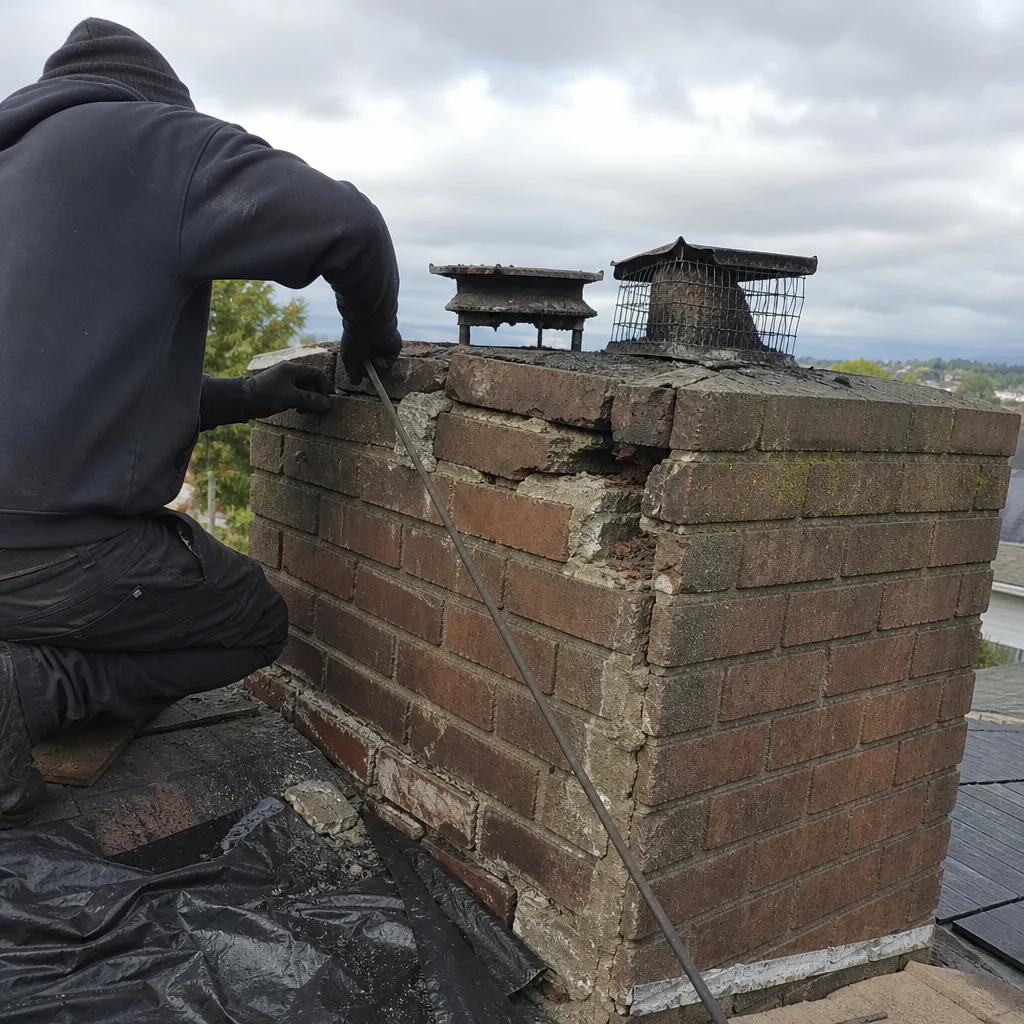 Before
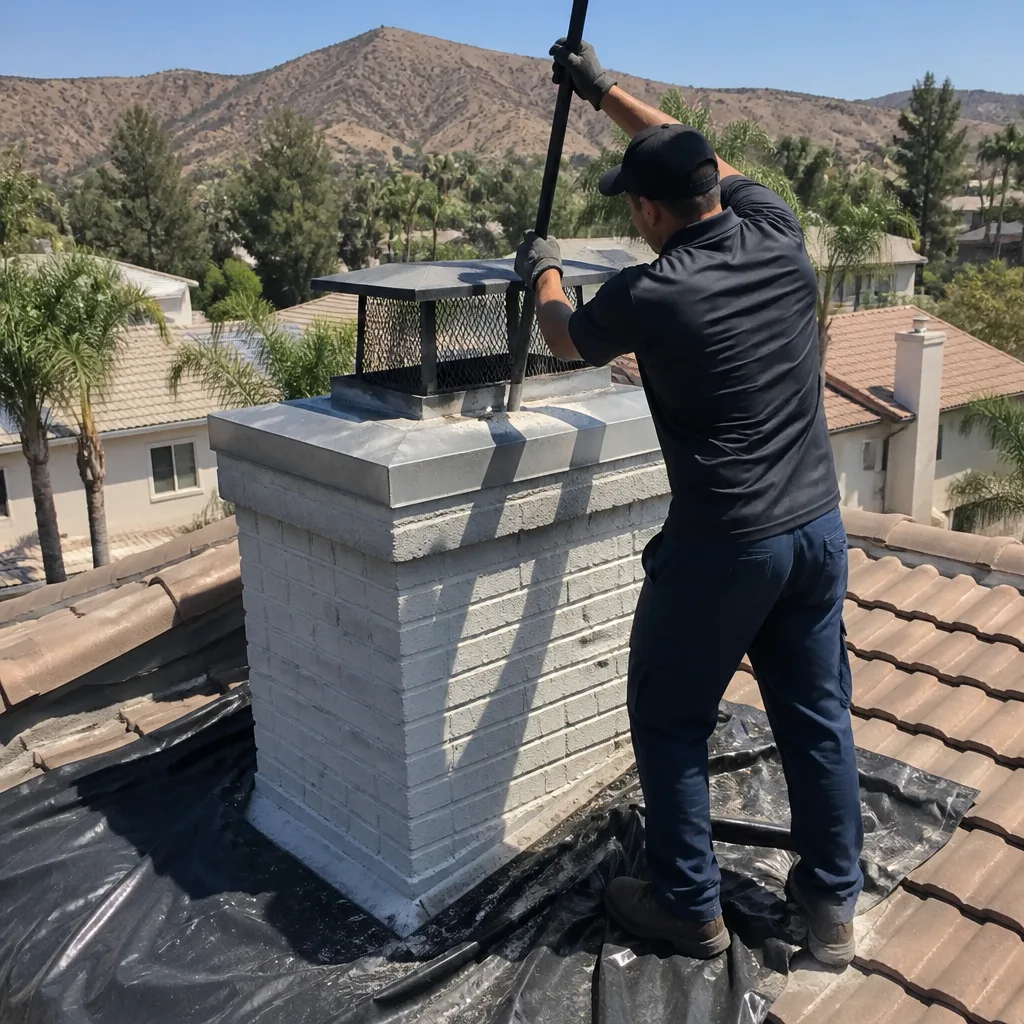 After
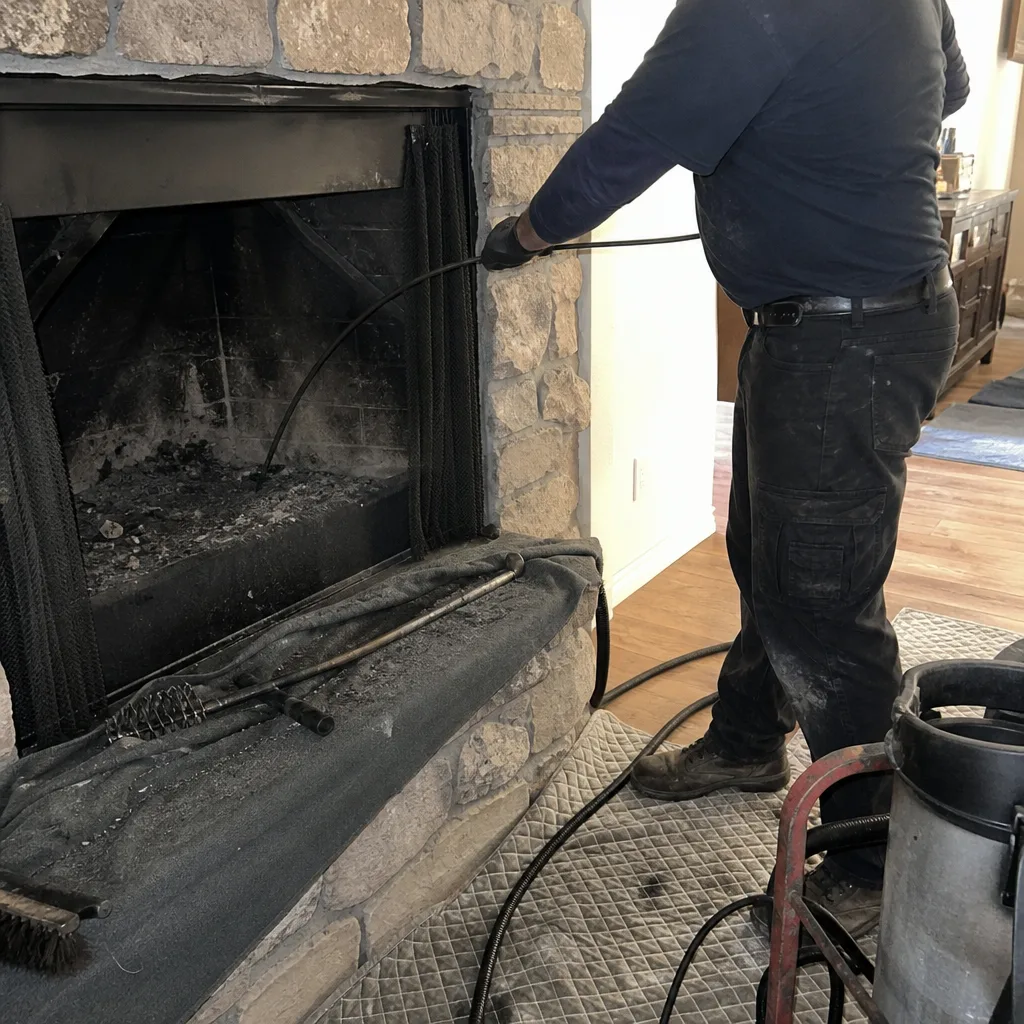 Before
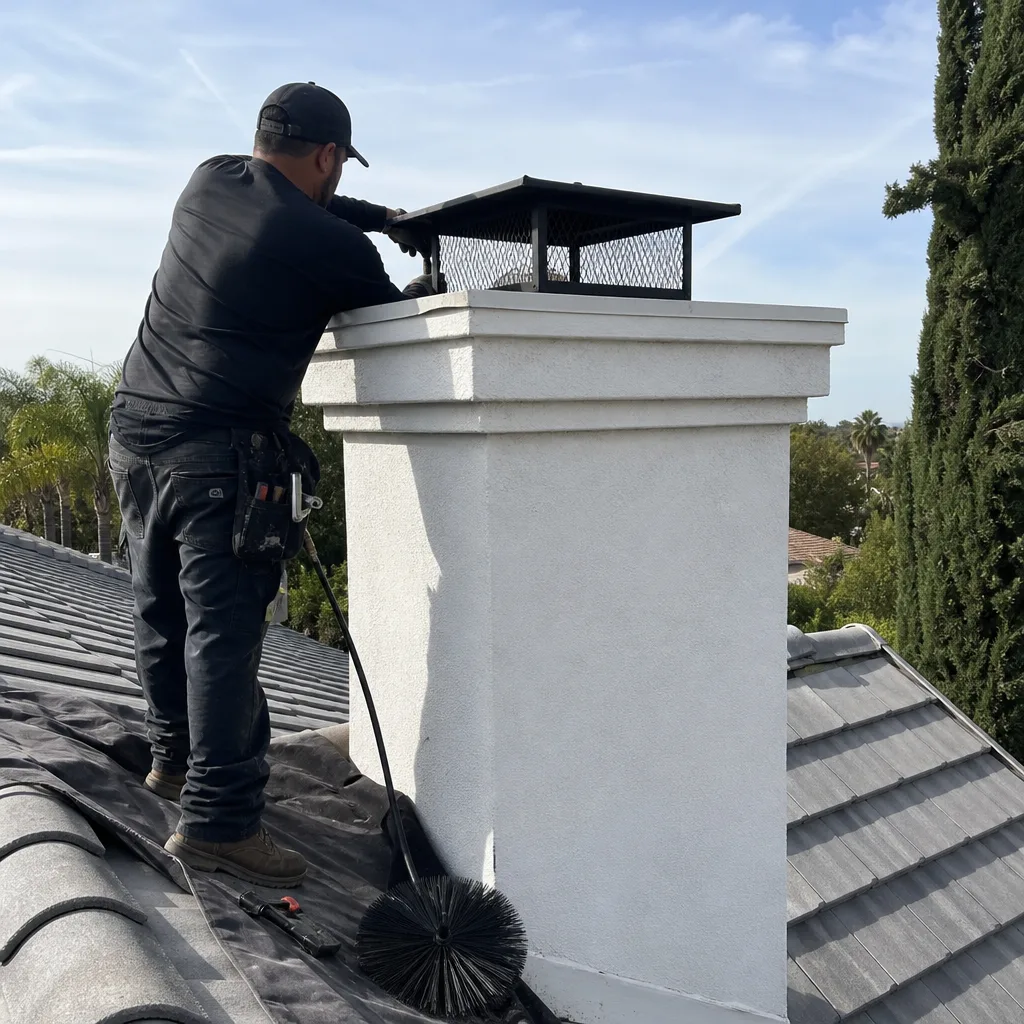 After