
Gelco Chimney Sweep in Menifee: A Homeowner’s Guide
If your Menifee home was built between 1995 and 2015 and has a zero-clearance fireplace, there’s a better than even chance it’s a Gelco unit. A Gelco chimney sweep in Menifee requires specific brush sizing and termination cap knowledge that general handymen rarely carry, and the technician who shows up with a one-size brush kit is about to charge you for an incomplete job. We’ll cover exactly what Gelco service looks like, what to verify before booking, and which replacement parts actually fit these units.
Why Gelco Fireplaces Need a Different Kind of Sweep
Gelco zero-clearance fireplaces use prefabricated metal flue systems, not traditional masonry chimneys. That distinction matters in Menifee because so many tract communities out near Audie Murphy Ranch, Menifee Lakes, and Heritage Lake were built during the Gelco installation window.
A prefabricated system means the flue is a series of interlocking metal sections running through a framed chase. The combustible clearance is engineered into the design, which is why you can’t treat it like a brick chimney. Standard masonry sweep brushes are sized for round clay tile liners, typically 6 to 8 inches. Gelco units run smaller, often in the 5 to 6 inch range with a proprietary termination cap that has its own support geometry. If a sweep doesn’t have the right brush diameter, they’ll do one of two things: skip the job and call it done, or force a larger brush through and risk scratching the inner liner walls. Both outcomes leave you paying for a service that didn’t happen correctly.
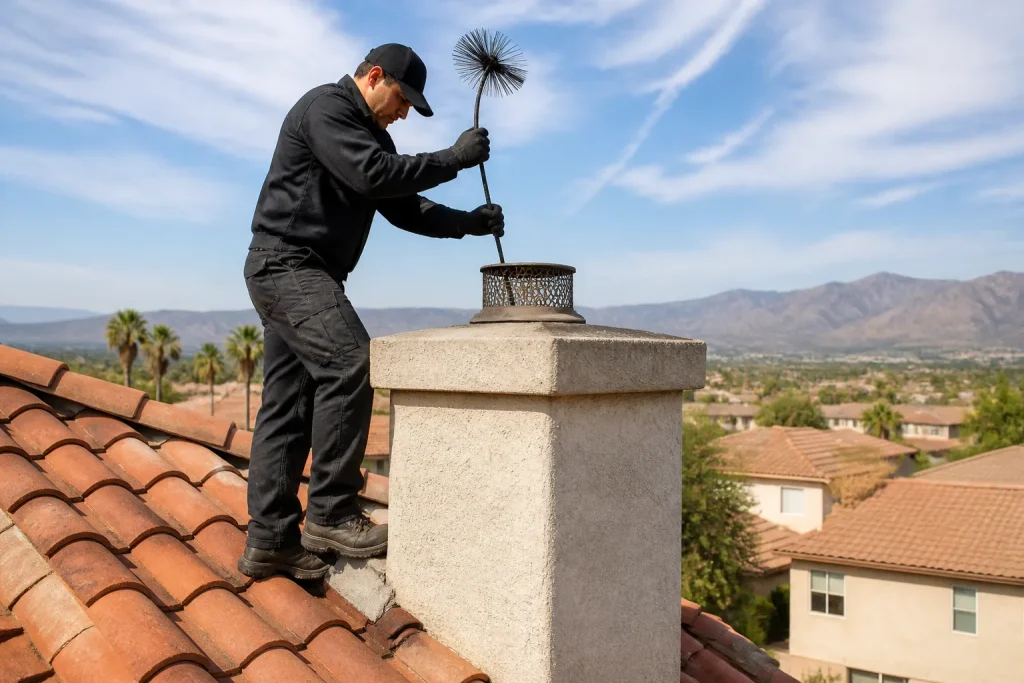
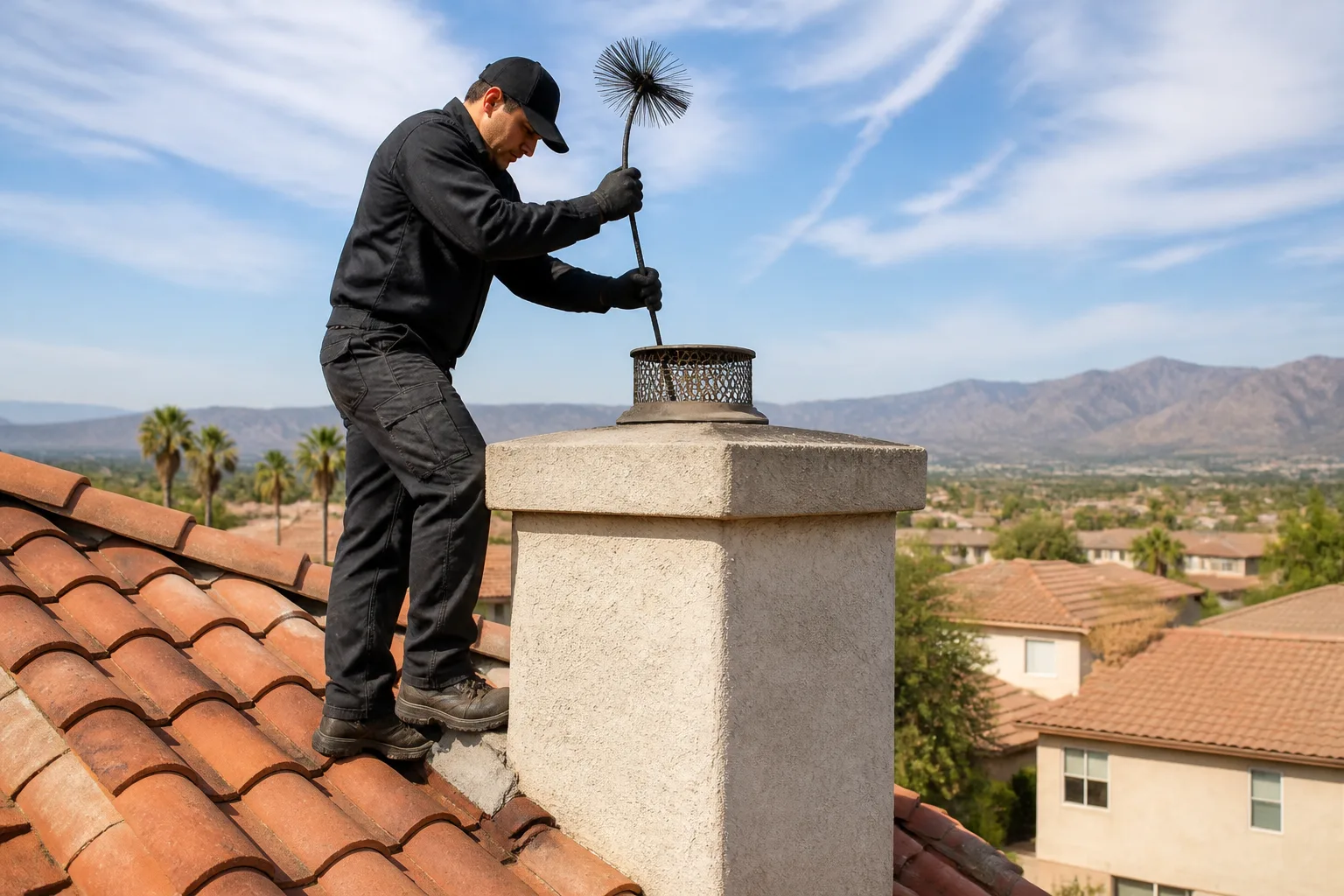
What a proper Gelco sweep in Menifee involves: removing the termination cap, inspecting the cap screen and support brackets, running a correctly sized poly or steel brush down the full flue length, vacuuming the firebox and smoke shelf, and documenting the liner condition photographically. The cap removal step is where inexperienced techs get lazy. Gelco caps are secured with specific hardware, and a lot of them have been sitting in Menifee sun and Santa Ana winds for twenty years.
Reading the Gelco Model Plate: What to Check Before Anyone Arrives
Every Gelco unit has a model plate, usually riveted inside the firebox opening on a side wall or visible when you remove the lower access panel. The plate lists the model number, serial number, and clearance specifications. Before you book any chimney service, snap a photo of that plate with your phone.
Here’s what the plate tells a qualified technician:
- Model number identifies the exact firebox configuration and flue diameter. A Gelco GC-36 takes different components than a GC-42.
- Serial number dates the unit, which tells us which generation of liner and cap design we’re working with. Menifee homes from the early 2000s often have the first-generation galvanized chase covers.
- Listing standard confirms whether it’s UL 127 rated, which affects what replacement components are code-compliant.
- Clearance to combustibles specifies framing requirements in the chase, relevant if you’ve had any attic or chase work done.
When you call us, having that photo ready saves a trip. We can often tell you before we even arrive whether the unit takes a standard 5.5-inch liner or something less common, and whether we’re likely looking at Gelco-specific replacement parts or off-the-shelf components. The full detail lives in our Chimney Sweep in Menifee service, but the plate photo is the starting point.
Common Gelco Failure Points We See in Menifee Homes
Gelco units age in predictable ways. After hundreds of inspections in Menifee, we can tell you the four failure points we encounter most, and they’re almost never what homeowners expect.
1. Firebox panel warping. The refractory panels inside a Gelco firebox are cement-based and built to handle heat, but they crack over time. The crack pattern matters. Hairline cracks are cosmetic. Cracks wider than a quarter inch or panels that have shifted out of their brackets mean the firebox is no longer doing its job of directing heat upward and away from the metal shell.
2. Refractory panel joint separation. The joints between panels are sealed at the factory. When that seal fails, you get heat migrating behind the panels toward the metal firebox walls. In Menifee’s dry climate, the panels also dry out and shrink slightly, accelerating separation. This is a firebox integrity issue, not a cosmetic one.
3. Chase cover corrosion. Galvanized chase covers were original equipment on most Gelco installations. Menifee isn’t coastal, but we get enough seasonal rain and hard water from sprinkler overspray that galvanized covers rust through in fifteen to twenty years. Once water enters the chase, it gets behind the siding and into the insulation. We replace these with stainless steel through our Chimney Repair in Menifee work.
4. Termination cap screen blockage. The cap screen on a Gelco unit is small and fine-mesh. Creosote builds up on the underside, and in Menifee we also see fine dust and occasional bird nesting in the cap. A blocked screen restricts draft and pushes smoke back into the house.
DuraFlex Liners and the Gelco Retrofit Question
When a Gelco original liner fails, whether from corrosion or fire damage, the retrofit path matters more than the diagnosis. Gelco flues often have offsets built into the design, meaning the liner doesn’t run straight up from the firebox. It kicks back once or twice to navigate the chase framing.
Rigid stainless steel liner sections can’t make those bends without cutting and custom-welding, which introduces seam failure points and adds labor cost. DuraFlex flexible liner systems are the correct retrofit for these configurations because the flex line follows the existing offset without modification. We specify DuraFlex precisely because it’s designed for this application: a continuous, smooth-wall interior that slides through the original Gelco chase and terminates cleanly at the cap.
Homeowners ask us whether a failed Gelco liner can be resurfaced instead of replaced. In some cases, yes. HeatShield is a cerablanket-and-cementitious resurfacing system that physically re-lines the interior of the flue without pulling the original liner. It’s not right for every situation. If the original liner has corroded through or the firebox has structural damage, full replacement is the only correct repair. But for hairline cracks and early-stage spalling, HeatShield resurfacing is a legitimate middle option that most sweep companies in Menifee don’t even mention because they aren’t certified to apply it.
The rule we give homeowners: ask what brand of liner material your contractor is installing, and if they can’t name it, call someone else. You deserve to know what’s going into your flue.
The Gelco-Specific Inspection Checklist
A Gelco inspection is different from a masonry chimney inspection, and you should expect your sweep to document the following physically, not just check a box on a form:
- Termination cap removal and inspection of the cap, screen, and upper flue section. The cap comes off and gets photographed.
- Flue diameter verification against the model plate. A mismatch between the installed liner and the listed diameter is a red flag.
- Refractory panel inspection for warping, cracking, and joint separation, with panel-by-panel photos.
- Chase cover condition check from the roof, looking for rust, water staining, or failed sealant.
- Firebox floor check for ash buildup in the air channels that feed combustion air to the fire.
- Smoke shelf and transition inspection where the firebox narrows into the flue. Creosote accumulates here on Gelco units more than on masonry fireplaces.
If the sweep can’t or won’t show you photos of what they found inside your flue, the inspection didn’t happen at the level you’re paying for. We pulled a Gelco cap off a house near Menifee Lakes last month where the previous company had left the cap sealed to the chase with roofing tar. The homeowner had paid for two “full inspections” in three years, and neither one had actually opened the system. Asking for photos is the shortest path to knowing whether you’re getting real service.
What a Gelco Sweep Should Cost in Menifee
Gelco chimney sweep pricing in Menifee runs slightly higher than a masonry sweep because the job includes cap removal and reinstallation, Gelco-specific brush sizing, and the documentation step. Here’s a realistic line-item breakdown of what we charge and why:
| Service | Typical Range in Menifee | What It Includes |
|---|---|---|
| Standard Gelco sweep | $169 – $229 | Cap removal, flue brushing, firebox vacuum, visual inspection |
| Sweep + camera inspection | $249 – $329 | Everything above plus documented camera footage of the full flue |
| Chase cover replacement | $425 – $750 | Stainless steel cover fabricated to Gelco dimensions, installed and sealed |
| HeatShield resurfacing | $1,800 – $3,400 | Depends on flue length and access; usually a single-day application |
| DuraFlex liner replacement | $2,200 – $4,500 | Flex liner specified to the Gelco offset, cap, and top plate |
The prices vary by flue length and access difficulty. A single-story Menifee home with a straight chase and easy roof access lands at the lower end. Two-story homes over near Bell Mountain with steep roof pitches land at the higher end.
When to call a pro rather than attempting any of this yourself: if you’re on the roof removing a Gelco cap without knowing whether the chase framing is compromised, you’re taking a fall risk for no good reason. And if you see water staining on the ceiling near the fireplace, you have a chase leak or a liner breach, and that’s a repair call, not a sweep. For the sweep itself, the brush sizing and cap handling are the parts that go wrong when someone tries to improvise, and a scratched liner on a Gelco unit accelerates creosote buildup in the scratches.
The Bottom Line
Gelco fireplaces in Menifee require service from someone who knows the unit, not just someone who knows how to push a brush. The flue diameters are smaller than masonry chimneys, the caps are Gelco-specific, and the common failure points from firebox panels to chase covers follow a predictable pattern in our local climate. Before booking any sweep, get a photo of your model plate, ask what brush size they’ll be using, and insist on photo documentation of the flue interior.
When the original liner fails, don’t accept a generic patch. DuraFlex is the right retrofit for the offset flue configurations in Gelco units, and HeatShield resurfacing is worth asking about before committing to a full liner replacement. If you’re in Menifee and want someone who works with these units regularly, Chimney Sweep Menifee offers free estimates. Call (866) 538-1538 and have your Gelco model plate handy, it helps us tell you exactly what you’re looking at before we even put boots on the roof.
Frequently Asked Questions
How often should a Gelco fireplace be swept?
A Gelco zero-clearance fireplace should be swept after every cord of wood burned, or annually if you use the fireplace more than twice a month during winter. Gelco units have smaller flues than masonry chimneys, so creosote builds faster relative to flue volume. If you burn manufactured logs or use the fireplace infrequently, every two years is defensible, but the annual inspection is cheap insurance against panel separation going unnoticed. Call (866) 538-1538 and we’ll give you an honest interval based on your actual usage.
Can you reline a Gelco chimney without replacing the whole fireplace?
Yes. If the Gelco firebox is structurally intact, the flue liner can be resurfaced with HeatShield or replaced with a DuraFlex flexible liner without touching the firebox itself. The decision comes down to what the camera inspection shows. Minor cracking and surface spalling are HeatShield candidates. Through-corrosion or fire damage means DuraFlex replacement. Full fireplace replacement is the last resort, not the default recommendation.
What does a Gelco termination cap do, and can it be replaced?
The Gelco termination cap sits at the top of the flue and does three jobs: it keeps rain, animals, and debris out of the flue; its screen acts as a spark arrestor; and it provides the mechanical connection point for the liner. Gelco caps corrode and get damaged by hail, branches, and UV exposure in Menifee. They are replaceable as a standalone component, and we stock Gelco caps for the most common models in our service area. A damaged cap is a water-intrusion risk, and it’s a straightforward fix.
Why does my Gelco fireplace smell like smoke when it’s not in use?
Smoke smell from a cold Gelco fireplace almost always means one of three things: a blocked or partially blocked termination cap screen, a negative pressure problem in the house pulling air down the flue, or creosote buildup inside the firebox and smoke shelf that off-gasses when humidity rises. Menifee’s dry summers hide the buildup, and the first cool, damp evening makes it obvious. A proper Gelco sweep with cap removal addresses the buildup and blockage, and the inspection will tell you whether the issue is house pressure instead. If you’re smelling it in Menifee, call (866) 538-1538 and describe when the smell appears, that timing tells us a lot.
Written by the team at Chimney Sweep Menifee, serving Menifee since 2011.
Need Chimney Cleaning Help?
Call Chimney Sweep Menifee - licensed & insured, here with fast help in Menifee.
(866) 538-1538